Italian President Sergio Mattarella and French Prime Minister Bernard Cazeneuve this week became the latest European leaders to beat a path to Beijing, carrying messages in support of globalization and against a protectionist revival favored by "certain populists".
More are expected to follow this year when President Xi Jinping hosts a forum on the China-led Belt and Road Initiative (the Silk Road Economic Belt and 21st Century Maritime Silk Road). Although no guest list has been issued, there are reports that British Prime Minister Theresa May will be among those invited. And State Councilor Yang Jiechi told China Daily this month that leaders from about 20 economies in Europe, Asia, Africa and Latin America had confirmed they will attend the gathering in May.
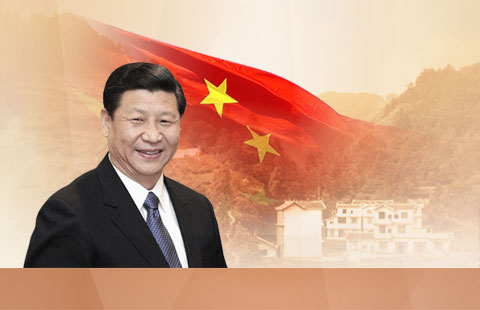
Xi announced the forum in his speech at the World Economic Forum in Davos on Jan 17. Coming just days ahead of the inauguration of US President Donald Trump, his address was widely praised in Europe as a robust defense of globalization in the face of the potentially isolationist stance of the incoming US administration.
Both China and Europe are worried about the economic blowback from a more protectionist US and the potential threat it would pose to future trade. These concerns have provided a focus for the latest contacts between Chinese and European officials.
Europe, however, is not immune to the populist, anti-globalization trend. It was a factor in the United Kingdom's "Brexit" vote and will figure in a series of elections across the continent this year.
This helps explain why mainstream European politicians are stressing the need for equal treatment and reciprocity in trade relations with China. "If we want to prevent the growth of protectionism in the international sphere, our great countries must be able to establish balanced trade relations," Cazeneuve told an audience in Beijing. "There is still a lot to be done."
There was a similar message from Michael Clauss, Germany's ambassador to China, who last month told a Chinese newspaper: "Opposing protectionism begins at home. That is why Germany will stay open for Chinese investment, and why we ask for more reciprocity from the Chinese side."
The prevailing rhetoric from Europe is that, while it welcomes large-scale Chinese investment, it would like to see greater access for European capital into the Chinese market. With anti-globalization populists snapping at the heels of mainstream politicians this year in France, Germany, the Netherlands and Italy, elected representatives have to persuade a sometimes skeptical public that ever closer trade ties with China truly represent a "win-win" opportunity for both sides.
There will be inevitable tensions along the way. European officials have expressed unease over Beijing's growing bilateral ties with Eastern Europe, as it extends rail links through the Balkans. The European Commission was this week reported to be investigating the Chinese-backed Belgrade-to-Budapest high-speed rail link, a key element of the Belt and Road Initiative, to ensure its financing is in line with European Union laws.
From China's perspective, one positive outcome of the Beijing forum in May would be to bring the Belt and Road concept to a wider European public and to present it as an opportunity. The initiative, at the moment, begs for more understanding and debate among European voters.
A paper published by Singapore's S. Rajaratnam School of International Studies last March asked whether the EU had already missed the Belt and Road train. It cited different perspectives and viewpoints among European capitals and the lack of a common EU voice on China's plans.
"The EU population is still not well aware of the OBOR (One Belt, One Road) initiative," according to the authors of the paper. They also criticized the European media for being too focused on Chinese mergers and acquisitions, rather than analyzing the benefits of a long-term relationship based on a better understanding of reciprocal values and interests.
The paper also suggested China needed to update its public diplomacy on the Belt and Road Initiative to help build confidence among Europeans. The May forum should provide a platform for China's leaders to do just that.
The writer is a senior media consultant for China Daily UK. editor@mail.chinadailyuk.com




Copyright 1995 - . All rights reserved. The content (including but not limited to text, photo, multimedia information, etc) published in this site belongs to China Daily Information Co (CDIC). Without written authorization from CDIC, such content shall not be republished or used in any form. Note: Browsers with 1024*768 or higher resolution are suggested for this site.
License for publishing multimedia online 0108263 Registration Number: 130349