The modern cities of Uzbekistan, a country steeped in history, sparkle under the bright sun like pearls scattered along the Silk Road thousands of years ago.
Braving the blistering sun and sand-laden winds, Chinese traders began arriving in the city of Bukhara during the Han Dynasty (206 BC-AD 220). Some stayed, while others carried on along the Silk Road to explore new markets.
Known as the "Shining Pearl of the Silk Road", Uzbekistan's fifth-largest city is more than 2,500 years old. Back when the ancient trading route was a well-trodden path, long caravans traveled to the city from across the globe, lured by the legend of a magical oasis hidden between two deserts.
According to some records, the first caravans appeared on the Silk Road in 138 BC, when ancient China opened its borders for trade. One of the first Chinese to cross what later became Uzbek territory from north to south was Zhang Qian, an envoy of Emperor Wu (156-87 BC). Zhang and his companions wrote about three prosperous kingdoms: Bukhara, Fergana and Samarkand. All three are now territories of Uzbekistan.
Zhang may not have envisioned that China's links with Bukhara would still be strong more than 2,000 years later.
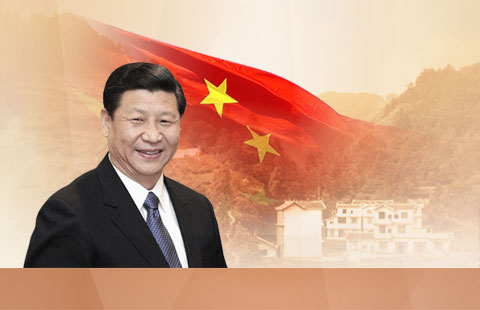
In June, President Xi Jinping and his wife, Peng Liyuan, took a tour of the city, accompanied by Shavkat Mirziyoyev, who was Uzbekistan's prime minister at the time and is now president.
Bukhara, a UNESCO World Heritage Site, was the first stop on Xi's state visit. During his stay, he visited the Ark Fortress, once the residence of ancient rulers, but now a cultural museum housing a wealth of antiques - including an ancient manuscript of the Quran - handicrafts, ancient coins and weaponry.
Xi said the tour would help China and Uzbekistan to carry forward the spirit of the ancient Silk Road, boost the friendship between the peoples of the two nations and promote the Belt and Road Initiative.
Despite the city's modern appearance, Bukhara's merchants still welcome guests in exactly the same places their forefathers did; under the ancient trading domes and in the surrounding streets.
"A guest is like our father, as it was in ancient times and will always be," said Bukhara resident Doston Rajabov. "We receive guests as we would our own father."
Mubashira Bahshilova, a local tour guide, said: "You can still sense Bukhara's atmosphere, and the colors of the bricks mean the old towers and buildings have not been rebuilt since ancient times. The colors you see now are the same as in the days when the ancient city was a major trading center on the Silk Road. Even today, under those trading domes, people still sell the same items that were sold hundreds of years ago, as well as typical handmade goods."
Culture and commerce
Bukhara has long been a center of not only trade, but also scholarship, culture and religion. During the golden age of the Samanid Empire (819-999), it was a prestigious intellectual center for Islamic scholars, second only to Baghdad.
One of the many highlights in the city's historic center, which features many mosques and madrassas, is the mausoleum of Ismail Samani, a powerful Samanid emir. The structure is one of the best-known pieces of Central Asian architecture, unique for its style, which combines Zoroastrian and Islamic motifs.
The mausoleum's facade is covered by intricately decorated brickwork, with circular patterns reminiscent of the sun, a common feature of Zoroastrian art, which usually represents the god Ahura Mazda as fire and light. Moreover, the building is shaped like a cube - similar to the Kaaba, a structure in Islam's most sacred mosque in Mecca - and has a domed roof.
Built in the ninth century, the mausoleum appears to change color with the weather, which experts say is a feature of its unique brickwork.
"The architect who created the mausoleum had 18 ways of laying the bricks," Bahshilova explained. "If you take a closer look, you'll see that each surface has 10 windows. Each has its own decorative pattern, so the windows on each face of the building are different."
Xi, who visited the mausoleum during his visit, said the tour of Bukhara had given him a more profound understanding of the deep-rooted historical connections between China and Uzbekistan.
Abdumalik Bektemirov, an Uzbek economist, said Sino-Uzbek cooperation dates back to ancient times, when China was the starting point of the Silk Road, and the area that is now Uzbekistan was one of the most important trading posts along the route.
"There are more than 130 ethnic groups in Uzbekistan, and most of them traded with China thousands of years ago," he said. "Bukhara played such an important role in the Silk Road, I think both countries are looking forward to maintaining those ancient ties under the Belt and Road Initiative."




Copyright 1995 - . All rights reserved. The content (including but not limited to text, photo, multimedia information, etc) published in this site belongs to China Daily Information Co (CDIC). Without written authorization from CDIC, such content shall not be republished or used in any form. Note: Browsers with 1024*768 or higher resolution are suggested for this site.
License for publishing multimedia online 0108263 Registration Number: 130349