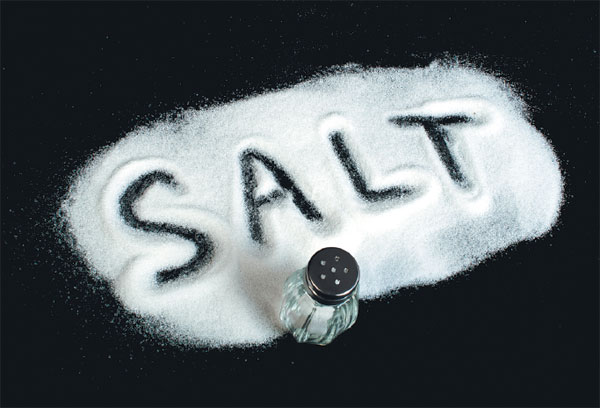
Consuming more salt requires urinating more to get rid of it
Frequently needing the toilet in the middle of the night is a condition that affects more than half of 50s, leading to fatigue, irritability and a groggy feeling in the morning.
But scientists believe they have found a solution, and it could be as simple as a slight dietary tweak.
Japanese researchers discovered that lowering salt intake can significantly reduce excessive night time toilet trips, a condition which is also known as nocturia.
When 223 volunteers were asked to cut their salt by 25 per cent, from 10.7g to 8g a day, their average night time toilet expeditions fell from an average of 2.3 trips to 1.4 times.
In contrast, when 98 subjects increased their intake from 9.9 to 11g they found that their need to urinate increased from 2.3 times/night to 2.7 times/night.
The NHS recommends that adults only eat 6g of salt each day, which suggests that keeping to the limit could bring more benefits than lowering blood pressure.
"This is the first study to measure how salt intake affects the frequency of going to the bathroom," said lead author Dr Matsuo Tomohiro, of Nagasaki University.
"Night time urination is a real problem for many people, especially as they get older.
"This work holds out the possibility that a simply dietary modification might significantly improve the quality of life for many people".
This reduction in the need to go to the bathroom at night also caused a marked improvement in the quality of life of the participants.
Salt can only be disposed from the body when it is dissolved, so the more people eat the more urine needs to be expelled to get rid of it. Salty foods also make people more thirsty, so the double impact of salt and more liquid increases the need to urinate, particularly at night.
Most people still eat one third more than the maximum recommended intake which leads to higher blood pressure, putting strain on the heart, arteries, kidneys and brain and eventually leading to heart attacks, strokes, dementia and kidney disease.
Reducing daily salt intake from 8g to the recommended 6g per day could prevent 14,000 deaths a year, a saving to the NHS of around 3 billion, experts have calculated.
The new research which is being presented at the European Association of Urology (EAU) conference in London, suggests that cutting salt could have even wider health implications.
Professor Marcus Drake of Bristol University, the Working Group Lead for the EAU Guidelines Office Initiative on Nocturia, said: "This is an important aspect of how patients potentially can help themselves to reduce the impact of frequent urination.
"The body becomes less efficient at dealing with salt as we get older or in ill health; so we can end up accumulating salt, leading to rather unstable urine production, particularly during the night.
"There is a high salt load in modern foods and fizzy drinks - the surplus is disposed of in the urine, and that can be done more overnight than when awake.
"Research generally focuses on reducing the amount of water a patient drinks, and the salt intake is generally not considered.
"Here we have a useful study showing how we need to consider all influences to get the best chance of improving the symptom".
A separate study being presented at the same conference found that treating the condition sleep apnea, which is often associated with loud snoring, can also prevent the need to urinate during the night.
Around four per cent of people suffer sleep apnea, a disorder characterized by pauses in breathing or periods of shallow breathing during sleep.
Dr Sajjad Rahnama'i from the Maastricht university Medical Centre, The Netherlands, studied 256 patients who were given a special mask to help them breathe more easily in the night.
After starting to use the mask, nearly two thirds of patients reported a reduction in the need to urinate at night.
|
Too much salt may be causing excessive urination at night, scientists believe. Provided To China Daily |




Copyright 1995 - . All rights reserved. The content (including but not limited to text, photo, multimedia information, etc) published in this site belongs to China Daily Information Co (CDIC). Without written authorization from CDIC, such content shall not be republished or used in any form. Note: Browsers with 1024*768 or higher resolution are suggested for this site.
License for publishing multimedia online 0108263 Registration Number: 130349