Rather than imposing itself, the project invites others to inquire how they can benefit from partnership
In the 2000s, after China entered the World Trade Organization, it experienced an era of racing productivity. Frequently, annual GDP grew at double digits. Over the period 2001 to 2012 the Chinese economy quadrupled in size. Never before had such a large economy experienced such sustained, high growth.
Over this era, Chinese diplomatic intentions were often unclear to the outside world. The idea of a "peaceful rise" from around 2005 seemed too abstract. What was China aiming to mean to the rest of the world? During the great financial crisis from 2008, it was clear what China didn't want - to become a proxy US, as part of a G2, running the world in a superpower club. But the question still remained - what did it want? What was its vision as it became, economically and probably geopolitically, a globally important power?
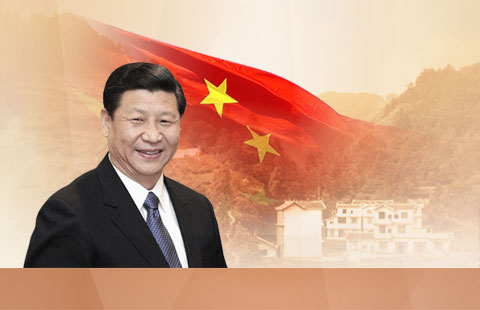
Since 2012, under the leadership of Xi Jinping, there has been a more communicative tone to Chinese diplomacy - a search for clarity. China has spelled out the intimate link between its domestic and external challenges. There is a recognition that in terms of economic growth, environment and human security, China is now an intrinsically global power. As the great work of ancient Chinese philosophy the I Ching stated, "Everything is connected." These days, even with events which seem very local within China, there is a link to the wider world.
The Belt and Road Initiative is the boldest attempt yet to spell out the way that China wants to engage with that world. It is significant, first because so many of the countries involved are in China's neighborhood. These are the ones that will most feel the impact of its new prominence. They are the ones that need to have a framework to best understand what China means in their economic and political lives.
The Belt and Road Initiative's secret is partly in its title. It is not, as many have been making clear, a policy with a normative framework. It is not prescriptive. Instead, it sets down an opportunity, a question as it were. It provides space. The question it poses for engagement with China domestically is a simple one: What do outside countries, partners, companies and others want from China? How do they best engage with its rising consumption, services and sales market? What sort of partnerships do they want?
There is also a clear external dimension. The set of questions here is slightly different. What kind of investments do countries feel would be most beneficial from China and how, where and on what terms are they willing to work with Chinese partners to achieve these? Rather than searching for spaces in China to develop their growth, in what ways do they want to have China come to them and stimulate growth?
The other element of the Belt and Road Initiative is the possibility it offers for a different, more knowledge-based relationship. China through the Asian Infrastructure Investment Bank is selling its expertise in building, successfully, a huge amount of infrastructure domestically. That knowledge of development is very precious, and something that it can share, particularly in the region. This is probably where the "win-win" slogan has meaning. It is in China's interests to have a region with better trains, airline links and road infrastructure. These will open up promising new markets while the EU and US, China's traditional sales destinations, continue to decline.
Of course, in constructing this network in partnership with locals, China is part of positive development strategies for neighboring countries. It is stimulating domestic growth and progress. That eventually brings powerful diplomatic and political capital. It is less easy in this context, even for the most negative, to see China as a belligerent, assertive and self-interested actor. The story becomes a bit richer and more nuanced, something that is useful both to China, seeking a more understanding hearing in the world, and the countries closest to it now who have so far lacked a proper framework to have the optimal engagement with it.
The main formal statements about the Belt and Road Initiative have so far been relatively brief. In 2015, a White Paper was issued by, amongst others, the National Development and Reform Commission. That particularly stressed the importance of connectivity - in terms of transport, trade, finance, people and culture.
As an initiative, something that is non-prescriptive, Belt and Road is highly dependent on discussion and dialogue. It seeks to put pay to the idea of a China assertively marching into the world and being understood purely on its own terms. Instead, it is aiming for a more consensual approach.
The May summit is part of this vast communication exercise. It won't answer every question about the initiative, but it will make some elements of it clearer. In some ways, the Belt and Road Initiative is there to provide space to stimulate, provoke and intrigue. It is not searching for one answer, but for many different interpretations and treatments. That seems a fitting enough framework within which to understand the great theme that lies behind it - the ways in which global China can develop and expand in the current world.
The author is professor of Chinese studies and director of the Lau Institute at King's College London. The views on this page do not necessarily reflect those of China Daily.




Copyright 1995 - . All rights reserved. The content (including but not limited to text, photo, multimedia information, etc) published in this site belongs to China Daily Information Co (CDIC). Without written authorization from CDIC, such content shall not be republished or used in any form. Note: Browsers with 1024*768 or higher resolution are suggested for this site.
License for publishing multimedia online 0108263 Registration Number: 130349