History tells us the initiative can truly deliver a win-win situation for all concerned - given tolerance and mutual understanding
Archaeologists across China keep making remarkable discoveries - finds that help us better understand the past. One of the most striking came following a recent series of digs that took place in Inner Mongolia. A fabulous silver bowl was recovered from a grave of a high-ranking figure who died some 1,500 years ago. Depicted on the bowl - which is in near perfect condition - are four figures who might not be immediately recognizable to modern Chinese eyes: Zeus, Hera, Athena and Aphrodite. These were some of the most important deities from the world of ancient Greece. It is not known who brought the bowl to China or when it arrived, although it must have reached its burial spot before the 6th century at the very latest.
What this magnificent object shows, however, is the way that the world was connected in the past: people, ideas and goods - especially valuable ones - traveled over long distances. The Silk Roads facilitated cultural, theological, linguistic and biological and as well as commercial exchanges. Three main factors underpinned the success and vitality of the networks that allowed objects like the newly-discovered bowl to reach China - and for Chinese artifacts to reach the Mediterranean and North Africa: stability, mutual understanding (or tolerance) and infrastructure. These are the secret ingredients that have made the Silk Roads the most important transport and commercial routes in history - the world's central nervous system.
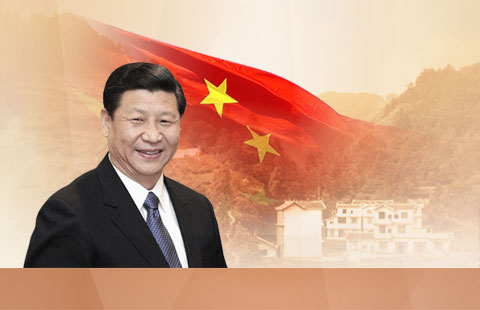
The 21st century is seeing new life being breathed into the arteries and veins that link the East with the West. All eyes will turn to Beijing on May 14-15 this year to see how the new Silk Roads are taking shape. Less than four years ago, President Xi Jinping first announced the formation of the Belt and Road Initiative. Progress since that time has been swift, as major investment has not only been promised but put in place across many locations in Asia. Train lines, roads and deep water ports have moved from the drawing board into reality with extraordinary speed, laying the basis for the transformation of the present and the future for hundreds of millions of people in China and beyond.
The two-day forum comes at an important time, not only in the genesis and evolution of the Belt and Road Initiative, but in geopolitics and global affairs too. Recent weeks have provided important reminders about the complexity of the world we live in. The warning from Dimitry Medvedev, the prime minister of Russia, that US President Donald Trump's decision to launch 59 Tomahawk missiles against a Syrian air base was not only illegal but brought the United States "one step away from military clashes with Russia", show how high the stakes are in the Middle East.
Those who study history understand that there is a difference between words and reality, and that politicians sometimes say things for their own people that they do not expect to be taken seriously. But there can be little doubt that we are living through difficult and dangerous times.
The forum in Beijing has a very different emphasis to the belligerent words being used in many other parts of the world. As State Councilor Yang Jiechi put it, the aim of the conference is to "explore ways to address problems facing global and regional economies." The aim and language of win-win is important, for it is a reminder that there often comes a choice between collaboration and cooperation on the one hand and confrontation on the other.
The big question going forward, therefore, is how to build stability, how to create conditions for tolerance and mutual understanding and how to invest in infrastructure projects in a way that really is beneficial to all sides. Those secret ingredients of the Silk Roads are essential if the Belt and Road is to flourish. And, like all secret ingredients, the recipe is both difficult to come by and requires considerable skill to blend together correctly.
Inevitably there are limitations as to what can be agreed and what can be discussed over 48 hours as world leaders and delegates arrive in Beijing. But in many ways, the forum next month marks an important crossroads in what it is that Belt and Road will eventually become. There is a golden opportunity now for those that are part of the Silk Roads of the 21st century to work together; there is a real chance to build sustainably for the future in a way that sees partnerships, investment and collaboration that bear fruit not only in decades to come but in the near future too.
While many are looking at fragility and flashpoints and worrying about the problems tomorrow may bring, the forum in Beijing in May is potentially the event that will shape the future. Many countries that are part of the Belt and Road framework have different ideas and different agendas from those of China, the driving force behind the initiative. A great deal depends now on the decisions next month.
That in itself is not surprising, nor a source for concern; for in the past, too, peoples have had to solve the same problem of working out how to cooperate, trade and benefit together. That, after all, is why the Silk Roads were so successful in the first place. The bowl bearing the face of Zeus, king of the gods, is a good reminder of just that.
Peter Frankopan is senior research fellow at Worcester College, Oxford. His book, The Silk Roads: A New History of the World, is an international best-seller. It is published in China by Shanghai Dook Publishing Co.




Copyright 1995 - . All rights reserved. The content (including but not limited to text, photo, multimedia information, etc) published in this site belongs to China Daily Information Co (CDIC). Without written authorization from CDIC, such content shall not be republished or used in any form. Note: Browsers with 1024*768 or higher resolution are suggested for this site.
License for publishing multimedia online 0108263 Registration Number: 130349