Ethnic Jino areas that exist in modernization's limbo offer authentic slices of traditional life - but perhaps not for long, Will Wain-Willams reports.
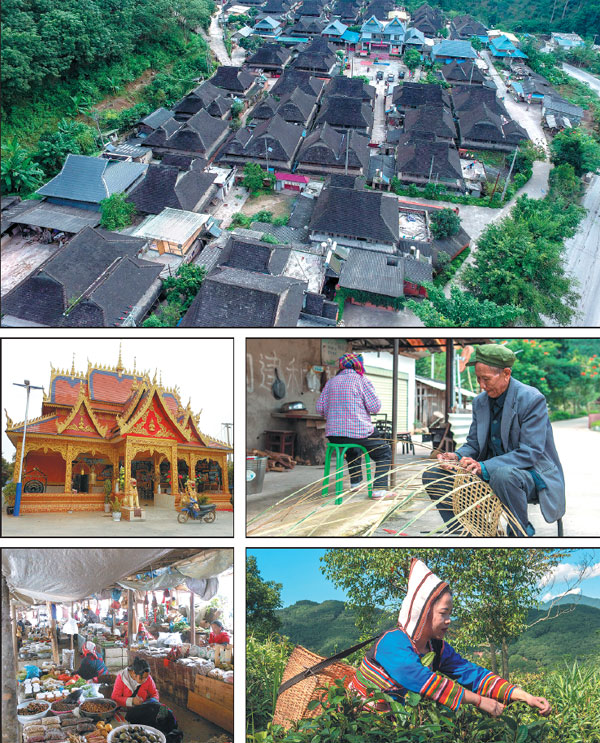
The ethnic Jino people inhabit Yunnan province's remote mountains, where they cultivate tea and medicinal herbs but still experience the country's rapid and massive transformation.
I set out to explore the lands on which they live, traveling from Yunnan's Xishuangbanna, a tropical settlement in the rainforest on the banks of the Mekong River near the border with Myanmar, northward toward the mountains leading to the Tibet autonomous region's highlands.
The main city (if you could call it that, given its small size and slow pace of life), Jinghong, is mostly inhabited by the Dai ethnic group. The Dai's close links to Thai people can be seen in the language, architecture and religious beliefs, endowing the area with a Southeast Asian feel.
The roads northward were lined with rubber plantations. My driver says many owners are shifting toward coffee production, which is more profitable.
Yunnan's coffee has been increasing its market share in the country and beyond.
Signs advertising tacky theme parks devoted to ethnic culture punctuate the agricultural plots.
I was looking for something more authentic.
They typically live in the harsh mountaintop jungles. Their knowledge of endemic medicinal plants helps them stay strong and healthy, despite tough natural conditions.
The increasing demand for their teas has enabled many Jino people to move into more modern houses and enjoy comfortable lifestyles. Some have set up large plantations to cultivate tea and herbs.
I visited a tea-production area run by a local family.
They were in the process of selling a beautiful wooden guesthouse and a massive traditional drum. The percussion instruments fashioned from a single log are traditionally the main feature of villages. They're used in festivals and to greet visitors.
(The aforementioned theme parks also often feature dance performances centered on the drums several times a day.)
I also toured the family's workshop for pressing Pu'er teacakes.
The leaves are dried and then steam-pressed into cakes that are hung from the ceiling for about a month to fully dry.
The room was fragrant.
I really wanted to try some. I was in luck.
We next visited the tearoom, a large space centered around a beautiful table carved from a huge tree root.
Cakes of every shape and size were piled around the edges of the room.
It had a contemporary feel, although still family-owned.
The head of the household explained they'd relocated from the mountaintop to enjoy a better quality of life.
Their traditional lifestyle had been ascetic, without any modern amenities.
It's fine if urbanites want to criticize them for abandoning their traditions, he said, as he broke a chunk of tea and dropped it into a small teapot with a Chinese poem printed on the side.
But these "city dwellers" haven't endured the harsh life that accompanies ancient ways - that is, going without electricity, running water or access to education.
Indeed, I enjoyed the laid-back lifestyle and opportunities to learn from this journey.
While there are tourist traps, hiring a local driver or trekking guide makes it easy to literally get off the beaten path and enjoy an authentic experience.
Everyone I met was warm and generous.
My driver told me: "If you come to my village, I'll treat you like family. You can eat anything in my home - even kill one of my pigs!"
The changes sweeping the area may transform it beyond recognition and soon turn it into an overdeveloped and inauthentic tourism zone.
Many villagers today have TVs and iPhones but no plumbing.
Wealthy people from the north are buying villas as winter homes.
Other outsiders are moving in to open tourism agencies or hotels.
Indeed, the area may soon be unrecognizable. So, now may be a good time to go.
Contact the writer at willwainwilliams@gmail.com
|
Clockwise from top: Bapiao village, inhabited by ethnic Jino people in Jinghong, Yunnan province; an elderly ethnic Jino man weaves a bamboo basket; a Jino woman picks tea leaves; residents of a Jino village sell local products at a market; a temple of Theravada Buddhism in the area. Photos By Xinhua And Will Wain-Willams |




Copyright 1995 - . All rights reserved. The content (including but not limited to text, photo, multimedia information, etc) published in this site belongs to China Daily Information Co (CDIC). Without written authorization from CDIC, such content shall not be republished or used in any form. Note: Browsers with 1024*768 or higher resolution are suggested for this site.
License for publishing multimedia online 0108263 Registration Number: 130349