We are living in a seemingly rudderless world full of uncertainty thanks to the simultaneous existence of globalization and anti-globalization sentiments. As a result, the paradigm of global governance has begun a momentous yet bifurcated shift, making adaptation difficult for countries, large and small. Yet countries have to understand and timely adapt to this shift, both individually and collectively.
The global governance paradigm is shifting in two directions. The first shift is led by the United States and a few other Western countries, which are riding the rising tides of anti-globalization and populism, and blaming all the global and domestic troubles on the "clash of civilizations" and globalization. They seek solutions through "America First" or "Me/Us First" in order to gain more benefits in their dealings with other countries while shirking their responsibilities to maintain the right balance between market efficiency and social equality and justice.
In this context, the rhetorical question raised by US President Donald Trump in his recent Warsaw speech is really illustrative: "Do we have the desire and the courage to preserve our civilization in the face of those who would subvert and destroy it?"
Other senior US officials are less subtle, with one saying, "the world is not a 'global community' but an arena where nations, non-governmental actors and businesses engage and compete for advantage". The failure of the recent G20 Summit in Hamburg to reach a consensus on climate change and anti-protectionism is an example that has a clear US footprint.
Former US treasury secretary Lawrence Summers wisely said in the Financial Times that "the existence of the G20 as an annual forum arose from a common belief of major nations that there was a global community with common interests in peace, mutual security, prosperity and economic integration and the containment of threats even as there was competition between nations in the security and economic realms".
In the US, there are two schools of thought on globalization and what Washington's role should be: the "me-first" versus "community first" schools. Of course "community first" does not negate "me first".
Trump rejected the concept of global community right from the start of his presidential campaign. The fight over choosing to work alone to seek better bilateral deals and trying to build a better and stronger world order and global governance architecture has been going on within the US administration. The former seems to be winning for the time being.
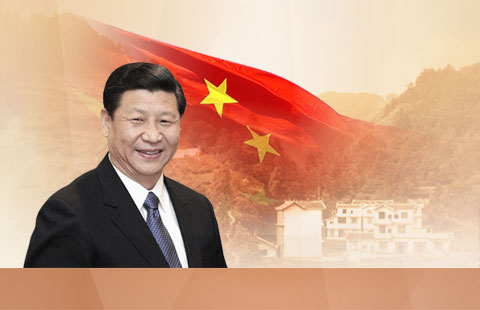
The other paradigm shift is toward the world stage, with China leading the way, supported by many countries, both advanced and developing. President Xi Jinping gave the clarion call early this year at World Economic Forum at Davos, Switzerland, when he appealed to the world to build a global "community of shared destiny".
Given the widening gap between the poor and the rich, both within and among countries, and the growing challenges before the international community, the old paradigm of global governance seems inadequate to overcome the challenges that include but are not limited to climate change and rising protectionism.
Xi's idea of building a community of shared destiny is nothing less than a call for concerted action to transcend ideological and other differences. The goal is to achieve a "meeting of minds and hands" to help build a world order in which countries with their political systems and cultures can cooperate and compete peacefully to build a community of shared destiny.
The Belt and Road Initiative proposed by Xi in 2013 dovetails perfectly with the idea of building a community of shared destiny. And both are based on the successful experiences of China in domestic governance and fast-paced economic growth. No wonder the Belt and Road Initiative, the Silk Road Economic Belt and 21st Century Maritime Silk Road, has gained much traction, with the Asian Infrastructure Investment Bank, Silk Road Fund and the BRICS New Development Bank as complementary vehicles for raising capital for large infrastructure projects, which is especially needed by less-developed countries that lag behind in terms of globalization and industrialization.
The Belt and Road Forum for International Cooperation in Beijing in May attracted a great deal of international attention, reflecting many economies' eagerness to engage in this innovative effort to improve global governance and develop a new type of international cooperation to transform globalization into a project "of the people, by the people and for the people".
It would not be inappropriate to mention here the G20 Communiqu?? of 2009 that declared, "we start from the belief that prosperity is indivisible". We should not veer away from that belief of "shared prosperity" and "shared destiny".
The bifurcated paradigm shift is something the world needs to take seriously, as it is unstoppable because of the fast changing world and increasing convergence of power between the "West and East" and the "North and South", as political pundits are fond of saying. The key issue is what is good for the international community as a whole in today's deeply interdependent world - more clashes both within and between civilizations or coming together to tackle global challenges, because no country alone can deal with them, and thus paving the way for building a community of shared destiny.
Blaming everything on globalization and so-called clash of civilizations is actually an attempt to divide countries into ideological "camps" as was seen during the Cold War, which is not conducive to promoting the new era of globalization that has already bound all countries into a closeknit "community of shared interests".
The comment made by a US scholar at a seminar I attended recently is relevant here. He described today's world as a series of "rings of communities" within one another, from a local community a person lives in to the global community we all share.
Sharing and connectivity is the key link in those rings, he said and concluded that the idea is to "not to leave anyone behind" because we are all part of the same world. And shared interests and "one world, one dream", a slogan of the Beijing 2008 Olympic Games, are of great essence to China's idea of building a global community of shared destiny.
The author is former vice minister of Foreign Affairs. Courtesy: chinausfocus.com




Copyright 1995 - . All rights reserved. The content (including but not limited to text, photo, multimedia information, etc) published in this site belongs to China Daily Information Co (CDIC). Without written authorization from CDIC, such content shall not be republished or used in any form. Note: Browsers with 1024*768 or higher resolution are suggested for this site.
License for publishing multimedia online 0108263 Registration Number: 130349