The global artificial intelligence market has experienced explosive growth in recent years, and this game-changing technology is now considered the "next big thing" after the mobile internet.
AI has a long development history but recent breakthroughs have led to a new inflection point. Advances in deep learning neural network algorithms, alongside improved computer processing power, and the abundance of big data that serves as valuable training data are all contributing to the rise of the AI industry.
China's AI industry has been growing in an exponential manner. According to Tencent Research Institute, the number of AI companies has increased more than tenfold over the past 10 years, from 57 AI companies in 2007 to 592 by June 2017. Remarkably, the number of newly established AI startups in 2015 was equivalent to the total number of AI start-ups from 1999 to 2012. In terms of fundraising, according to The Economist, Chinese AI companies received $2.6 billion investment from 2012 to 2016 while US peers received $17.9 billion over the same period. However, China has been catching up quickly in recent years.
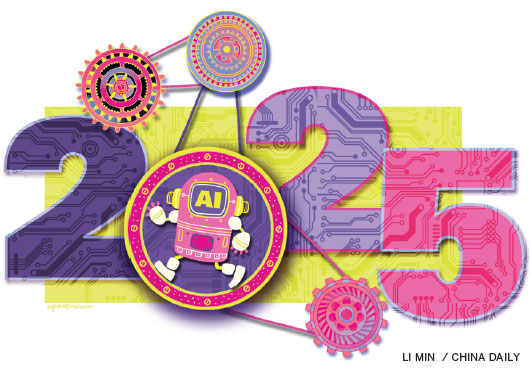
The Chinese government has positioned AI as a national strategic priority. China, earlier seen as a technology development laggard, aims to become a world leader in AI to drive its economic transformations with it. In the most recent government policy document outlining the New Generation AI Development Plan, the State Council, the country's Cabinet, has declared an ambitious goal of becoming a world leader in AI innovation with a market size of over 1 trillion yuan ($151.86 billion) by 2030. Policies such as Made in China 2025, the Three-year Guidance for Internet Plus AI plan, and the New Generation AI Development Plan are all top-down initiatives aiming to take the nation's AI technology forward. Furthermore, local provincial and city governments are also offering preferential policies and generous financial incentives to AI start-ups. For example, the city of Tianjin recently set up a 30 billion yuan fund to support the local AI industry.
Data is the key to unlocking the potential of AI development. With 751 million internet users and 724 million smartphone users, Chinese are embracing a 24/7 connected lifestyle and adopting all kinds of new digital products and services. Their ubiquitous connectivity has led to tremendous amount of data that can be further monetized. And with the massive amount of training data sets as input, the AI algorithms are continuously self-tuning and improving. Companies are now able to leverage AI-enabled tools to develop a more comprehensive and dynamic understanding of their customers and competitors.
This vibrant innovation and entrepreneurial ecosystem has also fueled China's AI development. Chinese AI-based patent applications grew 186 percent between 2010 and 2014, a huge increase from the previous five-year period. Also, in the past two years, all the top-performing teams in the ImageNet Large Scale Visual Recognition Challenge, an influential AI computer vision contest, were Chinese, while half the teams were Chinese-based. Meanwhile, Internet giants such as Baidu, Alibaba and Tencent, along with rising startups like Mobvoi, iCarbonX, Megvii and SenseTime, and unicorns like Didi Chuxing and Xiaomi are all investing in or experimenting with AI technology.
Baidu is one of the major leaders in AI development in China. It established the Institute of Deep Learning in 2013 and the Silicon Valley AI Lab in 2014. In 2017, Baidu announced a shift in its strategy from mobile-first to AI-first, and recruited Qi Lu, a former executive vice president at Microsoft, as its new COO. In particular, it has launched an open-source platform for autonomous driving solutions, namely Project Apollo, to transform the global research and development landscape of self-driving vehicles.
Yet, China's AI industry still faces major challenges. First, China's academia is not doing much in fundamental scientific research, especially in the areas of advanced computer algorithms and computing infrastructure. So far, the majority of groundbreaking research is still being done in the West. Second, AI startups are good at launching new products and features to satisfy unmet market demand. However they primarily rely on business model innovation rather than technology innovation. Third, governments and venture capitalists tend to provide more incentives to commercial applications of technology over fundamental technology research, which takes more time and involves more risks.
The success of China's ambitious goal to become a world leader in AI by 2030 will hinge on the nation's innovation capabilities and long-term strategic vision. Could China eventually achieve global leadership in AI? Like everything that is related to business and technology innovations these days, it would be imprudent to count China out.
Edward Tse is founder& CEO, Gao Feng Advisory Company, a global strategy and management consulting firm based in China and author of China's Disruptors. Jackie Tang is a consultant with the firm.




Copyright 1995 - . All rights reserved. The content (including but not limited to text, photo, multimedia information, etc) published in this site belongs to China Daily Information Co (CDIC). Without written authorization from CDIC, such content shall not be republished or used in any form. Note: Browsers with 1024*768 or higher resolution are suggested for this site.
License for publishing multimedia online 0108263 Registration Number: 130349