Editor's note: This is the fifth in a series looking back at some of the most important, timely or unusual stories covered by China Daily's reporters last year.
A central question for policymakers last year was how to cope with the growing pressure of paying "old age insurance", or pensions, in the country's less-developed regions as the nation ages.
Provincial and municipal authorities manage such funds separately, which has led to a lack of money in areas with rapidly aging populations.
The problem is most acute in the less-developed provinces in China's western regions and the northeast, which have struggled for years to cope with a constant exodus of young workers.
A 2017 report shed light on the pressure facing Heilongjiang, the northernmost province.
The report, released by the Ministry of Human Resources and Social Security, found that while the country's collective fund totaled 3.7 trillion yuan in 2016, Heilongjiang had a deficit of 32 billion yuan.
The situation was no better in central and western provinces. A report published by the Chinese Academy of Social Sciences in February last year found that several provinces, including Jiangxi, Hubei, Gansu, Qinghai and the Ningxia Hui autonomous region, faced serious funding issues and that deficits are expected in the next few years.
It predicted that nearly half of provincial regions will face deficits by 2022.
"The balance problem is caused by the aging population, exacerbated by the loss of young people to the coastal regions," said Jiang Xiangqun, a professor of social security at Renmin University of China.
He added that the ripple effects of vast numbers of factory workers being laid off in the northeast have complicated the issue in the region.
Rust belt
The northeastern provinces-Liaoning, Jilin and Heilongjiang-were once known as the "Republic's eldest son" because of their crucial status in the national economy as a base for heavy industry.
But the region became a rust belt after large numbers of State-owned coal mines, steel plants and oil refineries were idled amid sweeping economic reforms in the 1990s.
The former employees, mostly born in the 1950s and '60s baby booms, have now surpassed the retirement age for blue-collar workers-55 for men and 50 for women-and large numbers of them have started collecting the State pension.
Meanwhile, the job evaporation in the northeast has seen many young people move to Beijing and other economically vibrant regions, meaning they do not contribute to the pension fund in their home province.
Moreover, their numbers are fewer because many were born after the one-child rule was introduced in 1980.
In the first decade of this century, Heilongjiang saw a net outflow of 1.26 million residents. Meanwhile, starting in 2010, an average 100,000 people moved elsewhere every year, according to the provincial statistics bureau.
More than 30 percent of those people are age 20 to 30, and less than 20 percent have reached retirement age, it said.
The workers' migration to the coastal regions has created a huge discrepancy in the health of pension funds in different parts of the country.
In 2017, Yin Weimin, a former minister of human resources and social security, said that at 1.3-to-1, Heilongjiang had the country's lowest contributor-collector ratio, suggesting immense payout pressure.
However, the ratio was 9-to-1 in Guangdong province, the manufacturing and trading hub in South China, he said.
Experts said that in addition to putting pressure on fund payouts, the fragmented system has caused problems such as a gap in benefit collections, as the contribution rate varies from area to area and the benefits are calculated according to local income levels.
Unified system
To narrow that gap, in December, the Communist Party of China pledged to speed up the process of establishing a national pension fund, which would allow the central authorities to collect the money and plan spending as a whole.
The Party's preference for centralizing management of funds emerged in late 2017, when the CPC's National Congress decided to unify the system as soon as possible.
That commitment was followed by the rollout of a temporary relief plan in 2018, which aimed to direct money from provinces with larger balances to places struggling to pay retirees before the completion of the unifying process.
"The solution is far more complicated than just channeling money between regions," said Nie Riming, a researcher with the SIFL Institute, a public policy think tank in Shanghai.
He said a well-designed system is needed to ensure that urban and rural residents receive equal treatment along with members of different generations "because today's young people could end up receiving much smaller pensions, despite being burdened with high contribution rates".
Concerns
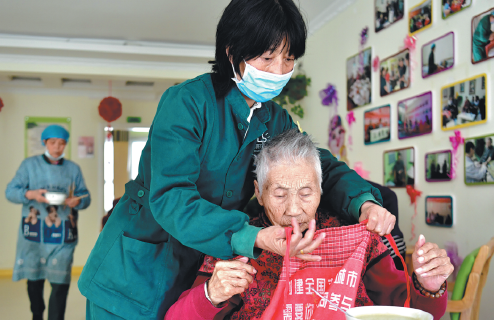
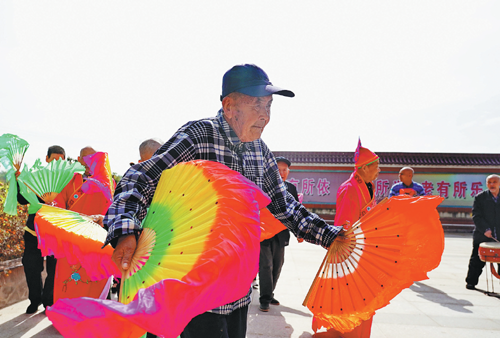
Last year marked the 20th anniversary of the UN listing China as an aging society, and people age 60 and older accounted for 10 percent of the population.
That makes China one of the few countries to fall foul of the aging process before becoming fully industrialized.
Given that the country was once dependent on labor-intensive industries for growth, the fading demographic dividend that quickly followed sent a warning to policymakers.
In the past two decades, the country has seen the number of over-65s almost double, reaching 166.5 million in 2018, according to the National Bureau of Statistics.
The elderly dependency ratio-the proportion of seniors supported by people of working age-was 16.8-to-100, compared with 10.2-to-100 in 1999, the NBS said.
Meanwhile, the pension funds-which used to be reserved for government employees-have expanded to cover nongovernmental workers, who used to be supported by their families during old age.
Those developments have led to concerns that providing cover for so many retirees could put the pension fund under strain.
The fear was reflected by a CASS report in April, which said pension funds could run out before workers born in the 1980s retire. One Sina Weibo user commented, "If the prediction is accurate, many people born after 1975 will also bear the brunt in about 15 years."
At a regular news conference in April, Nie Mingjun, a pension fund official with the Ministry of Human Resources and Social Security, said the report's authors had failed to fully understand how the fund works.
He attempted to assuage fears by saying that adjustments have been made to ensure that benefits do not run out, including cutting the contribution rate to entice a larger proportion of the working population to participate in the pension fund.
Road map
More assurances for worried pensioners came in November, when the central authorities unveiled a guideline on medium-and long-term planning for dealing with the graying society.
Considered a landmark document, it detailed for the first time how China plans to cope with mounting demographic stress in the coming decades.
It called for measures to improve the health of newborns, develop vocational education for seniors and expand the reservoir of social wealth, with the aim of bolstering the workforce and funding a resilient social security system in an aged society.
The ultimate goal is that by 2050, China will be able to support its senior citizens with sufficient incomes, human capital, innovative technologies, healthcare and other services.
Du Peng, vice-president of Renmin University of China and an expert on aging, said the plan would help to assuage people's concerns about the solvency of the pension fund system by detailing reforms in a wide range of areas, including education, employment and the law.
"It indicates that the authorities are doing things on that front," he said.





Copyright 1995 - . All rights reserved. The content (including but not limited to text, photo, multimedia information, etc) published in this site belongs to China Daily Information Co (CDIC). Without written authorization from CDIC, such content shall not be republished or used in any form. Note: Browsers with 1024*768 or higher resolution are suggested for this site.
License for publishing multimedia online 0108263 Registration Number: 130349