
Making museums a mirror of the times
Updated: 2008-05-15 07:27
When I meet with foreign museum officials and art collectors visiting Japan, they often ask where they can see contemporary Japanese art and whether there are permanent exhibits of such works. Unfortunately, I usually find myself saying, "We don't have such facilities yet".
As far as contemporary art is concerned, new artists are emerging who can demonstrate the richness and fun of art in the true sense. Japan also has a growing number of art museums. Despite these favorable conditions surrounding art, the relationship between artworks and the facilities that show them is not good. I attribute this situation to three failures concerning art museums and propose ways to overcome them.
The first is the way museums have been built-as an extension of "pork-barrel public works projects".
After using huge amounts of money to construct impressive buildings, local governments ran out of funds to collect artworks, to organize exhibitions, and to fund research and education projects. Although impressive "boxes" were completed, with no budget to spend on art, the walls remained bare.
It is like creating an image of the Buddha but leaving it without a soul or putting the cart before the horse.
It should be the other way around. Moreover, when the economy is down, art is often the first budget item to be cut. As a result, local governments cannot afford to fill the "boxes".
Since museums are not the only "boxes" that remain idle throughout Japan, it is not difficult to turn public facilities, such as community centers, into exhibition halls. In fact, recycling space is rather easy. That is all the more reason why a policy change regarding cultural projects is needed. More money needs to be spent on artworks, personnel and information gathering. I want local governments to take the initiative, and I urge the art community to support them.
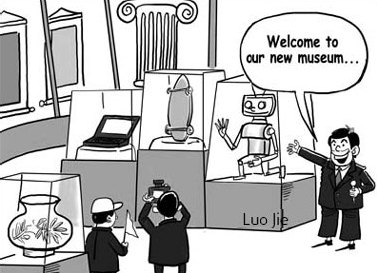
The second failure is the way museums are run. The opening of museums is, of course, always welcomed by artists. Citizens are also apt to visit new museums, furthering their appreciation of art. Major art shows at Japanese museums draw some of the largest crowds by international standards.
But drawing large crowds to exhibits currently on display is not the only purpose of museums. Nor are they just a place to accommodate past masterpieces.
Another important role of museums is to find, develop and collect artworks to fill future exhibits. This will, in turn, lead to an increase in museum visitors. I want museums to find value in the present. I urge them to serve as an educational forum to assess these values.
Of course, since public museums are funded by taxes, the exhibits they stage must be scrutinized to ensure taxpayers are getting their money's worth.
When museum curators try to dodge criticism and play it safe, they tend to show well-known pieces that have been displayed elsewhere, in other words, "established works of art." As a result, museums are inclined to show similar works or develop similar collections. It can be hard to tell one from another.
That is why I would like to see responsible curators develop the status and expertise to come up with original programs. If curators acquire the ability to discover young artists, their value and new themes, without being bound by conventional thinking, they can make a positive contribution to the future of art.
Museums should collect art as an educational resource. Such collections stimulate young artists and encourage them to produce new works. Such a cycle is needed.
The third failure is the inadequate archiving of domestic art and culture. There is an accepted recognition that paintings, sculptures and craftworks that are considered works of art are things for museums and other public facilities to collect and keep. But this thinking does not extend to the storage and collection of items related to fashion, design, architecture, movies, anime, manga and cityscapes, for example, and subcultures such as the manners and customs of ordinary people.
The reason seems to be that many of these are considered more commercial than cultural. But that is exactly why they need to be preserved because, otherwise, they would be lost. This is because there are virtually no public facilities eager to collect items that are not recognized as part of traditional culture.
What visitors from foreign countries want to see as soon as they arrive in Japan are things that originated in Japan and items that tell them what is happening here now.
Also, for the Japanese to understand more about their own culture, they need to show others what kind of country Japan is and what it has been doing. I would like to give shape to this idea through contemporary art.
THE ASAHI SHIMBUN
(China Daily 05/15/2008 page9)
|
||

|
|
|
|