OPINION> Commentary

|
OPINION> Commentary
|
|
No perfect knowledge out there in markets
By Robert Skidelsky (China Daily)
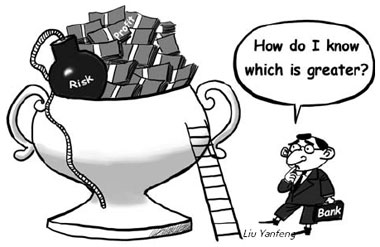
Updated: 2008-12-31 07:49 Economics, it seems, has very little to tell us about the current economic crisis. Indeed, no less a figure than former United States Federal Reserve Chairman Alan Greenspan recently confessed that his entire "intellectual edifice" had been "demolished" by recent events. Scratch around the rubble, however, and one can come up with useful fragments. One of them is called "asymmetric information". This means that some people know more about some things than other people. Not a very startling insight, perhaps. But apply it to buyers and sellers. Suppose the seller of a product knows more about its quality than the buyer does, or vice versa. Interesting things happen - so interesting that the inventors of this idea received Nobel Prizes in economics. In 1970, George Akerlof published a famous paper called "The Market for Lemons". His main example was a used-car market. The buyer doesn't know whether what is being offered is a good car or a "lemon". His best guess is that it is a car of average quality, for which he will pay only the average price. Because the owner won't be able to get a good price for a good car, he won't place good cars on the market. So the average quality of used cars offered for sale will go down. The lemons squeeze out the oranges. Another well-known example concerns insurance. This time it is the buyer who knows more than the seller, since the buyer knows his risk behavior, physical health, and so on. The insurer faces "adverse selection", because he cannot distinguish between good and bad risks. He therefore sets an average premium too high for healthy contributors and too low for unhealthy ones. This will drive out the healthy contributors, saddling the insurer with a portfolio of bad risks - the quick road to bankruptcy. There are various ways to "equalize" the information available - for example, warranties for used cars and medical certificates for insurance. But, since these devices cost money, asymmetric information always leads to worse results than would otherwise occur. All of this is relevant to financial markets because the "efficient market hypothesis" - the dominant paradigm in finance - assumes that everyone has perfect information, and therefore that all prices express the real value of goods for sale. But any finance professional will tell you that some know more than others, and they earn more, too. Information is king. But just as in used-car and insurance markets, asymmetric information in finance leads to trouble. A typical "adverse selection" problem arises when banks can't tell the difference between a good and bad investment - a situation analogous to the insurance market. The borrower knows the risk is high, but tells the lender it is low. The lender who can't judge the risk goes for investments that promise higher yields. This particular model predicts that banks will over-invest in high-risk, high-yield projects. In other words, asymmetric information lets toxic loans onto the credit market. Other models use principal/agent behavior to explain "momentum" (herd behavior) in financial markets.
Although designed before the current crisis, these models seem to fit current observations rather well: Banks lending to entrepreneurs who could never repay, and asset prices changing even if there were no changes in conditions. But a moment's thought will show why these models cannot explain today's general crisis. They rely on someone getting the better of someone else: the better informed gain - at least in the short-term - at the expense of the worse informed. In fact, they are in the nature of swindles. So these models cannot explain a situation in which everyone, or almost everyone, is losing - or, for that matter, winning - at the same time. The theorists of asymmetric information occupy a deviant branch of mainstream economics. They agree with the mainstream that there is perfect information available somewhere out there, including perfect knowledge about how the different parts of the economy fit together. They differ only in believing that not everyone possesses it. In Akerlof's example, the problem with selling a used car at an efficient price is not that no one knows how likely it is to break down, but rather that the seller knows perfectly well how likely it is to break down, and the buyer does not. And yet the true problem is that, in the real world, no one is perfectly informed. Those who have better information try to deceive those who have worse; but they are deceiving themselves that they know more than they do. If only one person were perfectly informed, there could never be a crisis - someone would always make the right calls at the right time. "The outstanding fact," John Maynard Keynes wrote in his General Theory of Employment, Interest, and Money, "is the extreme precariousness of the basis of knowledge on which our estimates of prospective yield have to be made." There is no perfect knowledge "out there" about the correct value of assets, because there is no way we can tell what the future will be like. Rather than dealing with asymmetric information, we are dealing with different degrees of no information. Herd behavior arises, Keynes thought, not from attempts to deceive, but from the fact that, in the face of the unknown, we seek safety in numbers. Economics, in other words, must start from the premise of imperfect rather than perfect knowledge. It may then get nearer to explaining why we are where we are today. The author is a member of the British House of Lords and professor emeritus of political economy at Warwick University Project Syndicate (China Daily 12/31/2008 page9) |