OPINION> OP-ED CONTRIBUTORS

|
OPINION> OP-ED CONTRIBUTORS
|
|
We're now well prepared to tackle the flu
By Nancy Davis Lewis (China Daily)
Updated: 2009-05-08 07:51 Last week, in response to the outbreak of a new strain of H1N1 Influenza A centered in Mexico, the World Health Organization (WHO) raised its pandemic threat level to Phase 5, which is characterized by verified human-to-human transmission of a virus in two or more countries, giving a strong signal that a pandemic, or widespread contagion, is imminent. Within the past several days, a case has been confirmed in Hong Kong (a Mexican visitor), and in South Korea. The first person-to-person transmission of the virus in Asia was confirmed (a nun who met another nun returning from Mexico at the airport in Seoul). Responding to the threat of pandemics, especially at the beginning of an outbreak, is tricky. The last time the US faced a threat of the H1N1 flu epidemic of this magnitude, for example, was in 1976, when 200 soldiers were infected at Fort Dix in New Jersey. The response to that incident was something of a public health fiasco: Fearing a pandemic like the deadly Spanish Flu of 1918, which killed tens of millions of people worldwide, health officials launched a widespread vaccination campaign. The campaign was suspended, however, after officials received numerous reports of people coming down with a serious disorder called Guillian-Barre Syndrome, which causes paralysis, after they had been vaccinated. In the end, the feared global H1N1 flu pandemic never materialized. The situation is much different today. Heightened awareness after 9/11 and the outbreaks of SARS and Avian Flu (H5N1) earlier this decade, along with important efforts of the global health community, have left us much more prepared for a global pandemic than we were even a decade ago. Asian nations in particular have had valuable experience in responding to both SARS and the threat of Avian Influenza, and they are now in a much stronger position to respond quickly to health challenges like the current flu outbreak, which now appears to be less severe than originally thought.
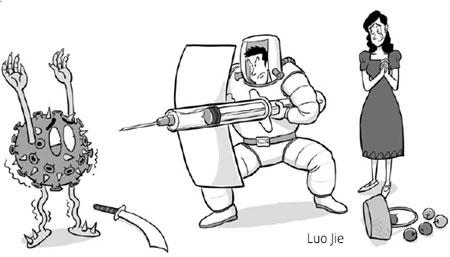 New WHO International Health Regulations, in preparation for at least a decade before the 2003 SARS pandemic, were published in 2005 and fully implemented in 2007. Key aspects of international regulations include greater transparency in disease reporting and in the definition of a public health emergency; establishment of national disease surveillance capability; recognized rights for international travelers; and recognition that infectious-disease threats demand international collaboration across multiple sectors beyond health. Large stockpiles of antiviral drugs now exist, and production is being stepped up. Vaccines can be developed more quickly. There is also increased understanding of past pandemics, and guidelines have been developed by WHO to contain outbreaks at their source (although the spread of H1N1 beyond Mexico City makes it apparent that containment is no longer a viable strategy for the current H5N1 Influenza A outbreak). We also have increasingly sophisticated techniques to understand the virus and to model the spread of influenza. Many countries have developed preparedness plans and conducted mock pandemic exercises. At the same time, the world's population is in some ways more vulnerable than it was during previous pandemics. We are highly interconnected, we move quickly, and most of us live in densely populated urban places. Over half of the global population now lives in cities (including Mexico City, which, with 20 million people, is the second-largest city in the world, after Tokyo). Two billion passengers worldwide take commercial flights annually. And while it's true that large stockpiles of antiviral drugs now exist, because the current H1N1 Influenza A outbreak was not contained at the source, in this instance the global need for the antivirals Tamiflu and Relenza may outstrip the supply. Another dimension that affects infectious disease perception and response is the incredibly rapid evolution in information and communication technologies. This has both pros and cons. On one hand, public health organizations can now communicate and respond much faster than before (the US Centers for Disease Control, for example, has an emergency broadcast system on Twitter), and it also facilitates disease mapping and contact tracing. At the other end of the spectrum, concerns have been raised about the potential for mobile communications and online social networks to speed the spread of incorrect information and mass panic. It's entirely possible that the current outbreak could just "fizzle out' as the 1976 outbreak did, but we need to be prepared for a serious situation. Michael Osterholm, Director of the University of Minnesota Center for Infectious Disease Research and Policy, has noted that during the first wave of the 1918 epidemic, many cases were mild. But by late July and early August, the virus was causing severe illness and often death. At an East-West Center conference in 2007, Osterholm said that because the world economy has developed a "just in time" approach to commodities, from medical supplies to food and energy, such resources are highly vulnerable to any disruption in the global transportation system. As a result, he said, the fallout from a flu pandemic could have an impact on human life and welfare around the globe that far outstrips the flu itself. Even if the current H1N1 Influenza A outbreak does not develop into a major world health crisis, massive disruptions in crucial supply lines whenever the next serious flu pandemic does hit are an eventuality that our leaders urgently need to be preparing for today. The author is Director of Research at the East-West Center and a specialist in the geography of infectious disease. She can be reached at LewisN@EastWestCenter.org (China Daily 05/08/2009 page9) |
