It was absurd for Tokyo's controversial governor Shintaro Ishihara to say that his city prefecture is negotiating with the "owner" of the Diaoyu Islands, with the aim of "buying them by the end of this year".
Ishihara said in a speech in Washington on Tuesday that he had begun negotiations to "purchase" three islets of the Diaoyu Islands that are "owned by a Japanese family".
This is ludicrous, as all the islands belong to China.
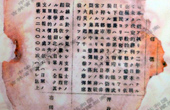
China has indisputable sovereignty over the Diaoyu Islands. The Diaoyu Islands were named first by China and have always been within the maritime defense boundary of China since the Ming Dynasty (1368-1644). The islands were illegally occupied by Japan after Sino-Japan War (1894-95).
After World War II, the Chinese government resumed its sovereignty over the Diaoyu Islands, but the islands were "entrusted" to the US in 1951, which in turn "returned" them to Japan in 1971. However, both these moves were illegal as they involved territory that wasn't theirs, and China never acknowledged these moves.
Japan has for a long time adopted the strategy of denying there is a dispute over the islands in order to exploit the islands' resources. The denial of a dispute over the Diaoyu Islands by Japan has prevented negotiations from progressing.
Though Diaoyu Islands are China's indisputable territory, China takes a pragmatic approach and hopes to solve the problem through talks with Japan.
However, this year some Japanese politicians repeated provocative words even though this year marks 40th anniversary of the normalization of China-Japan diplomatic ties.
In fact, what happened four decades ago exactly proved their denial wrong.
Four decades ago, when then Japanese prime minister Kakuei Tanaka met former Chinese premier Zhou Enlai on Sept 27, 1972, they agreed to avoid talking about the islands in order to pave the way for the normalization of bilateral ties that year. In 1978, then Chinese vice-premier Deng Xiaoping proposed to "shelve the dispute and explore jointly", which led to the signing of the China-Japan Treaty of Peace and Friendship in 1978. All these showed Japan agreed that the two countries had a dispute over the Diaoyu Islands.
In 2008, diplomats from the two countries did a good job in reaching an agreement in principle on the East China Sea issue. That marked a beginning of efforts to find a way to resolve the disputes between them. But disparities and contradictions still exist because no consensus has been reached in the dispute over the islands and the maritime boundary.
In fact, Japan even denies there is a dispute. Yet according to a judgment by the Permanent Court of International Justice, a dispute is "a disagreement on a point of law or fact, a conflict of legal views or of interests". This definition has since been applied and clarified on a number of occasions. So from the point of international law, there exists a dispute between China and Japan over the Diaoyu Islands.
Japan should accept that there is a dispute and withdraw its vigilance mechanism in and around the Diaoyu Islands, so that joint historical and legal research can be undertaken to solve the dispute.
The most important thing China can do at the moment is to break Japan's argument that it has no dispute with China over the Diaoyu Islands. Only then will it be able to promote joint exploitation in and around the Diaoyu Islands.
What's more, the Chinese government should show its sovereignty over the Diaoyu Islands by strengthening its management of the islands. It should announce standardized names for the islands, and make public their locations.
The mainland and Taiwan need to set up a joint authority to make surveys of the islands' resources and environment, and they need to establish a GPS station and observatories. They should also enhance cooperation to protect Chinese fishermen and their rights to fish around the islands.
These will pave way for China to restart the process of drawing a boundary in the East China Sea.
The author is a law scholar with the Shanghai Academy of Social Sciences and the Academy of Ocean of China.
(China Daily 04/20/2012 page9)


Copyright 1995 - . All rights reserved. The content (including but not limited to text, photo, multimedia information, etc) published in this site belongs to China Daily Information Co (CDIC). Without written authorization from CDIC, such content shall not be republished or used in any form. Note: Browsers with 1024*768 or higher resolution are suggested for this site.
License for publishing multimedia online 0108263 Registration Number: 130349