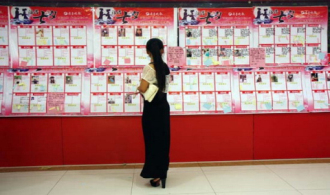
Recently I signed up with Wanfang, China's public "pay-to-read" portal for academic papers. The site is easy to navigate and sophisticated in function, with bibliographies, citation statistics and buttons you can click to share an article using social networking sites. Someone has invested some serious money and the site is poised to become a marketplace for research papers in China.
The "pay-to-read" website for research papers helps to illustrate how far China has progressed in protecting intellectual property over the past few decades.
China's progress in protecting intellectual property rights has been marked by several milestones, such as China's joining of the World Intellectual Property Organization and other world conventions, as well as the signing of bilateral agreements with individual countries on the matter. Most of these agreements were signed in the 1980s and 1990s when China was struggling to convince skeptical observers that efforts were under way to protect international intellectual property.
Yet during the same period, China strengthened IP protection domestically by developing new laws or amending old ones. It is an increasingly common understanding that we as a nation are doing ourselves a disservice by tolerating copyright infringements, as creativity and innovation are at risk if the works of scientists, artists and engineers are not protected. Awareness has grown so that today a university professor violating someone else's copyright can spill out of the ivory tower of academia to become national news.
In the late 1980s to early 1990s, translations of books like One Hundred Years of Solitude by the Colombian writer Gabriel Garca Mrquez were readily available on college campuses in China. These translations were tremendously popular. But the authors and their publishers never gained a cent from these translations as they were all unauthorized. Last year, Thinkingdom Media Group was said to have paid a million dollars for the right to translate and sell One Hundred Years of Solitude in China.
The novel 1Q84 was also said to have brought the Japanese author Haruki Murakami a million dollars in royalties in China. There might be some marketing gimmicks for deals like this, but still, a million dollars?
As a translator and writer, I have personally witnessed the change in IP protection that has taken place over the past two decades. However, through my work I have found that international authors, publishers and agents are still sometimes overtly cautious of publishing in China, because they have an impression of China's IP protection that is decades out of date. They risk missing out on the opportunities that the publishing industry in China has to offer now. I think in a few years, the prices will regress to more moderate levels with million-dollar deals the stuff of legends.
In other fields, I also see large improvements in IP protection. As a columnist and blogger, my works used to be republished on many sites without my permission. In the last two years, however, I see that more people ask for permission to use my content.
This change is happening thanks to stronger laws and regulations on the one hand, and publishers' heightened self-regulation on the other. Last year, for instance, Caixin News found that a number of sites took an article I wrote for their site without my permission. The editor, Tan Juan, took the trouble to contact the administrator of each and every one of these sites to ask them to remove the article. I was really impressed with such dedication and respect for my work.
Copyrights have much to do with protecting the creative professions' ability to make a profit. It is encouraging to find that there is so much interest in China now to protect IP. Countries, like people, go through developmental stages. There was a time when Charles Dickens complained of not making a penny for his works in the United States. Now the US has a library of laws to make sure people like Dickens get what they deserve.
China may still have some way to go in its development, but it is definitely profitable to establish a presence in China now.
The author is a US-based instructional designer, literary translator and columnist writing on cross-cultural issues.
(China Daily 09/28/2012 page8)

I’ve lived in China for quite a considerable time including my graduate school years, travelled and worked in a few cities and still choose my destination taking into consideration the density of smog or PM2.5 particulate matter in the region.

Copyright 1995 - . All rights reserved. The content (including but not limited to text, photo, multimedia information, etc) published in this site belongs to China Daily Information Co (CDIC). Without written authorization from CDIC, such content shall not be republished or used in any form. Note: Browsers with 1024*768 or higher resolution are suggested for this site.
License for publishing multimedia online 0108263 Registration Number: 130349