Comments()
  Print
Print  Mail
Mail  Large Medium Small
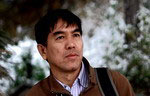
Ingo Nentwig, a German sinologist and ethnologist, wrote an article explaining why Japan's claim to the Diaoyu Islands is both illegal and worrying, which was published in the German daily newspaper Junge Welt. Excerpts below:
The mass media has recently found a new topic that allows them to engage in their predilection for China bashing. "Chinese nationalists relieve their anger with Japan by destroying Japanese institutions and hurting Japanese people in China," they claim. "China is provoking poor little Japan with the Diaoyu Islands issue," they cry. But what's the truth of the issue.
Japan occupied China's Diaoyu Islands during the Sino-Japanese War (1894-95) and brought Taiwan and the Penghu Islands under its colonial rule through the forced Treaty of Maguan in 1895.
Based on the Cairo Declaration of 1943 and the Potsdam Proclamation of 1945, which together defined the terms for Japan's surrender, all the territories that Japan had illegally occupied during the Sino-Japanese War should have been returned to China after its capitulation.
Although Taiwan and the Penghu Islands were later returned to China, the Diaoyu Islands, together with Okinawa, remained under the jurisdiction of the United States.
The US jurisdiction was based on the so-called Treaty of San Francisco in 1951, against which China lodged an immediate protest because the US and Japan had no right to deal with China's territory in China's absence.
Therefore, Washington's continuing control of the Diaoyu Islands under the framework of the US occupation was invalid according to international law.
When Washington "returned" Okinawa and the Diaoyu Islands to Japan in May 1972, China immediately protested against this illegal act .
To normalize Sino-Japanese ties in 1972, the then Chinese leader Deng Xiaoping suggested shelving the islands dispute, and the two sides pledged to do so until last year, when the islands were used as a card in Japan's domestic politics.
On Sept 11, the Japanese government announced the "purchase" of Diaoyu Island and its affiliated Nanxiao Island and Beixiao Island. For China, the "nationalization" of islands was a signal that Japan was no longer honoring the agreement to "shelve the dispute". So China was forced to take measures to protect its sovereignty.
The aggression of Japanese militarism during the World War II is still fresh in the memories of people in East and Southeast Asia.
These bad memories are reinforced by those Japanese politicians, even some leaders, who refuse to reflect on Japan's history and who publicly deny their country's war crimes.
Today we are witnessing a resurgence of Japan's aggressive arrogance, which deeply troubles all its neighbors.
For China, the Diaoyu Islands dispute is a bitter reminder of Japan's past aggression, says an article in the German daily newspaper Sueddeutsche Zeitung on Sept 19. Excerpts:
Japan argues that China claims the Diaoyu Islands because of the rich oil and gas reserves in the nearby waters. But for the Chinese, the islands are historically theirs and they remind them of a past full of humiliation.
On Sept 18, demonstrations were staged in China to mark the 81st anniversary of the "Sept 18 Incident".
On Sept 18, 1931, Japan performed a terrorist action in the city of Shenyang, which was used as an excuse for the Japanese army's invasion and occupation of China's Three Northeast Provinces.
In 1937, Japanese soldiers massacred civilians in many Chinese cities. During the war, Japan performed vivisection experiments on human beings and developed biological weapons, which it then used in China.
No one in Japan has ever taken responsibility for these acts, and Japan's view is there is no taint in its history.
By either denying the atrocities or explaining them away by claiming "it was just war", Japan has never seriously faced up to its wartime past.
Although the Japanese government has expressed their regret over incidents in the war several times, those apologies were soon glossed-over.
No Japanese politician has ever performed a great gesture of expiation such as that of then-German Chancellor Willy Brandt, who kneeled before the memorial to the Warsaw Ghetto in 1970.
Japan tries to deny the fact that the territorial disputes are a result of its aggression before and during World War II. It chooses to emphasize its own national interests rather than reflecting on its historical guilt.
(China Daily 09/28/2012 page9)
Copyright 1995 - 2010 . All rights reserved. The content (including but not limited to text, photo, multimedia information, etc) published in this site belongs to China Daily Information Co (CDIC). Without written authorization from CDIC, such content shall not be republished or used in any form. Note: Browsers with 1024*768 or higher resolution are suggested for this site.
License for publishing multimedia online 0108263 Registration Number: 20100000002731