V.
Protecting Women and Children's Right to Health
Currently, China has 860 million women and children, accounting for two thirds of the nation's total population. The Chinese government has established gender equality as a basic national policy, and has always attached great importance to the life and health of women and children. The state strives to improve the legal regime and related policies regarding women and children's healthcare, and has signed many international conventions committed to the protection of women and children. China has improved its health services for women and children, and implemented public health service programs for them, focusing on making these services more equitable and accessible so as to effectively protect women and children's right to health.
The legal regime and related policies regarding women and children's healthcare have been improved. In October 1994, the Standing Committee of the National People's Congress reviewed and passed the Law on Healthcare for Mothers and Infants, which signaled that China's management of women and children's affairs had entered a law-based stage. Since the 1990s, the Chinese government has enacted the Program for the Development of Chinese Women (1995-2000), Program for the Development of Chinese Women (2001-2010), Program for the Development of Chinese Women (2011-2020), Program for the Development of Chinese Children in the 1990s, Program for the Development of Chinese Children (2001-2010) and Program for the Development of Chinese Children (2011-2020), giving priority to women and children's health in national programs of economic and social development.
The health service system for women and children has been improved. China's healthcare system for women and children takes professional women and children's health organizations as its core and is based on community-level urban and rural healthcare services. With technical support from large and medium-sized general hospitals and relevant research and training institutions, the state provides all-round healthcare services for women and children. The country publishes annual reports on women and children's healthcare progress and has developed the world's largest monitoring network in this regard, keeping track of cases of birth defects, deaths of pregnant and lying-in women, deaths of children under five years of age, and complicated cases of pregnant and lying-in women, as well as children's nutrition and health. The information collected on women and children's health has provided a solid statistical basis for governments at all levels to formulate healthcare policies, especially policies on women and children's health.
The reproductive health services for women are provided. China has proactively promoted premarital and pre-pregnancy healthcare, and has been publicizing knowledge on prenatal and postnatal care, and reproductive health. Intensive healthcare services for pregnant and lying-in women are available, and a complete array of services for pregnant and lying-in women has been developed, covering prenatal examination, prenatal defect screening and diagnosis, screening and management of high-risk pregnant and lying-in women, hospitalized delivery, infant healthcare and postnatal home visits. In 2011, a total of 93.7%, 91.0% and 85.2% of pregnant and lying-in women, respectively, received prenatal examinations, postnatal home visits and other medical management services in China, 4.81%, 5.57% and 10.36% higher than the statistics of 2000. The percentage of high-risk pregnant and lying-in women included in the medical management program has reached 99.6%. China has carried out a program to "lower the maternal mortality rate and eliminate neonatal tetanus," which achieved the desired effects. The maternal mortality rate in 2011 was 26.1 per 100,000, dropping 72.4% and 50.8% as compared to 1990 and 2000, respectively. The state also provides medical services for the screening and treatment of gynecological diseases, adolescence health, and climacteric and old-age health, offering services that cover the whole life cycle of Chinese women.
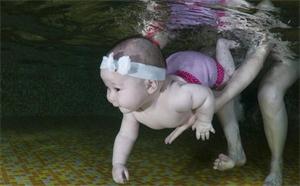
The healthcare services for children are provided. China has strengthened healthcare for newborns and regularized home-visiting service for newborns. The state offers healthcare services for infants, young children and pre-school children, and exercises health management of children under seven years of age and comprehensive management of children under three years of age. In 2011, some 84.6% of children under three years of age and 85.8% of children under seven years of age received comprehensive health management and medical management services. Chinese children are growing healthier and faster physically, and cases of malnutrition keep declining. The state strives to control birth defects and improve the quality of newborn babies, and has conducted disease screenings for newborns, early development programs for children under three years old, rehabilitation training for children with growth deviation, early-stage intervention for high-risk children, early-stage intervention in cases of food allergy, assistance with sleep problems, early-stage help in case of damage to children's health caused by environmental pollution, and adolescence healthcare, among others. Children whose parents seek employment away from home, children who live with their migrant-worker parents, disabled children and other special groups of children also receive attention and help from the state both physically and mentally.


In our daily life, more and more loanwords appear and change our habits in Chinese expression. Loanwords sound very similar with their original English words, and the process of learning them is full of fun to foreign students.

It has been a while since I've contributed to this Forum and I figured that since now I am officially on summer holiday and another school year is behind me I would share a post with you.
Copyright 1995 - . All rights reserved. The content (including but not limited to text, photo, multimedia information, etc) published in this site belongs to China Daily Information Co (CDIC). Without written authorization from CDIC, such content shall not be republished or used in any form. Note: Browsers with 1024*768 or higher resolution are suggested for this site.
License for publishing multimedia online 0108263 Registration Number: 130349