The Internet needs a safety net
China's first national standard related to personal information, issued by the Ministry of Industry and Information Technology recently, will take effect on Feb 1. Though the Information Security Technology - Guidelines for Personal Information Protection Within Public and Commercial Services Information Systems lacks the force of law, it represents a substantial step forward in the protection of personal information in China.
In the absence of a specific law on the subject, the guidelines are expected to boost self-regulation on the Internet because they outline concrete requirements and preconditions for collection, processing, transfer and deletion of personal information by companies. They also set principles for the use of such data and define how the rights of relevant people can be protected. Classifying personal information into "sensitive" and "general" categories, the guidelines stipulate that consent must be taken from people before collecting their "sensitive" information.
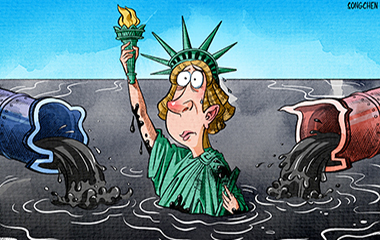
The Internet has made online communications, and gathering and spread of information convenient, but it has also caused a sharp increase in the number of junk advertisements, frauds, "identity" thefts and libels, highlighting the need to tighten the lax Internet industry to protect personal information.
There is nationwide consensus that sound regulation or legislation should be put in place to stop malpractices and crimes on the Internet, and to punish the offenders.
The newly issued Internet guidelines, along with the recent decision of China's top legislative body to make it mandatory for Internet users to use their real names to access online services and other similar regulation drafted in recent years, will form a framework to strengthen personal information protection.
It is believed that the top legislature's decision will clear the path for the government to revise the Administration of Internet Information Services Procedures, which has been used to monitor and supervise the Internet since being passed by China's cabinet in 2000. The procedures have also made it compulsory for Internet and online service providers - including those offering e-mail, news and entertainment services - to compel their users to register with their real names.
A spokesman has said that the top legislature's move is aimed at better protecting online users' privacy and providing a legal basis for safeguarding online information to ensure a healthy and orderly development of the Internet.
Although the guidelines on the Internet and use of personal information do promote information safety and protect privacy, they have raised concerns of micro-bloggers, or weibo users, at a time when weibo has come to be seen as a grassroots platform to fight corruption and expose corrupt officials. People are worried that the measures could hamper the fight against corruption on the Internet and deter online government critics, and thus weaken the supervisory role of netizens.
Some people are also worried that a stricter personal information management regulation will stifle the fledgling "online anti-corruption campaign", which was launched across China after the new Party leadership took office in November.
In recent months, a number of officials have been removed from their posts or investigated by judicial authorities after netizens exposed their corrupt practices such as splurging on their mistresses and/or possessing assets disproportionate to their legal incomes.
But the punishment meted out to two netizens who uploaded information on the real estate holdings of two officials from Guangzhou, Guangdong province, sparked a heated public debate on how whistleblowers should act and be protected, and fueled concerns that the fear of retaliation would dampen netizens' enthusiasm to participate in the online anti-corruption campaign.
The noticeable achievements made in the fight against corruption in recent months because of netizens should be an encouraging enough sign to carry forward the campaign, and measures aimed at protecting personal information should not thwart its progress. But online reporting on corruption cases have to have a legal and factual basis.
Despite proving effective in the anti-corruption fight, the online campaign has some inherent limitations and could harm innocent people if it is not used properly, as seen in the Guangzhou case in which the two officials had used income from legal sources to buy the properties.
Protecting personal information has become a big challenge because of the booming development of new information technology in recent years, and a sound and secure cyberspace is needed to stop the malpractices. It has become necessary to put in place specific regulation or legislation to guide people in the safe use of the Internet as a platform for communications and exposing corruption cases.
There is more than ample justification in regulating and setting moderate curbs on online information transmission, but such efforts should not be made at the cost of denying people the legitimate right to free expression on the Internet.
The author is a writer with China Daily. E-mail: wuyixue@chinadaily.com.cn
(China Daily 01/31/2013 page9)