Flaws of private education institutions
Winter vacation has started, but perhaps it has become another school season for many children in China, especially in cities.
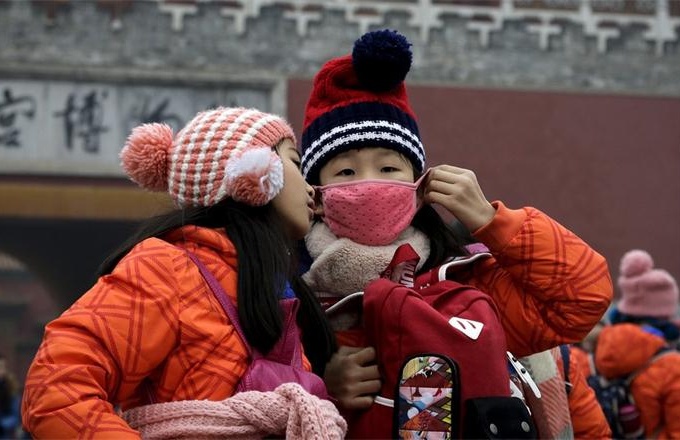
Unlike typical US or European schoolchildren, their counterparts in urban China are facing increasing pressure in an extremely competitive educational environment.
China's population, growth and, most importantly, urban population density continue to exert massive pressure on parents and children to succeed. This is the biggest reason for the ever-increasing demand for extra classes for Chinese children and adolescents. Additional education and training are often considered key to a Chinese child's economic future, and the demand goes further than English language classes, to music lessons (typically piano or violin) and sports coaching.
Though the additional-education and training market for adults focuses on English language and business classes, it is also growing rapidly. Many white-collar workers in cities are desperately seeking to improve their business career prospects by enrolling in English language, particularly business English, classes after work and over the weekends.
Chinese parents are extremely keen to do all they can to help create more opportunities for their children. They take pains to provide them with the best and most comprehensive education and training possible. Also, Chinese parents, and young adults, are all too aware of the variable quality on offer in Chinese schools, which is another reason they look for additional classes after school/work.
In Europe and the United States, too, many parents send their children to extra classes (in music, for example) either over the weekend or in the evenings. But they do not have the same level of expectation from their offspring as their Chinese counterparts.
Parents in the United Kingdom, for example, see extra classes more as a hobby that would help their children relax, recharge their batteries and help develop their social skills. But more often than not they discontinue the classes immediately if their offspring appear unhappy or unenthusiastic.
This is the key difference between most European and American parents and the majority of their Chinese counterparts in urban areas. Chinese parents do want the very best for their children and make monumental sacrifices for it, but such is the intensity of competition across urban China and the desire to "gain face" that quantity (of classes) often supersedes quality.
Sadly, the quality of the mushrooming private education and training establishments vary substantially with many poorly resourced and badly managed training providers rushing in to exploit the lucrative market opportunity across Chinese cities.
Urgent government regulation, monitoring and inspection are required to clean up the industry, which is seen as over-charging and under-delivering. The government should also start a major training initiative to improve the entire education sector. For example, private English language institutes often employ "trainers" with no teaching or training qualification or experience. They are hired because English is their native language. In such circumstances, the first step toward establishing better education standards is to make certain teaching and training qualifications mandatory for teachers and trainers.
As a private business and management trainer, I have seen many foreign companies disregard the needs of Chinese customers and pursue low-cost, low-quality strategies because their objective is short-term profit. Only the government, or branches of the government, can enforce better standards and ensure that the Chinese people get value-for-money training programs they so richly deserve.
The quality of teaching and training will improve if more Chinese training providers emerge as genuine competitors to the existing dominant foreign companies operating in China. Since most Chinese people assume that a foreign training company, especially a well-known name, provides far better training and service, they flock to them and unwittingly help raise their charges.
The appetite of Chinese parents and young adults for education and training represents an extremely positive aspect of Chinese culture, which could be traced to Confucius. However, Confucius, if he were alive today, would have whispered sage-like into the ears of most Chinese parents, "less is more". He would also have enforced far higher standards across the Chinese education and training sector.
The author is a visiting professor at the University of International Business and Economics in Beijing and a researcher at Nottingham University's School of Contemporary Chinese Studies.
(China Daily 02/01/2013 page9)