Tough measures needed to deal with the smog
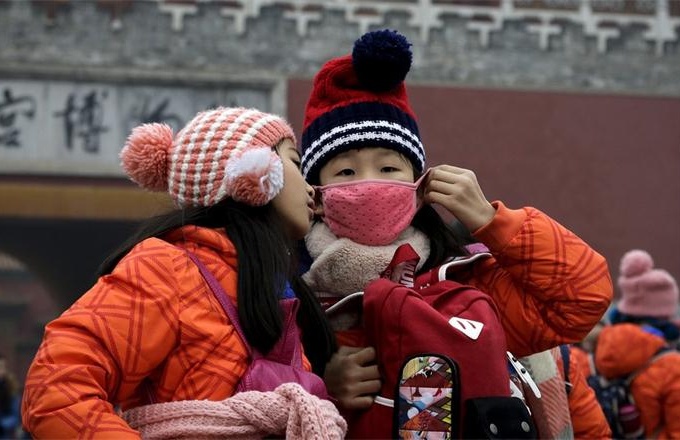
 The smog over many Chinese cities has attracted the attention of many people in the world for the last few days. This is not anything new. London suffered the same problems in the 1950s. So did the cities in Europe and America in the 1960s. The deteriorating air qualities and other environmental degradations in the west led to the world wide environmental movement today.
In 1994, I was attending graduate school in Boston. A delegation of Henan Provincial Government invited me and few other Chinese students to a meeting. At the meeting, the head of the delegation asked us to share with him and other people what lessons China could learn from the West in its development. Encouraged by his willingness to learn, I said that China should pay attention to the environmental cost of development. China should not reap the same mistakes the western nations made which developed at the expense of the environment. The head of the delegation was upset with my words right away. He said that was the rich man mentality. He said that only the rich could afford to care about the environment. China needed to get rich first before it could care about the environment.
I disagreed with his attitude, but I did not argue with him. Later, I wrote an article entitled “The Auto Industrial and China’s National Conditions” Which I argued in that article that China’s national conditions would not support an uncontrolled auto industry. China has a relatively a small share of arable land in proportion to its huge population which is also very concentrated. A good developmental strategy would be to develop good public transportation, and restrict the private car ownership. I argued that auto industries would have taken over too much scarce land because China would have to build more roads, more parking lots and more gas stations and so on. Traffic jams and car exhaustion would create tremendous air pollution for China’s big cities. When I returned to China in the summer of 1994, I talked with some Chinese leaders about the subject of cars and pollution.
They invited a group of government officials, college teachers and students to debate with me on this topic. After they heard me talk on this topic, they asked me if I had a car in the US I told that I did have a car in the US Most American cities did not have good public transportation, and American population was more scattered. I lived in Boston at the time. I told them that I needed a car to go to class, to go to work, and buy groceries from the supermarket. It would be impossible to do anything without a car. But in China, one is able to do all these things without a car.
I remember that a person at the debate asked me if I drove my family to the suburb during the weekends to see the beautiful natural sceneries as well. I told him that I sometimes did. He then asked me that the Chinese wanted to have that privilege of driving to the suburb at the weekend as well. Why, he asked, a person like me who enjoyed the advantages of cars, have the guts to tell the Chinese people to forsake the benefit of cars? I told him that if Chinese people thought that they wanted to have everything Americans have regardless of China’s natural conditions.
Then I do not have anything to say. I was not trying to deprive the Chinese people the privileges of owning and driving cars. I was worrying the potential harms cars could bring about to China. I knew I lost the debate. But I was not convinced. Later, I published my article on an electronic magazine called China and the World in 1997, just for the record.