Green around the renewable gills
China recently announced that it would join the International Renewable Energy Agency. China is a global leader in terms of installed capacity and investment in clean energy, though the acknowledgement of its status may come as a surprise to some, given the recent headlines on the country's air pollution. But in 2012, China invested $68 billion to develop renewable energies, 55 percent more than US investments, making it the largest clean energy investor in the world.
What is important for energy sustainability, however, is not only the scale of clean energy products and the amount of investment, but also the environmentally friendly approach through which the sector is built and operated. Although clean energy is certainly not to blame for a large part of the pollution problems, China's efforts to rapidly develop renewable energy have generated some environmental problems.
The lack of effective environmental policymaking and regulation has led to unsustainable practices in China's renewable energy sector that have cast a shadow on the country's "top spot" numbers.
While the production of renewable energy technologies constitutes a critical building block of a sustainable future, if it is not managed correctly, it can have some negative environmental impacts and sometimes can even create hazardous pollution.
Hydropower is China's largest renewable energy resource. Without incorporating sufficient ecological consideration into basin-level planning and engineering design (like fish ladders), however, dams built for hydropower projects can disrupt the natural flow of water that sustains balanced aquatic ecosystems. The country's heavily-dammed river system has led to a decrease or even extinction of some fish and cetacean species.
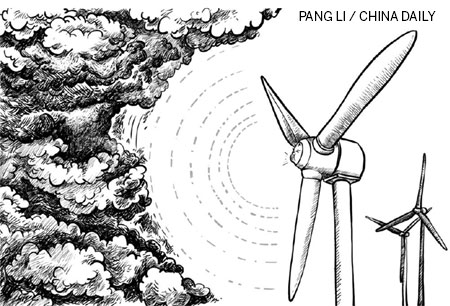
If wind turbines are not installed at proper sites, their blades can accidentally injure birds and bats. Wind farms, therefore, should be set up far away from the migration paths of birds and areas with high population density. But there are no traceable records to show that China has been conducting such impact assessments before planning new wind farms.
Similar cases related to pollution in China's clean manufacturing and renewable energy sector are still being reported, revealing loopholes in regulation, especially in enforcement.