An economic agenda for Italy
At the end of this month, Italian voters will choose their next government, from which they expect jobs and a more level economic playing field - and from which Italy's European partners expect structural reforms and fiscal probity. What should the new government's economic-policy agenda be?
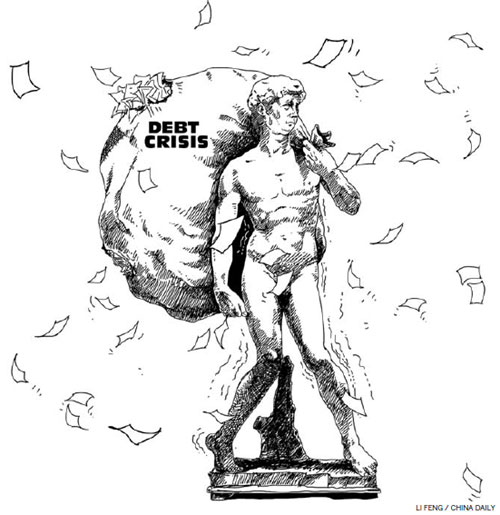
To reduce public debt, which stands above 120 percent of GDP, while minimizing painful adjustments, Italy needs economic growth - something that has eluded policymakers in recent years. Indeed, Italy's average annual GDP growth rate since joining Europe's economic and monetary union in 1999 has been an anemic 0.5 percent, well below the eurozone average of nearly 1.5 percent. In the four years since the global financial crisis struck, the growth rate fell to minus 1.2 percent, compared to the eurozone average of minus 0.2 percent, and it is expected to remain negative this year.
The new government's biggest challenge will be to implement reforms that enable Italy's economic performance to catch up to that of its neighbors after years of bad policies and neglect. This requires increased investment in innovation and human capital.
From 1992 to 2011, labor productivity grew at an average annual rate of 0.9 percent, the lowest in the Organization for Economic Cooperation and Development. Since 2001, unit labor costs have been growing faster than real GDP and employment, undermining the economy's competitiveness with developing countries. In the last decade, Italy's share of global exports dropped from 3.9 percent to 2.9 percent.
Persistently weak labor-productivity growth has created a situation in which unit labor costs do not fall, even if real wages remain stagnant or decline. Indeed, despite a 1.3 percent drop in real wages in 2011, unit labor costs remained unchanged.
Italy's new leaders must address this situation by decoupling labor's contribution to productivity growth from that of capital and total factor productivity. According to the OECD, lower regulatory costs and more efficient public administration - building upon measures introduced by the previous government, led by Mario Monti - could add 0.3-0.4 percent to average annual GDP growth by 2020.
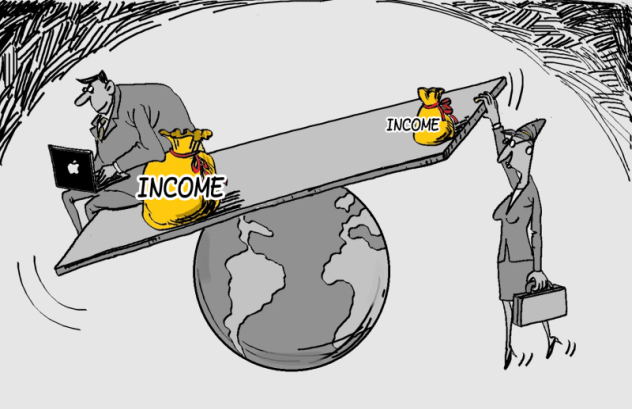
Likewise, labor-market reform, improved education, and enhanced human capital could contribute an additional 4 percent to GDP growth in the next decade. Moreover, Italian policymakers should strive to boost the female labor-force participation rate , which, at 49 percent, is one of the lowest in the OECD. Doing so would raise per capita income by 1 percent annually through 2030.
At the same time, fiscal adjustment remains essential to Italy's short- and long-term stability. According to the International Monetary Fund, the budget deficit is declining, and the primary surplus (net revenues minus interest payments) is growing. Italy's new leadership must sustain this progress.