Building resilience to disasters
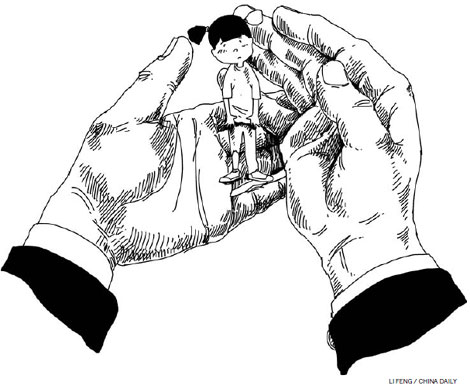
Building resilience to multiple shocks is one of the most urgent development challenges facing Asia and the Pacific. Economic crises and natural disasters are more frequent, and respect no boundaries. They devastate wide areas, have an impact on all sectors of economic activity, and endanger every community. They inflict deep and lasting damage on the poor, who are least capable of withstanding their onslaught.
Recognizing this as the increasingly serious "new normal" for the Asia-Pacific region, a record number of heads of state and government, senior ministers and regional policymakers will meet in Bangkok next week for the annual session of the United Nations Economic and Social Commission for Asia and the Pacific.
One of their main topics of discussion will be to agree on actions to build the resilience of countries and people across the region, enabling them to better withstand, adapt to and recover from multiple shocks. As many economies have plunged further into turmoil, the impact on the people of the Asia-Pacific region has been in the form of rising food and fuel prices.
While increased connectivity has brought unprecedented opportunities, it has also amplified the reach and impact of these shocks. A single incident, which might once have been localized and managed in isolation, will now have interrelated regional and global consequences. Floods in Thailand, for example, trigger disruptions in the supply chain around the world.
For policymakers, this is often uncharted territory. Building resilience to overlapping shocks calls for a holistic approach, which tackles interlinked vulnerabilities rather than each one in turn. This requires new, more sophisticated tools for decision-making that can change attitudes toward risks and uncertainty, well before shocks hit.
In other words, building resilience calls for bolder actions, through partnerships between governments, the private sector and local communities, as well as collective actions at the regional and international levels.
Governments must invest in both prevention and preparedness, which is more effective, and less costly than recovery efforts. Prevention can be as straightforward as updating building codes and retrofitting unsafe buildings, or as far-reaching as coordinating regional monetary policy, devising a regional framework for common norms on social protection and strengthening the management of cross-border river basin ecosystems.
Governments must also support the poor and disadvantaged, who have fewer resources or buffers against multiple shocks. Although most economies of the region appear to have recovered relatively quickly from recent shocks, this superficial evidence of economic resilience masks deep underlying social vulnerabilities.
While financial institutions may be "too big to fail", the poor must not be seen as being too small to matter. Each shock erodes the capacity to cope with the next disaster or crisis, often pushing poor families into vicious circles of chronic hardship, sometimes for generations. This is why better social safety nets need to be created or strengthened, with the response flexibility to cushion the blows of multiple shocks.
Local communities and their local governments need to be empowered, not only because they are at the forefront of recovery efforts, but also because they can change administrative cultures and build political will for greater investment in disaster risk management. Above all, during such shocks, public spending that benefits the poor must be protected, by law if necessary.
Governments cannot afford to simply apply the same macroeconomic stopgap measures for stability that they have in the past. The new normal calls for new solutions which factor in the impact of natural disasters, balance short-term macroeconomic stability with long-term development and build capacity across all sectors and at all levels of government.
Likewise, a new economic governance pact between government and business is needed, in which businesses become more accountable by raising their risk-awareness. When shocks envelop economies, the ensuing loss of jobs often results in legacies that affect human development long after GDP growth resumes. Risk-aware businesses must therefore be part of the solution for building resilience in Asia and the Pacific.
Finally, governments must protect critical sectors. Improving financial market supervision and regulation, for example, will reduce the potential for future crises. Protection of critical infrastructure - schools and hospitals, energy and communication systems - is particularly important. For a region at such high risk, additional investment in resilience is not a choice, but an ethical obligation.
By working together, governments in the Asia-Pacific region can produce solutions that are greater than the sum of individual country's actions. This requires a new regional framework for building resilience, which will rebalance economic, social and environmental systems, with priority given to the role of government working in partnership with its stakeholders as the planner of long-term development.
Threats can come any time, from anywhere, without warning, and with increasing frequency. Countries that build systems of early warning and early action are investing in the security of our region's most valuable resource - its people and their assets.
The author is executive secretary of the United Nations Economic and Social Commission for Asia and the Pacific.
(China Daily 04/26/2013 page9)