The problem with Chinese-style tours
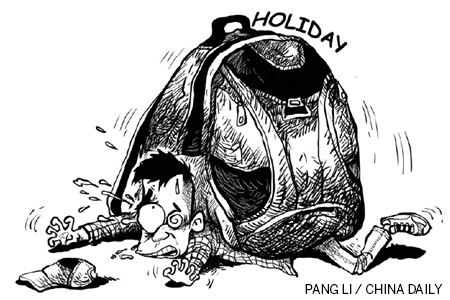
Traveling. That's what many Chinese would say when asked how they would spend their holidays. But for most people in a nine-to-five job traveling during holidays doesn't come easy. Their weekdays before a holiday are extra busy because they have to plan their travels as well as prepare for post-holiday work. For example, before the Qingming (Tomb Sweeping) Festival and Labor Day holidays this year, most people had to work for seven days in a row because of the arrangement made by the authorities.
During holidays, Chinese tend to travel in groups, for it is both convenient and easy on the pocket. So a typical Chinese-style tour is usually crowded and noisy, with people rushing from one spot to another and racing against time to click photographs to prove that they had been there.
Post-holiday life is no better, for most people feel tired and disoriented, which many call the "post-holiday syndrome". Interestingly, although the strongest feeling for many people about holidays is not one of relaxation but tiredness, people are still ready to wear themselves out again before and during the next holiday.
But it is not difficult to guess why an increasing number of Chinese, especially the middle class, love traveling during the national holidays. Thanks to rising incomes, people today have more money to spare and, more importantly, to spend on leisure. And traveling for many is the best leisure, for it includes visiting new places, sightseeing, eating, shopping and above all not having to worry about work. Since it is difficult to get long leaves, national holidays and even the shorter ones, offer a valuable opportunity to the middle class to travel with their family and friends. No wonder, many people think a holiday without traveling is somewhat "wasted".
With an eye on the economy, the government has helped shape people's desire to travel during holidays. Tourism helps increase consumption and domestic demand, which is conducive to developing the service industry and upgrading the economic structure.
But tourism is not only different from other consumption activities, but also expensive and time-consuming. So the central government created three seven-day "Golden Week" holidays for Spring Festival, Labor Day and the National Day, which resulted in an economic miracle of sorts. According to official figures, during the first National Day Golden Week holiday in 1999, the number of tourists was about 28 million and income from tourism amounted to 14.1 billion yuan ($2.28 billion).
In 2007, the government adjusted the national holidays. It shortened the Labor Day holiday to three days (including a weekend) and created three short national holidays: Qingming Festival, Dragon Boat Festival and Mid-Autumn Festival by adding just one day to the overall number of national holidays. More national holidays mean more opportunities, especially for the tourism industry. For instance, during the 2012 Dragon Boat Festival, Shandong province alone received 14.4 million tourists and its income from tourism increased to 11.4 billion yuan. In August 2012, the government decided to waive expressway tolls for small vehicles during four national holidays, which came as another shot in the arm for the tourism industry.
People's rising demand for entertainment, combined with the government's efforts to stimulate the economy, has created a prosperous holiday market, which seems a win-win situation for tourists and the tourism industry. But it's more like a victory of consumerism rather than consumers. Although traveling is a wonderful way of soothing our tired eyes and refreshing out spirits, more and more people are getting tired of fast-paced and "low-grade" tours. The quality of service at many tourist spots has been deteriorating with the increase in the number of people visiting them. As a result, the charm of going on tours has been diminishing.
We should not forget that leisure is still a luxury for most Chinese both in terms of money and time. Consumption seems to dominate the tourism market, but it ought not be so because people today need to spend their holidays in more meaningful ways instead of rushing from one place to another to get the maximum out of their limited time and money. Hopefully, they will develop better interests and make the most of their leisure time.
The author is a writer with China Daily.
Email: wangyiqing@chinadaily.com.cn.
(China Daily 05/02/2013 page9)