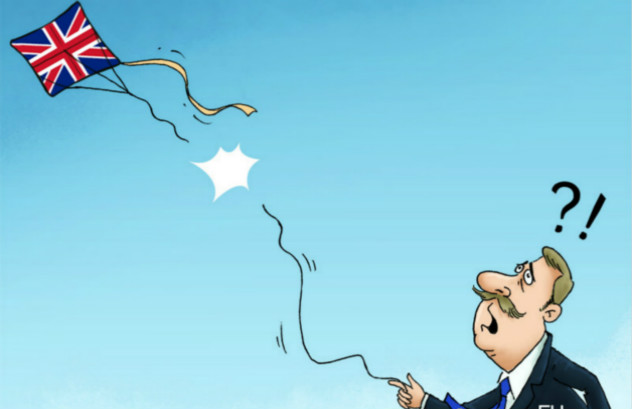
End of multilateralism and WTO?
For several years, global trade matters have been settled in line with the views of advanced economies, as they were the major players in world trade. However, the growth of emerging economies, particularly China, as major trade players has changed that. World trade decisions can no longer be taken without consulting China and other major emerging economies. Despite differences on various market access issues, the latter have the common grievance of not having been given enough importance in global trade talks and decisions in the past. This political angst makes them intrinsically defensive. While economic rationality might urge emerging economies to adopt constructive postures in world trade talks, mutual differences on specific market access issues prohibits them from fine-tuning a commonly acceptable alternative agenda. As a result they mostly end up blocking talks without proposing feasible alternatives.
The differences among emerging economies are less on non-traditional trade issues like services, intellectual property, labor and environment standards. But the divergence between them and the advanced economies is much more on these matters. Multilateral discussions covering both traditional market issues and non-traditional subjects are unlikely to yield common solutions even if emerging economies are not politically defensive. The enormous gap between them and the advanced economies on non-traditional trade issues precludes possibilities of even remote convergence.
Multilateral efforts to reorient global trade are unlikely to be successful given the political angst of emerging economies and the lack of convergence on non-traditional trade issues. Future world trade is likely to be split into distinct regional blocs. Some of these like the Trans-Pacific Partnership will try to pull in the more powerful economies in world trade for increasing the size of intra-bloc trade and its strategic economic influence. The success of such efforts will depend on the balance between advanced and emerging economies in the framework. The US has tried to keep internal political opposition to a minimum within the TPP by confining it to "like-minded" partners. But even then, the considerable economic distance between the US and an emerging economy like Vietnam is proving to be difficult to bridge in the TPP negotiations.
Lamy's tenure ends with not only no hope of resurrecting the Doha Development Agenda. It also ends on the worst possible note for multilateralism and the WTO.
The author is head of partnerships and programme and visiting senior research fellow at the Institute of South Asian Studies in the National University of Singapore.
(China Daily 05/10/2013 page9)