Canberra keeps sending over positive signals
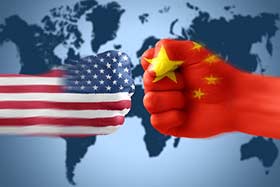
At a time when politicians in Washington seem to have developed a penchant for pointing their fingers at China over cybersecurity, it is interesting to observe that their counterparts in Canberra have taken quite a different approach.
Earlier last month, the Australian Broadcasting Corporation television program Four Corners reported that Chinese hackers had gained access to Australian top secrets. However addressing the Australian parliament on May 27, Prime Minister Julia Gillard refuted allegations that Chinese hackers were committing cyberattacks, calling such accusations "inaccurate".
In the same vein, Australian Foreign Minister Bob Carr said that the allegations had "absolutely no implications" for the strategic partnership with China that was announced in April.
Apparently, both politicians have no intention of allowing the current desirable momentum in ties to be overshadowed by the unwarranted accusations. Compared with the faultfinding strategy of the United States, the Australian approach is far more sensible.
In fact, Canberra has been sending positive signals in recent months, which have been a clear indication that it is now more than happy to interact harmoniously with Beijing.
In April, Gillard conducted a fruitful visit to Beijing after attending the annual meeting of the Boao Forum for Asia. She was among the first group of world leaders to hold face-to-face talks with President Xi Jinping after he took office in March.
The timely high-level contacts and the multiple bilateral agreements signed during Gillard's China visit guaranteed that expectations for warmer and closer ties between Beijing and Canberra would be well anchored.
Meanwhile, Canberra has been reshaping its views toward Beijing. Marking a visible departure from its past outdated and somewhat unfriendly rhetoric toward the Asian giant, the biggest country in the southern hemisphere now has a more positive attitude when answering such questions as how it sees China's rise in the region and how it will engage with Beijing in the future.
These positive changes have been clearly embodied in two important documents released by the Australian government recently: In December, in a white paper that analyzed Asia's development and Australia's interaction with the continent, especially with its big players - China and India, Canberra pledged to put Sino-Australian ties in an important position when reaching out to Asia in an unprecedented manner. The white paper, titled Australia in the Asian Century, was widely perceived in China as a sensible and more mature approach toward Sino-Australian ties.
In May, in contrast to the hostile tone toward China in its defense white paper released in 2009 which saw China's rise as a threat to Australia, Canberra's defense document this year recognizes China as a partner rather than an adversary, noting China's "peaceful rise" and wishing for a continuous build-up in mutual trust and mutually beneficial cooperation between the two nations.
Hence, it is reasonable to conclude that Canberra now views China with more goodwill and from a more balanced perspective. This will be conducive to the two countries recalibrating their relationship and anchoring it in more stable and healthy terrain. The sheer scale of the two countries' multi-faceted bilateral cooperation means that keeping the current good momentum in bilateral ties going and tapping the potential in bilateral cooperation will not only serve the interests of both sides, it will contribute to the development of the region as a whole as well.
Every Australian knows how economically important it is to have the relationship their country enjoys with China today. For bilateral ties to keep growing, Canberra needs to continue building political mutual trust with Beijing and properly handling their differences. As the country is due to hold a presidential election in September, whoever and whichever party wins, consistency in the country's China policy should be maintained as any retrogression, whether at the theoretical or practical level, would be costly.
The author is a senior writer with China Daily. E-mail: wanghui@chinadaily.com.cn
(China Daily 06/15/2013 page5)