ITA expansion requires a compromise
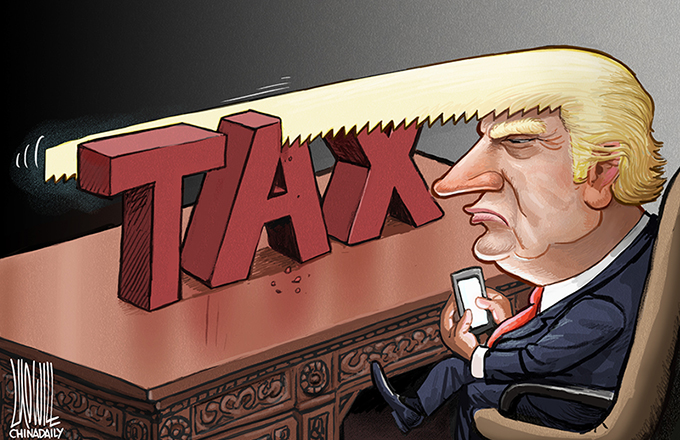
The negotiations on amending the Information Technology Agreement within the World Trade Organization were suspended last week in Geneva. The meeting failed to bridge the gap between members on expanding the product coverage and deeper tariff cuts.
However, just because China was not capable of accepting the excessively ambitious demands from a few major developed members - since the zero tariff requests on many products are extremely sensitive to its economic and social development - it was criticized by certain members at the meeting and by the relevant industrial circles of the most advanced developed countries through the media. This is unfair and unreasonable.
First, China accepted the exiting ITA in 2001 as one of the conditions for its joining the WTO, as demanded by the United States and other major developed members, although China had never been involved in the negotiations for the ITA, which concluded in 1996 and fully recognized the serious difficulties it would confront in the implementation of the agreement after its accession. Acceptance of the agreement at that time did not mean that China must naturally and unconditionally accept any more demands from any member should the agreement be amended.
Second, as a responsible country in the world, while doing its utmost to participate in international cooperation in each and every field and taking into account the concerns of other members of the international community, particularly other developing countries, China must consider its own capability to meet any commitments it might make, as well as their implications to China's own political, economic and social stability and progress. It is inappropriate for China to commit to anything beyond its capability to implement, and it is inappropriate for any other country to try and impose on China anything beyond its capabilities.
Moreover, regardless of China's great economic and trade achievements over the past 30 years, China is still a developing country with the largest population in the world, of which more than 300 million people are still living under the poverty line according to World Bank statistics. China's scientific and technological levels in many sectors of its national economy, including industrial production related to information technology, are still low and lag far behind many advanced countries. Many products in these sectors, being already very open compared with the country's development status, are still very sensitive and therefore need a certain degree of protection for further development and for the creation of jobs.
In addition to the above, one misinterpretation widely and repeatedly spread by some developed countries and their industries, whether through ignorance or intentional dealings, needs to be corrected. This is the relationship between the size of China's exports of industrial products, including those related to information technology, and the benefits they bring. In this respect, reports on global value chains published by the WTO and the Organization for Economic Cooperation and Development and research institutions, even those in some developed countries, have convincingly proved that while being the largest exporter of goods in nominal terms, China is far from being the biggest beneficiary in real terms. It is therefore not rational for the major developed countries to try and force China to accept whatever they want to impose on it by using its trade size as an argument.
China should not be blamed for the setback in the recent negotiations on the expansion of the ITA. Compromise among members, to accommodate the concerns of all parties, is the only way to achieve a breakthrough in the negotiations and get a deal done.
The author is vice-chairman of the China Society for WTO Studies and senior adviser to the Shanghai WTO Affairs Consultation Center.
(China Daily 07/24/2013 page8)