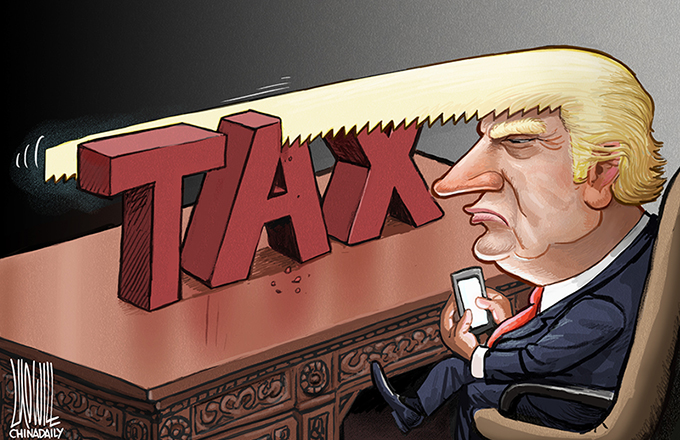
Sound fiscal revenue
China's fiscal revenue growth continued to rebound in July, a trend that will hopefully be maintained as the economic recovery becomes more entrenched.
The country's year-on-year fiscal revenue growth wobbled around 6 percent in the first five months of the year due to the economic slowdown. But in June, it rebound by 12.1 percent year-on-year, a trend that continued in July with a rise of 11 percent year-on-year.
The July figure shows that as the economy warms up, the pick-up could be sustained.
It also alleviates concerns that the country's policymakers might miss their yearly target of 8 percent fiscal revenue growth.
Such concerns were understandable given that the slowdown in the Chinese economy in the first half of this year and the tax reforms aimed at helping small enterprises survive the harsh economic climate have reduced tax revenues.
Since the early 1990s, China's fiscal revenue growth has seldom fallen below 10 percent, even when the economy was being battered by the fallout from the global financial crisis. For example, in 2009, when the economy was hardest hit, its fiscal revenue still increased by 11.7 percent.
The growth in fiscal revenue has been much higher than the country's GDP growth in most years. In 2007, it was as high as 32.4 percent, compared with a GDP growth of 13 percent.
But such high growth rates are exceptional and a difference that wide is anything but healthy, as it crowds out the revenues of enterprises and individuals and therefore affects consumption, ultimately jeopardizing the vitality and growth potential of the economy.
It is generally agreed that the growth rate of fiscal revenue should be in line with the growth rate of GDP.
China should shake off the traditional philosophy of the more fiscal revenue the better. It should become more tolerant of lower fiscal revenue growth and cut unnecessary administrative spending to save public funds.
Meanwhile, the government should reorganize taxes. For example, it should increase the taxes on resources to increase their contribution to fiscal revenues and help protect the environment, and further reduce the tax burden on small enterprises and technological innovation to create jobs and add to vitality of the economy.
(China Daily 08/15/2013 page8)