Birth registration a fundamental right
The newborn son of the Duke and Duchess of Cambridge made global news again this month, with the public release of his birth certificate. Even with his noble lineage, Prince George's birth was required to be officially registered in the same way as any of the roughly 800,000 births in the United Kingdom every year.
The birth certificate will give the prince legal proof of his name, birthplace and parentage - fundamental rights often taken for granted by those who enjoy them.
This isn't the case, however, for an estimated 220 million children below the age of 5 around the world. In the Asia-Pacific region, for instance, only 44 percent of children below 5 years are registered. In some South Asian countries birth registration rates are less than 10 percent, and in South Asia as a whole, only one-third of all births have been officially registered.
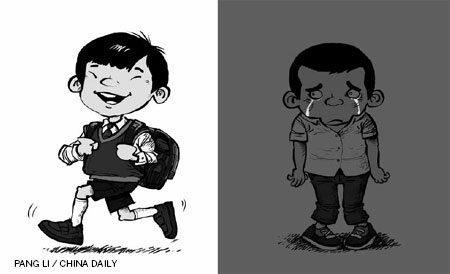
Unregistered children are, for all intents and purposes, officially invisible. They have no legal proof of their names, family links or nationalities. Since they do not exist in the eyes of the law, they are more prone to be excluded from society, and exploited or trafficked. They will also face considerable challenges accessing essential services like education and healthcare, and neither they nor their needs will be counted in the national statistics used to shape government policies.
Should they remain unregistered later in life, they will not be able to own property, open a bank account, hold a job in the formal sector, vote in elections, or apply for credit. Also, the birth of their children is less likely to be registered, reinforcing a vicious cycle of exclusion. Those most often trapped in this cycle are members of vulnerable groups, such as those living in poverty, marginalized populations, the disabled, the stateless and refugees. It is a situation which perpetuates inequality and hinders inclusive development.
Given the strong links enabling a range of other basic social, economic, and political services, birth registration is a fundamental human right. It is not, however, a standalone function. It forms part of the broader civil registration and vital statistics (CRVS) systems, which also document other important events in people's lives, such as marriages and deaths, helping to produce key statistics, such as population figures and causes of deaths. These are crucial for individuals and society both, making a robust and universal CRVS system a core component of good governance.
Yet the majority of countries in Asia and the Pacific are without well-functioning CRVS systems. Although much remains to be done, real progress has been made. This year alone, Laos, Nepal and Pakistan have taken coordinated action as a result of a regional meeting on CRVS convened in December 2012 by the Economic and Social Commission for Asia and the Pacific with our partners. Other countries, including Bangladesh, Kazakhstan and the Philippines, have made significant improvements to their CRVS systems in recent years.
At the December meeting, the countries identified the challenges of building the necessary political commitment to carry out the changes we need. In response, ESCAP and its partners, such as UNICEF, UNDP, UNFPA, UNHCR, WHO, ADB and Plan International, will organize an Asia-Pacific Ministerial Meeting in November next year, to galvanize commitment and to focus the resources of governments and development partners on accelerated action. Our collective goal is to ensure that every country in Asia and the Pacific has a well-functioning CRVS system by 2020.
Earlier this year, UN Secretary-General Ban-Ki-moon's High-Level Panel of Eminent Persons on the Post-2015 Development Agenda proposed, as a possible target for the next phase of global development: "Free and universal legal identity, including birth registration". This immensely positive step recognizes the importance of birth registration for inclusive and sustainable development. However, only with well-functioning CRVS systems, can the full benefits of birth registration for individuals and societies be realized.
The international community will meet in New York next month at the 68th Session of the General Assembly, to debate the shape of the post-2015 development agenda.
Let us be bold and fix a firm target for CRVS, to make the post-2015 development agenda truly transformative for governance and for protection of the rights of individuals.
Irrespective of rank, class or caste, no person in Asia and the Pacific should ever be excluded from society because of incomplete statistical systems.
No child should remain invisible, no life should remain uncounted.
The author is under-secretary-general of the United Nations, executive secretary of the United Nations Economic and Social Commission for Asia and the Pacific, and special advisor to the United Nations secretary-general for Timor-Leste.
(China Daily 08/21/2013 page9)