China protects human rights with vigor
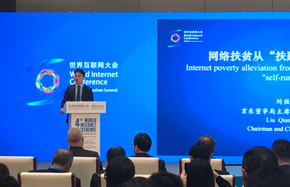
Editor's note: The Sixth Beijing Forum on Human Rights was held in Beijing on Sept 12-13. Following are excerpts of some essays presented at the forum:
Asian cooperation and development based on human rights
Qi Yanping, dean of law school in Shandong University
With the largest area, population and population density in the world, Asia is probably also the most diversified continent in terms of economy, politics and culture. It has both highly developed and developing countries. The political systems followed by countries within the region vary from each other. In terms of culture, the differences among countries are even more obvious and direct.
Thus it is not surprising that regional cooperation in Asia is also the most confusing among the five continents. On the one hand, Asia has formed some types of cooperation organizations such as the Association of Southeast Asian Nations and the Shanghai Cooperation Organization. On the other, Asia still has no widely covering cooperation mechanism with regional influence.
Then what could be the possible common ground of Asian cooperation?
Culture must be the decisive factor. No matter how many differences exist among the cultures in Asia, they are not essentially opposite. Peoples in Asia have gone through the severe test of war, especially after World War II, and reached an agreement on one culture, which is human rights culture, a culture recognizing, respecting, developing and accomplishing human beings. Therefore, I think human rights culture is the "Archimedean point" to solve the plight of Asian regional cooperation.
The reverence for life and all creatures, the persistence of freedom of conscience, the yearning for equality, the safeguarding of social justice, and the modern appeal to democracy and rule of law, embodied in all Asian cultures, are the common wealth we share in Asia.
Although countries in Asia differ greatly from each other in many aspects, they never stop making efforts to promote communication in various ways. The cultural pattern of Asia is the richest among all the continents and there has never been any artificial "cultural unity", which manifests the diversity and inclusiveness of the Asian civilization.

The Sixth Beijing Forum on Human Rights was held in Beijing on Sept 12-13, 2013. [Photo/Xinhua]
Human rights education in colleges
Liu Shiping, deputy director of Hunan University Research and Education Center for Human Rights
The part played by universities and colleges in human rights education is of special importance, because it directly involves well-educated people, both young and old. By setting professional schedules and recruiting experts to share their research with students, colleges can promote the value of human rights among the students.
Since the clause requiring the State to respect and protect human rights was added to China's Constitution in 2004, the State has invested huge amounts to promote human rights education in colleges and universities. In 2004, the Law School of Peking University set up the first human rights masters' program on the Chinese mainland together with the Raoul Wallenberg Institute of Human Rights and Humanitarian Law of Lund University, Sweden. Several key universities soon followed the example and offered more doctoral and masters' programs in human rights.
More universities and colleges are now offering courses in human rights under different titles, such as Hundred Years of China's Human Rights History, Human Rights for the Environment, Non-governmental Organizations for Human Rights, Rights of the Minorities, Business and Human Rights, Human Rights Theories and Diplomacy in the Modern West, and Human Rights and Relations of Big Countries.
Such colleges also play a big role in spreading human rights education in society. Guangzhou University organized a series of human rights training courses for judicial officials from 2006 to 2010. In 2008, Shantou University in Guangdong province joined hands with Guangzhou University to offer training courses in human rights to police officers in Shantou. Since April 2009, Peking University has organized 10 sessions for about 100 officials of the judiciary in Guangdong province.
Urbanization key driver of growth
Zhou Yezhong, professor at Wuhan University
In earlier waves of urbanization, rural regions saw huge population outflows as young farmers sought jobs in big cities. However, because of China's urban-rural house registration system, they were not accepted as true urban residents and could not get enough support from the system. The new generation of farmers hopes to overcome its inferiority complex by truly integrating in cities, but the limited resources in cities cannot accommodate such a big population.
The new urbanization drive offers a solution to this dilemma. By accepting farmers in industrial jobs in nearby cities, the new urbanization wave will raise the capacity of cities as a whole and accept more people. More importantly, the new urbanization drive will protect the fundamental human rights of the rural people by granting them more development opportunities.
Another factor of the new urbanization wave is the guarantee of equal social security to migrant workers. Since fewer rural workers today need to migrate to faraway regions in search of better livelihood, it is more convenient and attractive for them to join the social security system and, as a result, be ensured of getting pension in old age. Also, their children's right to education will be better protected and they can get better parental care.
In other words, the new urbanization drive is not only an innovative mode of economic development, but also a good opportunity to better promote human rights in China.