Urbanization is vital to China's development over the next decade. In fact, the secondary cities will be just as important as the first-tier cities, if not more so, because they will play a key role in fueling China's inland growth.
With a combined population of 43 million, nearly the size of Spain's, and a combined GDP of $550 billion, which would rank 20th in the world, China's two flagship cities have often determined the economic fate of the rest of the country. They are also prime examples of the challenges for megacities, such as escalating house prices, traffic gridlock, extensive air and water pollution, and overcrowding.
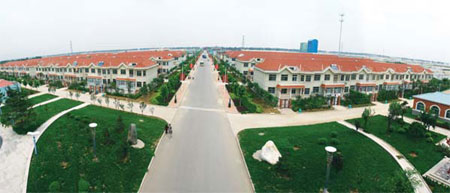
Sanyuanzhu village is a demonstration village for Weifang's "new countryside", a key part of ongoing government efforts to promote urbanization. Provided to China Daily
However, the megacities are no longer the only story. It is estimated that in the coming decades China's urban population will grow by 250 million.
The accelerating rural-to-urban population migration will increasingly impact China's secondary cities, those with populations between 1 and 10 million (some 135 cities in total). It is these cities that are expected to absorb much of the country's growth in the coming years.
The global emergence of the inland secondary cities in China is a result of shifting patterns of business investment, the lower costs of living, their healthier environments and ambitious local leadership. Reforms to the household registration system, such as those proposed by Chengdu, are also facilitating rural to inland urban migration as benefits are extended to the families of migrant workers.
In September, Premier Li Keqiang emphasized the importance of economic expansion in inland China, describing these areas as the "biggest space" for development.
The majority of China's rapidly growing second-tier cities are in the central and western provinces, and their proximity to large rural populations and low land costs will drive growth, as workers seek industrial jobs closer to their home regions.
This opportunity is already recognized in the international business environment. For example, since 2005, more than one-third of Changsha's foreign direct investment has come from Western countries.
This growth is partly the result of a new policy model. A common vision for urbanization is growth driven by the consumption of the middle- and high-income groups. Rising disposable incomes are expected to support domestic demand for locally manufactured products. According to the World Bank, domestic consumption accounted for only 36 percent of China's GDP in 2011. It accounted for 72 percent in the United States that year, 65 percent in the United Kingdom, and 59 percent in India. China's domestic markets have the potential to sustain the economic growth of secondary cities, even if the global economy continues to stagnate.
What makes secondary cities different from primary cities? Aside from being smaller and having less economic activity, second-tier cities represent unique opportunities. First, they can learn from the mistakes of the congested, crowded and poorly planned first-tier cities. These lessons include preserving historic buildings, planning for congestion, creating green spaces to enhance the urban environment, and maintaining clean air and water.
 New type of urbanization is in the details

Copyright 1995 - . All rights reserved. The content (including but not limited to text, photo, multimedia information, etc) published in this site belongs to China Daily Information Co (CDIC). Without written authorization from CDIC, such content shall not be republished or used in any form. Note: Browsers with 1024*768 or higher resolution are suggested for this site.
License for publishing multimedia online 0108263 Registration Number: 130349