That's not an ideal result because it means higher borrowing costs. But it is certainly preferable to the alternative-unsustainable liquidity creation and the rising probability of a debt default.
Xi is a consensus leader, and consolidated power provides strong leadership to enforce the reforms.
One of the most important policy achievements of the new leadership has gone by almost unnoticed. After the global financial crisis, the Chinese mainland avoided the worst thanks to a RMB 4 trillion stimulus package. But the stimulus also unleashed huge liquidity, which led to speculation, particularly in the property market, and burdened certain provinces with excessive local debt. The mainland's total credit, in the mean time, increased from 75 percent to 200 percent as a proportion of GDP.
If Xi and Li deleverage too fast the volatile property markets and unsustainable local debt, they would risk a severe European style recession. If they leave the outcome to the markets, the property markets would overheat and the local debt would eventually cause debt defaults in the provinces-something that US experienced in 2008 and 2009. Worse, the coupling of speculative property markets and soaring local debt could drive China to a lost decade, which has led some observers to forecast China's "hard landing" since 2009.
In a delicate balancing act, the new leadership has sought to prevent the concurrent deleveraging of the property markets and local governments. As the two have been decoupled, "hard landing" forecasts have given way to predictions of "soft landing" or "long landing" in the medium term.
In the coming months, Xi and Li must cope with the tapering of the US' quantitative easing policy, which began with reductions in bond purchases in December and will eventually mean higher interest rates in the West. In the past three to four months, it has caused "hot money" outflows from and deflation and depreciation effects in weaker emerging economies. It is in this volatile international environment that Xi and Li will try to curb fiscal deficit and stabilize the real estate market, even while financing urbanization and the impending hukou reform.
The risks and the rewards are particularly prominent in the financial and banking sector, and the new leadership hopes to foster stability in the banking system and financial intermediation regulation, along with interest rate liberalization and capital account opening.
If the policies of Xi and Li prove successful, China will continue to have potential for 6 to 7 percent growth in the coming years. In the Xi-Li era, adversities can no longer be faced with new stimulus packages, excessive leverage and deferred reforms, but with no stimulus, deleveraging and structural reforms-though with fiscal support.
It is tough medicine, but vital to deter the kind of liquidity traps that have led to a record slow recovery in the US, a probable lost decade in Europe and two lost decades in Japan.
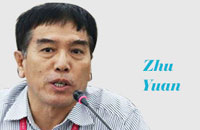
The author is research director of US-based International Business at India China and America Institute and visiting fellow at Shanghai Institutes for International Studies and Singapore-based EU Center.
(China Daily 02/26/2014 page9)
 New type of urbanization is in the details

Copyright 1995 - . All rights reserved. The content (including but not limited to text, photo, multimedia information, etc) published in this site belongs to China Daily Information Co (CDIC). Without written authorization from CDIC, such content shall not be republished or used in any form. Note: Browsers with 1024*768 or higher resolution are suggested for this site.
License for publishing multimedia online 0108263 Registration Number: 130349