|
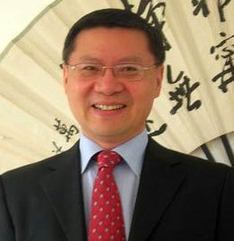 |
| Zhang Weiwei |
Is China's extraordinary rise a model of economic reform without political reform? Is China's Achilles' heel its political system? Is China's one-party governance doomed in the face of mounting challenges from a more diversified economy and demanding society?
These are questions in many Western minds whenever China is mentioned. But the assumptions behind these questions may be misplaced, as one's understanding of China could be vastly different if a Chinese perspective were adopted. China's political governance, adapting itself constantly to new challenges through many minor reforms, has proven crucial for China's economic success. The following five aspects of China's political governance merit special attention:
First, one-party governance. In fact, there is nothing new about one-party governance in China: in most of the past two millennia since its first unification in 221 BC, China almost always practiced a kind of one-party rule, or rule by a unified Confucian ruling elite selected through public exams (the Keju), claiming to represent -- or genuinely representing -- most if not all under heaven. Furthermore, in most of the one-party-rule era, China was arguably a better governed country and a more prosperous economy than Europe of the same epoch. China only began to lag behind Europe when it closed its door to the outside world and missed the Industrial Revolution of the 18th century, but the country is now catching up fast.
The Communist Party of China has to a great extent followed this tradition and built an impressive system of selecting its leaders based on merit and performance. For instance, its top decision-makers (6 out of 7 Politburo's Standing Committee members) all worked at least twice as much as party secretaries or governors at the provincial level, which means they have on average administered a population of about 100 million before being promoted to their current positions in Beijing.
The CPC today, like its predecessors in China's long past, also claims to represent the whole nation, but with a mission to restore the country's premier world-class status. Key independent surveys, including those by the Pew or the Asian Barometer over the past decade, show a consistent pattern in which the Chinese central authorities command a high degree of respect and support (above 75 percent) within the country. Depicting China's polity as being on the verge of collapse, as appears so often in the Western media, is out of touch with China's reality.
In this context, the word "party" may be a misnomer for the CPC, as it bears no similarity with the type of political institutions like the Republican or Democratic parties of the U.S., which openly represent group interests of a society and compete with each other. The CPC has tried, in China's own political tradition, to represent the interests of the overwhelming majority of people, who apparently accept this, at least up to now, thanks largely to the fact that most people have found their living standards significantly improved over the past three decades.
 New type of urbanization is in the details

Copyright 1995 - . All rights reserved. The content (including but not limited to text, photo, multimedia information, etc) published in this site belongs to China Daily Information Co (CDIC). Without written authorization from CDIC, such content shall not be republished or used in any form. Note: Browsers with 1024*768 or higher resolution are suggested for this site.
License for publishing multimedia online 0108263 Registration Number: 130349