Beijing will indeed shift some of its administrative bodies and industries to Baoding, a city in neighboring Hebei province. But before doing so, which will divide its highly concentrated resources, Beijing needs to change its development model and promote balanced development in its own districts.
The "small districts for big cities" model is something big cities cannot do without during their development period. Almost all the world's big cities have adopted the "from concentration to dispersion, from big to small" model. Cities will continue to grow bigger and their functions will keep becoming more complex during their initial development period because of their need for concentrated use of resources.
But with the passage of time such a model will overburden them with ever-deteriorating traffic, environmental, and safety and security problems, forcing them to transfer some of their excessively concentrated functions and industries to neighboring or satellite towns.
Most of the world's metropolises have adopted a three-tier geographic development model. For example, London in a broad sense has three geographical parts - the core area, equivalent to Beijing's Dongcheng and Xicheng districts in size, the inner urban area, equivalent to Beijing's Chaoyang, Haidian, Fengtai and Shijingshan districts, and the outer area, equivalent to Beijing's suburbs. Big Asian cities such as Tokyo and Hong Kong, too, have a similar three-tier makeup.
Beijing has an inner urban area of 1,400 square kilometers but with only six districts, each of which has an area of more than 200 sq km - with Chaoyang, Haidian and Fengtai having an area of over 300 sq km each. This fact, combined with its rapid development over the past decades, has made it necessary for Beijing to re-adjust its administrative divisions. Beijing has changed its administrative setup several times; it once had 32 districts, which were later reduced to 20 and then to the current 16.
In terms of its development level, Beijing has crossed the "from dispersion to concentration" period and has almost all the characteristics of a modern city. Thus it has no choice but to transfer some of its highly concentrated resources to a neighboring city for better functioning.
Beijing's industrial structure, such as its highly developed services and booming finance, logistics, tourism and information technology sectors, its total output as well as the size of its population already demand that it adopt a finer development model to complete its "second time leap".
For faster development, Beijing needs to shuffle its established administrative divisions. In terms of size or population, or both, Beijing's Chaoyang, Haidian and Fengtai districts can compare with many large cities in the world. Ironically, the three districts' large areas and big populations have prevented them from reaching the management level that matches their economic development, leading to huge development imbalances.
Beijing can learn from Shenzhen, which re-set its administrative divisions according to their functions. For example, China's first special economic zone was "re-set up" as an "experimental area for green city" in the new district of Guangming, carved out of Bao'an district, and an "experimental area for high-end industries" has come up in the new district of Pingshan, created out of Longgang district. The two new districts are under the direct administration of Shenzhen's higher authorities, although their GDPs are still added to the total of their parent districts.
Chaoyang, Haidian and Fengtai districts in Beijing have their distinctive economic zones, Chaoyang has the central business district, Haidian a high-tech industrial zone and Fengtai a leisure and tourism zone. These booming zones can follow the model of Shenzhen's Guangming and Pingshan new districts.
Several "only for sleeping towns", such as Huilongguan and Tiantongyuan, too, highlight the unreasonable distribution of industries in Beijing. Now that some of its industries will shift to Baoding and other regions, Beijing should also take measures to promote balanced and coordinated development in its own districts.
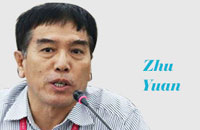
The author is a former senior research fellow with the Cheung Hong Graduate School of Business.
 New type of urbanization is in the details

Copyright 1995 - . All rights reserved. The content (including but not limited to text, photo, multimedia information, etc) published in this site belongs to China Daily Information Co (CDIC). Without written authorization from CDIC, such content shall not be republished or used in any form. Note: Browsers with 1024*768 or higher resolution are suggested for this site.
License for publishing multimedia online 0108263 Registration Number: 130349