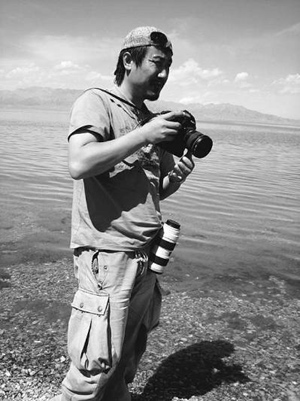
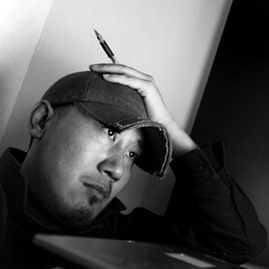
Photojournalist Chen Qinggang observes the world and shoots photos using his mind and heart. His work aims to reflect the reality of China while also providing insight into the essence of human nature.
|
When?an 8.0-magnitude earthquake hit southwest China's Wenchuan county, on May 12, 2008, Chen Qinggang was motivated by a sense of duty and? responsibility to document the tragedy. He want to give a voice to the victims, so he rushed to the disaster area.
His photo "Rescue troops carry earthquake survivor out of Beichuan county" won the first prize in the Spot News Singles category of the 52nd annual World Press Photo Contest in 2009. But his commitment to telling human stories began earlier. In 2002, Chen started to work on a photo essay about Comfort Women,?the term that?refers to women who were forcibly recruited to work in brothels servicing Japanese soldiers in World War II. He documented the stories of women in provinces such as Hainan, Yunnan, Hunan, Hubei, Hebei, Shanxi, Jiangsu, as well as Shanghai. He met with as many of the surviving victims – those who were willing to share their stories – as possible. His project, called " Surviving Comfort Women in China", was the country’s first large-scale documentary photo essay on the subject. Since 2000, Chen has also focused on China's efforts to lift hundreds of millions of Chinese out of poverty. He travelled to the country’s western regions where he documented this historical transformation. His work "14 Families (2000-2010): China farmers' survival report”was published by Jiangsu Literature and Art Publishing House in 2011.? |
|
Q: How did you begin your journey as a documentary photographer? A: When I realized photos can be an effective medium to tell stories, I began documentary photography. I always admired those who can tell their stories using words, paintings or films. I wanted to be someone like that, but didn’t know how to do it and what stories to tell until I discovered photography which opened my eyes to different stories in life. Q: What makes a good documentary photographer? A: Documentary photography?has to do with life, persistence toward the ordinary world and dedication. The techniques and the art of it are mostly reflected in how subject matter is displayed, requiring the photographer to understand and respect the subject. Not to glorify or vilify but to capture the real world without making things up. Documentary photography not only reflects what is happening now but also in the future. I believe it is part of photojournalism. |
|
Q: You have produced many realistic photo series, targeting groups that are often easily neglected. This means you have to put in a lot of time and effort and sometimes even risk your life. So what is behind your persistence? Have you ever doubted whether it is worth the effort? A: Most of the time I do it out of a desire for truth or the temptation from the unknown world. I want it just as much as I am eager to find out the answer to a riddle. Such desire sometimes even outweighs responsibility or mission. Of course you can see finding the truth as a kind of responsibility or mission. I never doubt the value of such efforts to myself, but I have questioned myself many times whether it was also valuable to others and society? And how much value would this provide?? |
|
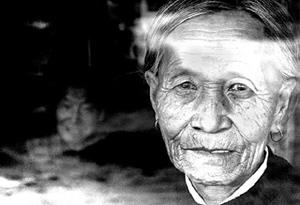
Q: Your in-depth investigation "The Survived Comfort Women in China" has a striking effect, and is also valuable historical material. What was the biggest difficulty during the shooting, and what details moved you most?
A: I talked to the many elderly people face to face for a long time, and I’ve been touched by many details. For example, one old woman would change into clean clothes every time before I interviewed her. I was greatly moved by such a small thing. And many others would get dressed up when I told them I wanted to take a picture of them. These old women care about how they look, and they value and respect themselves, which often made me ponder – how can such a group of people survive the immense humiliation and dirty memory that has lasted nearly a lifetime? |
|
Q: You have spent 10 years capturing the journey of China’s poor families on camera. What are your thoughts on poverty in China? What is the biggest obstacle in their pursuit of happiness and destiny?
A: For over a decade, in the interviews with families living in the poor areas of China, I’ve seen tens of thousands of poor people unwilling to succumb to their fate and struggling to rise out of poverty through relentless efforts. They have shown the tenacity of life and perseverance in the face of an extremely harsh environment. Among this poor population, most will continue to suffer. There are always many obstacles in fighting poverty, but we cannot afford to overlook two factors: one is the tolerance and disregard for the poor population in our society, and the other is social injustice. |
|
Q: Your work “Rescue Troops Carry Earthquake Survivor, Beichuan County, China, 14 May” earned first prize in the Spot News Singles category at the World Press Awards in 2009. As a recorder of this rare catastrophe, can you share one or two stories or scenes that are still vivid in your memory?
A: Years have passed since that disaster, but some of the scenes still haunt me. I still remember when I walked into the massive ruins of Beichuan county, I saw fallen walls and piles of debris lying everywhere. And from deep among the debris came groaning and cries for help from the victims. Without any lifting tools to move the huge pieces of rubble I was helpless to save people. An overwhelming feeling of despair grew in my heart as I heard those cries for help, and I could do nothing. I spent a long time talking to a girl amid the ruins, hoping to give her some comfort, but in the end I could not save her. Some rescuers tried to get in through cracks in the ruins, but that was not possible and extremely dangerous. There were frequent aftershocks, causing nearby walls to collapse and landslides in the distance. Smoke rose high in the air. I have never before felt such care, dependence and strong links among people until that disaster. |
|
Q: As a chronicler of the times, how do you view our era? What do you see as being your most satisfying accomplishment and your greatest regret? A: It feels right to use the famous lines from Charles Dickens' book A Tale of Two Citiesto describe our times. “It was the best of times, it was the worst of times, it was the age of wisdom, it was the age of foolishness, it was the epoch of belief, it was the epoch of incredulity, it was the season of Light, it was the season of Darkness, it was the spring of hope, it was the winter of despair, we had everything before us, we had nothing before us, we were all going direct to Heaven, we were all going direct the other way.” If there is any, then my greatest accomplishment is having stuck to my goals and the biggest regret is that until now I still don’t know whether I am “going direct to Heaven”, or “going direct the other way” by doing so. |
|
Source: chinadaily.com.cn ???? Editor:Sun Xiaohui?? Deng Jingjing |
Copyright 1995 - . All rights reserved. The content (including but not limited to text, photo, multimedia information, etc) published in this site belongs to China Daily Information Co (CDIC). Without written authorization from CDIC, such content shall not be republished or used in any form. Note: Browsers with 1024*768 or higher resolution are suggested for this site.
License for publishing multimedia online 0108263 Registration Number: 20100000002731