Carry on institutional reform
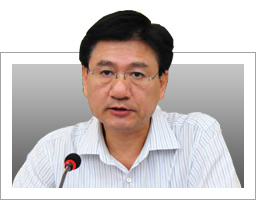
The author is a professor of politics at the Chinese Academy of Governance.
Following the path set out by Deng Xiaoping, the country must eliminate entrenched bureaucracy and over-concentration of power
By directing China's reform and opening-up since 1978 and innovating socialism with Chinese characteristics, the late Chinese leader Deng Xiaoping made a breakthrough in improving the institutional building of modern China, leading the country from the rule of man to the rule of law.
An important lesson Deng heeded from the decade-long "cultural revolution" (1966-76) was the State institutions' vital role in running the country, for "institutional problems can eventually affect China's State system and the purity of its ruling party".
Therefore, at the Central Working Conference of the Communist Party of China in 1978, Deng made an insightful comment regarding the missteps made by the Party prior to and during the "cultural revolution": "The past mistakes indeed owed to some individual leaders' thoughts and working styles, but the imperfect organizational schemes and structure played bigger roles." This signaled stable State institutions having overall importance and featuring fundamentality in national governance.
As Deng pointed out, despite the advantages of China's socialism, its concrete implementation such as the State leadership, working system, and even the organizational layout are far from flawless. Based on this viewpoint, he embarked on the nation's institutional reform and attached greater importance to the leadership level.
In this regard, in his speech on "Reform of the Party and State's Leadership System" in 1980, Deng pinpointed the major flaws that the Party and State leadership should correct - entrenched bureaucracy, over-concentration of power, life tenure in office, and abuse of privileges.
In particular, he was resolute and insistent in abolishing the life tenure tradition and replaced it with a new system under which officials at all levels have to abide by the recruitment, promotion, rotation rules and specific tenures for different posts. Similarly, more reform moves were implemented by Deng to optimize China's economic, cultural, and social system during his leadership.

Of course, any institutional reforms or improvements in China should be based on a distinctive socialist approach. It was made clear in Deng's opening remarks at the 12th Party Congress in 1982: "We should take our own path toward socialism with Chinese characteristics...on the footing of independence and self-reliance in the past and future."
However, sticking to China's own path of socialism does not necessarily mean that China should shut its door to the rest of the world. Deng once stated that China should be encouraged to selectively absorb the advanced management methods adopted by other states, including Western capitalist countries. For instance, an important consensus of talent selection in the capitalist world is that any eligible individuals shall be employed or promoted, regardless of their rank and seniority. "In comparison, our cadres' selection and the promotion system has lagged behind," Deng said.
But he also said, to establish socialism with Chinese characteristics, the country should avoid blindly copying the Western political systems. In regards to the reform of political system, Deng stressed that Western regimes' style of democracy and the separation of the three powers do not apply to China. China has to stick to the political system with Chinese characteristics, in which adherence to the leadership of the Communist Party of China, rule for the people, and rule of law are three integral parts.
Deng Xiaoping pinned high hopes on constantly improving the social system, and believed that socialism will one day surpass capitalism as "the best system across the globe".
Deng's confidence originated from the enormous advantages of socialism. He believed the shortcomings in the Party and State's concrete systems hindered socialism functioning well, so China needs to improve and develop socialism to fully prove socialism's superiorities.
As Deng predicted in 1992, it would take at least another three decades for China to establish a more mature, better institutionalized system.
To date, Deng's visionary anticipation is within easy reach of comprehensive implementation by the Party leadership headed by General Secretary Xi Jinping. In addition, the Third Plenary Session of the 18th CPC Central Committee passed the Decision on Major Issues Concerning Comprehensively Deepening Reform, which clearly stipulates that "the reform of Party building must evolve on the effort to raise the level of governance to be scientific, democratic and in line with the law", and that reform should attain decisive achievements by 2020.
Hence, Deng's proactive thoughts on China's institutional reform over three decades ago have been embodied in the specific political measures adopted by the Decision in promoting the modernization of the State's governance systems and governing capabilities and will naturally help realize the Chinese dream of national rejuvenation.
The author is a professor of politics at the Chinese Academy of Governance.
(China Daily 08/19/2014 page8)
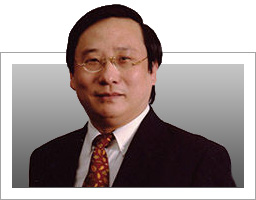
Learn from Deng's diplomacy
Although seventeen years have elapsed since Deng's passing away in 1997, China is still forging ahead in the overall direction of reform and opening-up to the outside world that Deng charted for China after he became the paramount leader at the end of the 1970s. [more]

Revisiting Deng and the socialist market economy
China has come a very long way since Deng Xiaoping articulated his vision of a reformed and modern China in December 1978. More than 35 years after the historical Third Plenum of the 11th Central Committee of the Communist Party of China in December 1978, "socialist market economy" has become a frequently used phrase in modern economic and development literature. [more]
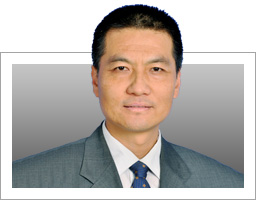
Scholars explore Deng's impact
Ranging from Deng's life and thought to the history of reform in China, the overseas studies of this former Chinese leader have undeniably shed new light on not only his own political, economic, cultural, military, and, diplomatic thought, but also on his important theories including the “One Country, Two Systems” policy that successfully enabled Hong Kong’s smooth return to the Motherland. [more]
Carry on institutional reform
By directing China's reform and opening-up since 1978 and innovating socialism with Chinese characteristics, the late Chinese leader Deng Xiaoping made a breakthrough in improving the institutional building of modern China, leading the country from the rule of man to the rule of law. [more]