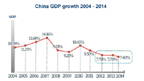
Emerging economic powers such as China, India and Brazil have long been demanding greater share of votes in multilateral development institutions like the World Bank, International Monetary Fund and the Asian Development Bank to reflect their recent phenomenal growth. China's economy is expected to grow to $10 trillion this year, yet its share of votes in the Bretton Woods institutions is only 3.72 percent, compared with 17.4 percent for the United States.
The existing situation is frustrating for emerging economies, because less voting power means less say in deciding where funds from these institutions should go. Also, most developing countries are unhappy with the unfair conditions imposed on them by the Western powers.
Unwilling to accept the status quo and answering critics, especially the US, that have long argued that China assume greater global responsibilities in areas like climate change and arms proliferation, President Xi Jinping surprised his Indonesian hosts during a state visit last year by initiating the formation of the Asian Infrastructure Investment Bank.
While the framework and modus operandi of the proposed bank are still to be finalized, its need is beyond doubt. According to ADB, in the 10 years up to 2020, the region requires investments of $8 trillion in terms of national infrastructure, or $800 billion a year. The ADB currently lends out only about 1.5 percent of this amount. Therefore, additional funding from the AIIB would be welcomed by the developing countries in Asia.
The AIIB is expected to have an initial capital base of $100 billion. Given that the ADB tripled its capital base from $55 billion to $165 billion only in 2009, the AIIB will start life with about two-thirds of the expanded capital base of the former.
From China's point of view, such a bank makes perfect sense. A major feature of China's miraculous economic rise has been its emphasis on infrastructure development. In the 20 years from 1992 to 2011, China spent nearly 8.5 percent of its GDP on infrastructure - corresponding figures for other Asian countries were between 2 and 4 percent.
The AIIB, to begin with, will serve at least five objectives for China. First, it could help China invest part of its foreign exchange reserves of $3.9 trillion on commercial terms. Second, it will play a vital role in the internationalization of the yuan. Third, it will help secure contracts for Chinese companies and thus boost employment opportunities at home. Fourth, China has funded many infrastructure projects across the world through the China Development Bank and Exim Bank, some of which have created resentment among local people. Funds from a regional development bank will ensure that there are no resentments. And fifth, the AIIB will boost China's global influence and enhance its soft power.


Copyright 1995 - . All rights reserved. The content (including but not limited to text, photo, multimedia information, etc) published in this site belongs to China Daily Information Co (CDIC). Without written authorization from CDIC, such content shall not be republished or used in any form. Note: Browsers with 1024*768 or higher resolution are suggested for this site.
License for publishing multimedia online 0108263 Registration Number: 130349