The blue skies Beijing enjoyed during the Asia-Pacific Economic Cooperation meeting in November were followed by dense haze, suggesting that China's efforts to reduce air pollution cannot succeed at one go.
Long-time exposure to haze can harm people's respiratory tract, lungs and cardiovascular system. If measures to control air pollution fail to achieve substantive results, the effects could be very harmful to human health in next 10 to 20 years.
The causes of the heavy haze are known. Unfavorable meteorological diffusion and excessive source emission of pollutants are what cause heavy haze. People can hardly change the meteorological conditions because they are natural factors. Haze means absence of wind which makes it impossible to "blow away" the pollutant cover blocking the sky, which, in turn, means there's only one way of reducing haze, that is mitigating pollution sources.
The authorities know well the sources of pollutants. "APEC blue", as the blue skies during the APEC meeting, were the result of the temporary closure of 40 to 50 percent of the polluting enterprises in and around Beijing, implementing the odd-even license plate driving rule in Beijing, Tianjin and some cities in Hebei province, and declaring a one-week holiday in government offices, primary and middle schools.
The major sources of pollutants are polluting industries, which mainly comprise thermal power stations, and steelmaking, petrochemical and building materials enterprises that use coal. Vehicles are another major source of pollution. Road rationing measures and the one-week holiday remarkably cut the number of vehicles, reducing air pollution.
"APEC blue" is an example of controlling air pollution at sources. But the restrictions implemented during the APEC meeting were temporary and mandatory, which are difficult to implement in the long term. Hence, the key to curbing haze and ensuring good air quality is efficient management and supervision.
China doesn't lack standards, technologies or laws and regulations to reduce haze. What it needs is complete implementation of the standards, technologies and regulations. And the central leaders have been reiterating precisely that for a long time.
Strict implementation of the technologies and rules can reduce haze by more than half. The burning of coal cannot be banned but the coal-firing enterprises can be made to strictly abide by the national standards of environmental protection.
It is important to upgrade the quality of fuels used in order to reduce pollution.
Recent studies show nitrogen oxides are the main cause of the heavy haze over Beijing and other Chinese cities. Nitrogen oxides are not only air pollutants but also increase oxidation and act as catalyst for many chemical reactions in the atmosphere that aggravate air pollution. So the removal of nitrogen oxides from the pollutants first could drastically reduce atmospheric haze pollution.
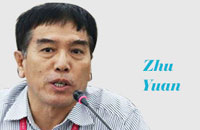
We (at the Chinese Academy of Sciences) have worked out a "nitrogen oxides centric hypothesis". Nitrogen oxides (including nitric oxide, nitrogen dioxide, dinitrogen trioxide, dinitrogen pentoxide and nitrogen trioxide) could turn into carcinogenic nitrous acid and a strong oxidizing agent, nitric acid. After being neutralized by alkaline gas ammonia, it could form particulate ammonium nitrate to cause a serious atmospheric scattering phenomenon, that is, haze.
During heavy haze the ratio of ammonium nitrate in the atmosphere could be more than 30 percent. It has a rapid growth rate that not only increases the atmosphere's oxidation ability, but also accelerates the formation of sulfur dioxide, volatile organic compounds and other noxious gases that transform into particulate sulfate and secondary organic aerosol, which result in the explosive growth of haze pollution.
Cutting the emissions of nitrogen oxides, therefore, is the most effective way to reduce atmospheric haze pollution. The major source of nitrogen oxides are coal-burning industries and vehicles. So the authorities should strictly supervise and manage industries that consume coal and take measures to ensure the decontamination equipment they have installed is efficient. They should also take measures to upgrade the standard of fuels, especially diesel, used in trucks.
These measures, along with those to reduce dust and other emissions from the catering, painting and construction sectors, can help Beijing and other cities to enjoy permanent blue skies.
 Considering money as the end is the tragedy

Copyright 1995 - . All rights reserved. The content (including but not limited to text, photo, multimedia information, etc) published in this site belongs to China Daily Information Co (CDIC). Without written authorization from CDIC, such content shall not be republished or used in any form. Note: Browsers with 1024*768 or higher resolution are suggested for this site.
License for publishing multimedia online 0108263 Registration Number: 130349