 |
|
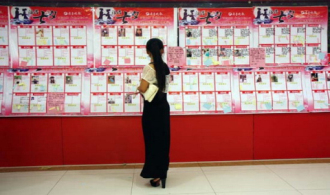
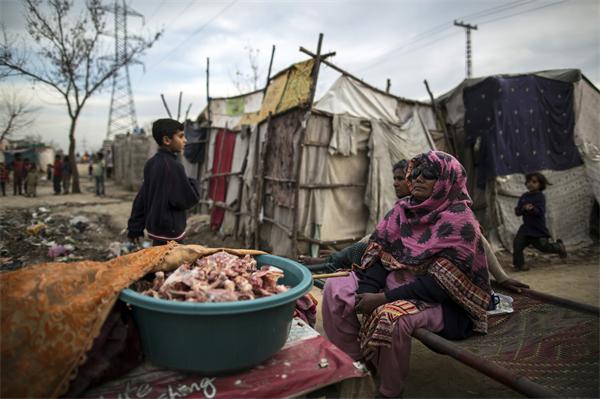
A street vendor waits for customers as she sells chicken outside her makeshift shelter at a slum on the outskirts of Islamabad March 10, 2015. [Photo/Agencies] |
Fighting poverty, protecting the environment and reaching healthcare to the poor (if we, for the moment, ignore ending conflicts, armed and unarmed alike) seem to be the overriding priorities of politicians and think tanks across the world. Indeed, they are noble goals.
The problem is the approach which mainstream intellectuals and experts propose to achieve those goals. It turns out that unshackled international trade - for example, a successful Doha free trade agreement - is the top choice of economists and think tanks, some of which masquerade as expert environmental protection groups.
This is hardly surprising because making money, more money than normally possible, is the top priority of mainstream economists. The logic seems to be that money will take care of all the problems. Of course, money can fight poverty and reach healthcare to the poor. But will the money earned from free international trade be used by those who possess it do so? Had that been the case, close to 1 billion people across the world would not be living in abject poverty. And had that been the case, three decades of World Trade Organization-dictated economic rules would have reached healthcare to most of the world's poor by now.
The food produced by the world today is enough to feed the entire global population. But that does not happen. And a global free trade agreement will make that more difficult, because it will make farming a less profitable profession because of the forced lifting of subsidies in developing countries, which, in turn, will lead to falling productions and subsequent shortage of food grains.
One of the main sticking points in a global free trade agreement is subsidy (or the lifting of it). Developing countries say they are being forced to lift agricultural subsidies by the developed economies even though the latter offer much higher amounts in subsidies to their farmers in different forms. Even if we ignore the arm-twisting methods adopted by some advanced economies to compel the developing economies to accept their demand, how can we ignore the state of agriculture in poor countries which have a large number of subsistence farmers? What will happen to these farmers and their families? Suicide, just like the hundreds of thousands of farmers in India committed?
Cutting subsidies on the use of fossil fuels - "to the tune of more than $500 billion each year" - will "reduce pollution and free up resources for investments in health, education and infrastructure", say two leading mainstream economists. The problem is that cutting these subsidies will raise public transport fares which the poor in many developing countries cannot afford to pay. With a larger part of their incomes being consumed by transport fares, these people will be further pushed into rather that being lifted out of poverty, because they have to cut expenses on more important items such as food, medicines and children's education.
And the least said the about taking care of the environment through perpetually rising productions and increasing profits the better. The more we exploit nature (extract oil and coal, and chop down forests, for example) the more damage we cause to the environment. Thus protecting the environment through rising productions defies logic.
The Earth has finite resources. Freshwater is an apt example. Droughts in many places in many countries, from the United States to China and India, are pointing to the dangers of water overuse. Complicating the human problems are unseasonal rains and floods in many countries, from the Americas to Europe and Asia.
The answer to the world's burning problems is not more productions and profits. The time has come to think differently, to study firsthand what the problems of the poor and weak are and then suggest solutions. The problems faced by the world's poor cannot be solved and the sufferings of the environment cannot be addressed on graphs and chessboards. They are real problems and need real solutions.
The author is a senior editor with China Daily.
oprana@hotmail.com

I’ve lived in China for quite a considerable time including my graduate school years, travelled and worked in a few cities and still choose my destination taking into consideration the density of smog or PM2.5 particulate matter in the region.

Copyright 1995 - . All rights reserved. The content (including but not limited to text, photo, multimedia information, etc) published in this site belongs to China Daily Information Co (CDIC). Without written authorization from CDIC, such content shall not be republished or used in any form. Note: Browsers with 1024*768 or higher resolution are suggested for this site.
License for publishing multimedia online 0108263 Registration Number: 130349