 |
|
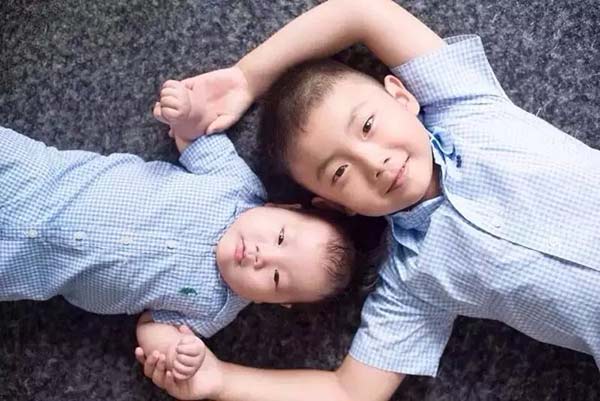
A boy with his younger brother. [Photo provided to chinadaily.com.cn] |
The news that after 35 years, China's one child policy is to be abolished, could not come too soon. It is a policy well-past its sell-by date. The policy, born in an era of concerns about too rapid population growth, had its merits then, when having several children was seen as an investment, especially the desire for one or more sons. Having children was more affordable then.
It was still a divisive policy, as those in the private sector with money could just pay a fine and carry on building a larger family, while those employed by the state could be punished with lack of promotion, demotion, even job loss as well as a fine. In the rural areas, extra children were hidden, brought up by a childless relative, while city dwellers found it difficult to hide extra children.
Yet the policy is believed to have prevented China's population from being 400 million more than today. Yet the biggest result that prompted the change are worries over an aging population with estimates that by 2050 one quarter of a population of around 1.4 billion will be aged over 65. That is a lot of folks dependent on a smaller working population to support. At an individual level it would be hard for 1 couple to support four parents later in life.

However without any laws, we see in western countries couples choosing to be childless or limiting themselves to one child. Reasons include priority given to career development by women and the high costs of raising a child which prohibit taking on a second. Today in China the costs of raising a child are much higher than a decade ago. Raising children in the ever expanding cities is a hard challenge which cannot always be helped by handy local grandparents. More females than males are graduating from universities - surely they are looking to a career and not just becoming a housewife? No disrespect to that role, but will many actually want to take an extended break from work to have two children? Those that see family building as their role may want more.
The conclusion is that China should leave family size to market forces driven by economic realities and personal choices. I suspect that many young Chinese couples will choose not to have two children - the evidence from what happened when China allowed two children if one parent was an only child, is not encouraging as not many people took up the opportunity. If I am right, the structural problems in the population will only be partly solved, so why not allow other families to have three children to help balance things out? This is much more sensible and all policies restricting choice in family size should be abolished.
The author is an economist and Director of China Programs at CAPA, The Global Education Network, a US/UK based organization that cooperates with Capital Normal University and East China Normal University.


Copyright 1995 - . All rights reserved. The content (including but not limited to text, photo, multimedia information, etc) published in this site belongs to China Daily Information Co (CDIC). Without written authorization from CDIC, such content shall not be republished or used in any form. Note: Browsers with 1024*768 or higher resolution are suggested for this site.
License for publishing multimedia online 0108263 Registration Number: 130349