 |
|
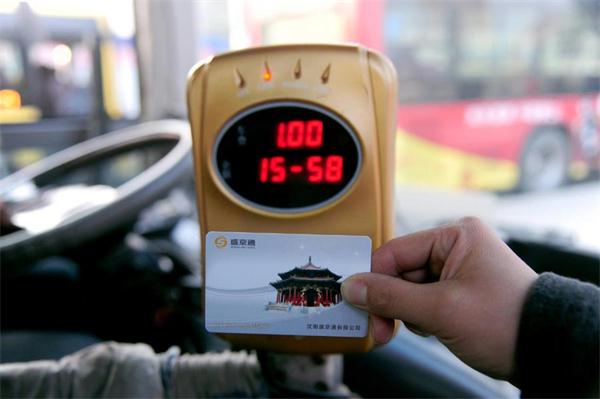
At the end of 2013, almost 30 cities had subway services with more cities planning to launch similar mass transit systems. By utilizing public transportation system, not only people can enjoy the convenience of affordable commute, but also reduce emissions caused by private cars. [Photo/Xinhua] |
The laws of economics say social welfare should be in accordance with the economic development level of a country. Welfare programs that are beyond a country's development level are not good for economic development, as has happened in Greece. On the other hand, if the economy develops rapidly without corresponding improvement in people's living standards and public welfare, people will not feel a "sense of gain", which in turn will have a negative impact on economic development.
First, excessive welfare beyond a country's development level will impede accumulation and harm welfare programs in the future. In economics, production is the top priority and it decides consumption. A society has to improve its production level if it wants to improve its consumption level. Production here refers to extended production, because only expanding the scale will breed competition and provide unfailing supply. The expansion of scale should be high-quality and high-level expansion of production through innovation and improvement of the industrial structure.
Second, welfare is not a free lunch. Welfare at any level needs economic support. High levels of welfare in countries such as Sweden depend on high taxation and high deficit. But the high-level welfare in Greece depends on high debt. High welfare supported by high taxation reduces development funds for enterprises, impeding the development of enterprises. And if enterprises lose energy, the entire economy will suffer. High taxation also affects individuals' desire and capacity for consumption and thus undermines people's enthusiasm to expand production.
The Laffer Curve, a possible representation of the relationship between rates of taxation and the hypothetical resulting levels of government revenue, shows that people are reluctant to engage in production activities if taxation is very high. High taxation enables people to enjoy more material welfare, but it also imposes a mental burden on them. And high welfare under high debt will cultivate inertia and create many social problems as has happened in Greece.
Third, excessive welfare will breed dependence and result in waste of social resources. Although high welfare comes from individual taxpayers' contribution, it seems like a public welfare provided by the state. It will result in many social problems, such as waste of social resources, voluntarily unemployment and retirement in advance. Once people get used to this kind of dependence, economic development will be undermined.
Fourth, welfare provided by the state is a redistribution of social resources. But such redistribution has many disadvantages. For example, it could lead to rent-seeking and distort market signals.
However, economic development will also be undermined if the authorities fail to provide enough welfare for the people. There is a lesson to be learned here from the planned economy. China's social welfare level today is not high; there is much room for improvement. So to strike the right balance between welfare and economic development, we should abide by the following principles:
One, it has to be clarified that the basic and final goal of China's economic development is the well-being of the Chinese people. And since China is the world's second-largest economy, it should pay more attention to improving public welfare. The Fifth Plenum of the 18th Communist Party of China Central Committee said the national GDP and urban and rural residents' incomes have to be doubled by 2020 compared with the 2010 level, and hence the authorities should focus on coordinated development to improve public services.
Two, the distribution of public welfare should be fair and transparent. The public welfare different social groups enjoy today is unbalanced, especially when it comes to urban and rural areas. Therefore, the authorities should make efforts to rectify the imbalance.
Three, the authorities should take measures to prevent unfairness and corruption from creeping into redistribution of welfare.
And four, they should not forget that China is still a developing country, and development is key to solving social economic problems, and only further development can guarantee sustainable and high-level welfare. More importantly, development problems should not be used as an excuse to reduce public welfare.
The author is a professor of economics at Renmin University of China.


I’ve lived in China for quite a considerable time including my graduate school years, travelled and worked in a few cities and still choose my destination taking into consideration the density of smog or PM2.5 particulate matter in the region.
Copyright 1995 - . All rights reserved. The content (including but not limited to text, photo, multimedia information, etc) published in this site belongs to China Daily Information Co (CDIC). Without written authorization from CDIC, such content shall not be republished or used in any form. Note: Browsers with 1024*768 or higher resolution are suggested for this site.
License for publishing multimedia online 0108263 Registration Number: 130349