 |
| CAI MENG/CHINA DAILY |
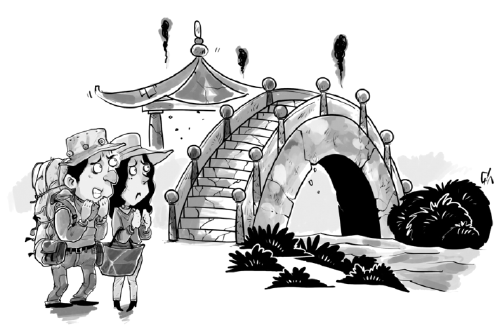
Several accidents took place at tourist spots in the country in the run-up to the Dragon Boat Festival holiday, turning recreation into tragedy and trauma.
Administrators of the Fenghuangxia scenic region in Jiangmen, South China's Guangdong province, didn't stop rafting operations despite the local meteorological department's orange rainstorm warning. The indiscretion resulted in the deaths of eight tourists and injuries to 10 in a flashflood on May 28.
On Saturday, a ferry carrying sightseers sank in Bailong Lake in Guangyuan, Southwest China's Sichuan province, after being battered by strong winds. None of the 18 passengers on board was wearing a life jacket when the tragedy struck. Only three passengers survived.
The two tragedies should teach scenic spot administrators and operators as well as tourists to pay greater attention to safety issues, especially during holiday seasons.
Tourism becomes a key industry in a country after its people earn more than enough to meet their basic demands, such as those for food, clothing, housing, transportation and children's education. In this sense, Chinese people's love to explore the country and the world is a reflection of their improved living conditions.
As Chinese people's disposable income increases, the number of tourists rises, breaking records every year. The increase in the number of tourists has also led to the creation of more scenic spots.
The problem is that not many administrators, tourism service providers or tourists are well prepared to handle the rising risks and dangers that come with the tourism boom. For scenic spot operators, the pursuit of more profits is the greatest driving force; in the process many ignore (even neglect) safety and security concerns. The rafting tragedy in Jiangmen is an appropriate example of such carelessness.
Authorities are glad to see the tourism boom because of the prosperity it brings to areas around tourist spots. But they forget that the boom means sharing more responsibilities in terms of ensuring safety and good service.
At the press conference on the Jiangmen tragedy, the director of the local sports bureau, which issued the license for rafting operations, said they cannot force the operator to shut down its operation even when there's an extreme weather warning. Doesn't this signify dereliction of duty on the part of the authorities?
Worse, after the tragedy, the local tourism administrative authority and the sports administration authority were busy blaming each other for not fulfilling their responsibilities. But neither answered the question whether they had taken foolproof measures to ensure tourists' safety.
Even many scenic spots that have not witnessed serious incidents are potential safety hazards, because intentionally or otherwise administrators and operators have been ignoring the risks.
Media outlets have frequently reported that many tourist spots take in a lot more visitors than their capacities during the holiday seasons, but in many cases local administrators or operators are not willing to restrict the number of visitors because of the huge economic benefits they bring.
Lack of safety awareness is a common problem among Chinese tourists. In the Guangyuan ferry tragedy, the passengers, including the ferry's owner and his family members, had not bothered to put on life jackets, which sharply reduced the possibility of their survival.
Indeed, it is the responsibility of the tourism industry's administrators and operators to ensure tourists on boats wear life jackets, but tourists, too, should realize the significance of personal safety and follow the safety instructions to protect themselves.
It's not uncommon to see tourists ignoring safety warnings and taking risks. We have but only one life. So we should not take unnecessary risks with it. Hopefully, tourists and tourism administrators and operators will learn the right lessons from the tragedies that struck Jiangmen and Guangyuan, and take all precautionary measures to avoid a repeat.
The author is a writer with China Daily.


I’ve lived in China for quite a considerable time including my graduate school years, travelled and worked in a few cities and still choose my destination taking into consideration the density of smog or PM2.5 particulate matter in the region.
Copyright 1995 - . All rights reserved. The content (including but not limited to text, photo, multimedia information, etc) published in this site belongs to China Daily Information Co (CDIC). Without written authorization from CDIC, such content shall not be republished or used in any form. Note: Browsers with 1024*768 or higher resolution are suggested for this site.
License for publishing multimedia online 0108263 Registration Number: 130349