 |
| Li Feng / China Daily |
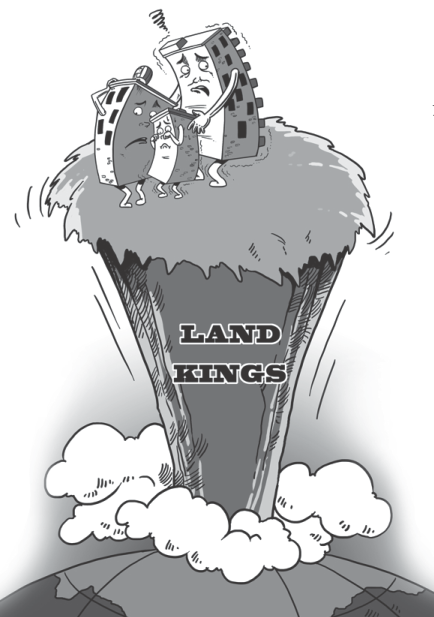
For those of us living in prosperous first- and second-tier cities in China, the land beneath our feet is exploding in value. Every week seems to set a new price record, as real estate developers buy up land to build on in Beijing, Shanghai, Shenzhen, Guangzhou, Hangzhou, Nanjing and elsewhere.
This has two ill effects. First, it adds more upward pressure on already high housing prices. Second, since the land buyers have mainly been large State-owned enterprises, they will need to sell the apartments they plan to build at one of highest prices per square meter in the world to make profits. It's another matter that the SOEs are meant to help solve, rather than exacerbate, the serious lack of affordable housing for China's ordinary urban population.
But there is one hidden and perhaps surprising benefit. The high and rising land prices are confirmation that land sales are becoming more transparent, less prone to potential favoritism and insider dealing. That is ultimately good for just about everyone in China. In the recent record-high land sales, the seller is the local government. In some cases, the price paid was more than double of what the government itself estimated the land would fetch. So it is up to the government now to spend the windfall wisely, in ways that will improve living standards for everyone in the city.
Too often in the past, urban land for residential development was sold for less than its true market price. The unfortunate result was that a comparatively few lucky real estate developers were able to buy land at artificially low prices and then make unconscionably high profits. Not for nothing was it said over the past 20 years that the easiest way in the world to make big money was to become a realty developer in one of China's major cities.
When a local government sells land at artificially low prices to developers, it can amount to a transfer of wealth from China's ordinary folks, the laobaixing, to those favored real estate companies. That's because the developers take the cheap land and then build and sell expensive apartments on it. And the government itself gets less revenue than it should have. This means less money to spend on services that benefit everyone: urban transport, affordable housing, schools, parks, hospitals and the like.
Few Chinese developers have mastered the art and business of building and marketing high-quality apartments on time and within a set budget. Apartment prices have almost always risen during the three years it takes to go from an undeveloped plot to a finished building. If a developer got a good deal on land, he/she was able to sell the new apartments during construction, use the cash to pay off the bank loans and lock in a very high profit.
Going forward all this will become far more challenging. When a developer goes bankrupt, the real victims are usually the ordinary folks who have bought apartments during the construction phase. Time and again, it has proven difficult, nerve-wracking and time-consuming for these buyers to get their money back or make sure the apartments they bought are completed.
As the risk of bankruptcies rise with land prices, I'd like to see rules requiring residential developers to buy insurance to automatically reimburse buyers in case they go bust. The insurance will also put additional and useful pressure on developers to complete work on time and maintain an acceptable quality. If the developer isn't making progress, or there are other signs of trouble, the insurance company would either withdraw coverage and reimburse buyers or require a new and more reliable developer to take over. Either way, the goal must be to protect, in a transparent and predictable way, the investment of ordinary homebuyers.
Up to now, too much pressure and risk has landed on the shoulders of buyers rather than builders, with cities also short-changing themselves. A fairer and better balance may now be emerging.
The author is chairman and CEO, China First Capital.


Copyright 1995 - . All rights reserved. The content (including but not limited to text, photo, multimedia information, etc) published in this site belongs to China Daily Information Co (CDIC). Without written authorization from CDIC, such content shall not be republished or used in any form. Note: Browsers with 1024*768 or higher resolution are suggested for this site.
License for publishing multimedia online 0108263 Registration Number: 130349