 |
|
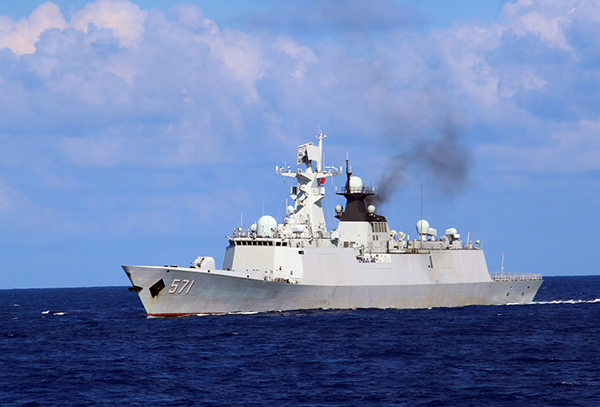
Missile destroyer Guangzhou launches an air-defense missile during a military exercise in the water area near south China's Hainan Island and Xisha islands, July 8, 2016. Chinese navy conducted an annual combat drill in the water area near south China's Hainan Island and Xisha islands on Friday. [Photo/Xinhua] |
The controversial ruling of the arbitral tribunal, initiated by the Philippines in the South China Sea dispute case, is in trouble again. And this time, it is not because of China's protest but because Filipinos are questioning why such a huge amount was spent on the arbitration.
According to former Philippine president Gloria Macapagal Arroyo's spokesman Rigoberto Tiglao, just the attorney fee in the case was $30 million. The Philippines' Constitution says it is mandatory to maintain records of government funds and how they are spent. But there is no record of the attorney fee or its source.
A former senator of the Philippines, Francisco Tatad, suspects the administration of former president Benigno Aquino III that initiated the case kept the Philippine people in the dark about the facts of the arbitration. He wonders whether some foreign country funded the arbitration case.
How much did the South China Sea arbitration case cost? Who paid the money? And who received it? Heated discussions on these questions have been raging in the Philippines. The questions have drawn the attention of the international community, too, because $30 million is not a small amount for the Philippines or any other country.
All the arbitral tribunal's services were clearly priced. During the trial, the standing arbitral tribunal that provided secretarial services, space and equipment for the process charged about $3.13 million. And since China refused to participate or recognize the arbitral tribunal or its ruling, the Philippines had to pay all the money. For example, the registration fee for secretarial services was €2,000 ($2,216) and the rent of the arbitral hearing rooms in The Hague Peace Palace was €1,000 a day, and the rent of a whole set of office equipment was €1,750 a day.
But Manila has not yet revealed how much money it paid to the arbitrators and witnesses, although the $30 million attorney fee gives an indication of the total amount of money spent on the entire arbitration process. And since the final award of the tribunal went overwhelmingly in favor of the Philippines, which is rare in international jurisdiction and arbitration history, one would be justified in questioning the impartiality of the entire arbitration process. Was the ruling delivered in Manila's favor because it paid millions of dollars to the arbitrators?
All these make it important for Manila to disclose how much money it actually spent on the arbitration case, more so because it proclaims the award's legitimacy and significance.
Tiglao hit the nail on the head-saying $30 million was paid as attorney fee-in his article published in the Manila Times on July 15. The United States, Japan and some other countries and international organizations reportedly put in considerable amounts of money and energy in pushing forward the South China Sea arbitration case. The down payment of the tribunal came from some agencies associated with the US. Tiglao also said the arbitration tribunal gave the US an excuse to intervene in the South China Sea disputes, prompting the US State Department and Central Intelligence Agency to reimburse Manila the legal fare and attorney fee.
So far, the arbitration has not benefited Manila. In fact, what it has got in exchange for spending millions of dollars is just a piece of scrap. The South China Sea arbitration farce should come to an end and the mess it has created cleared. The Philippine government should make public its financial accounts related to the tribunal to not only answer the questions of its own people but also address the international community's concerns.
The author is a researcher in maritime law and affairs at the Chinese Academy of Social Sciences in Beijing.


It has been a while since I've contributed to this Forum and I figured that since now I am officially on summer holiday and another school year is behind me I would share a post with you.

Copyright 1995 - . All rights reserved. The content (including but not limited to text, photo, multimedia information, etc) published in this site belongs to China Daily Information Co (CDIC). Without written authorization from CDIC, such content shall not be republished or used in any form. Note: Browsers with 1024*768 or higher resolution are suggested for this site.
License for publishing multimedia online 0108263 Registration Number: 130349