 |
|
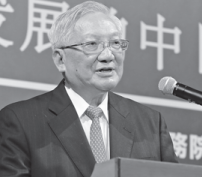
Tang Jiaxuan.[Photo by Xuxun/China Daily] |
At his meeting with Japanese Prime Minister Shinzo Abe on the sidelines of the G20 Hangzhou Summit earlier this month, President Xi Jinping stressed that the four political documents are the greatest stabilizing factors of Sino-Japanese ties, while the four-point consensuses reached between the two sides at the end of 2014 remain a "safety valve" for improving ties. So, both countries should abide by the relevant principles and consensuses, better manage their old problems and prevent the emergence of new ones.
To improve bilateral ties, China and Japan should cultivate correct perceptions and engage in peaceful and fruitful interactions. Correct perception will lead to correct actions. Some are worried that a rising China will eventually pursue hegemony. This is an unnecessary concern. China's concept of building a "new type of major country relationship" and its diplomatic idea of "amity, sincerity, reciprocity and tolerance" are the fruits of its consistent efforts to pursue peaceful development and build good-neighborly and friendly relations with countries in the region.
China's commitment to reducing emissions to help fight climate change and its participation in international peacekeeping reflect its determination to integrate itself with the international system and undertake its responsibilities as a big country. And its Belt and Road Initiative and efforts to establish the Asian Infrastructure Investment Bank reflect that it pursues open, inclusive, shared, mutually beneficial and win-win cooperation. China's development has created opportunities for and benefited Asia and the world, instead of posing a threat to them.
China attaches great importance to ties with Japan and has sincerely worked to improve bilateral ties. China's rise will not squeeze the space for Japan's development and growth; instead, it will continuously bring Japan certain development dividends. It is hoped Japan would view China's development in the right perspective and have the confidence to pursue common development with China, fulfilling the promise made by both countries that "they mutually see each other as cooperative partners and do not mutually pose a threat" in concrete policies and actions.
To improve bilateral ties, China and Japan should inherit traditions and highlight the benefits of friendship. The commitment to maintain friendship between Chinese and Japanese people from generation to generation and the promise that the two sides will never go to war are the starting point of Sino-Japanese relations and the basis of friendship. China and Japan should never abandon this concept of friendship. Next year marks the 45th anniversary of the normalization of diplomatic ties between China and Japan, and 2018 marks the 40th anniversary of the signing of the Sino-Japanese Treaty of Peace and Friendship. We should use these important occasions to stabilize and improve bilateral relations and guide them in the right direction.
Both countries should adapt themselves to the times, inject a new vitality into relations, and try to realize mutual help, mutual trust and mutual understanding. China and Japan set a good example of mutual help in the aftermath of the devastating Wenchuan earthquake in China in 2008 and the catastrophic earthquake in northeast Japan and the ensuing tsunami in 2011. Such mutual assistance and mutual support in the face of natural disasters should be maintained. Only by building mutual trust, which is now desperately needed, can the two countries lay a foundation for their friendship to continue from generation to generation. And to improve mutual understanding, they should conduct candid exchanges and communications and understand and respect each other's core interests and major concerns.
To develop better ties, China and Japan should not only learn from history but also look to the future. They should properly manage and handle their new and old problems, and take effective measures to promote pragmatic exchanges and cooperation, in order to continuously improve bilateral ties.
First, both countries should squarely face their histories. China and Japan have experienced two millenniums of friendly exchanges compared with a rivalry of only a few decades. So, they should view the history of their friendly exchanges as a common asset and intensify friendly exchanges. They should also learn lessons from history and avoid tragedies. Both countries should cherish the political courage and wisdom of their leaders and value the development fruits of bilateral ties and work harder to create a brighter future.
Second, they should try to maintain a peaceful sea. Since China and Japan are neighbors across the East China Sea, they should turn it into a field for bilateral cooperation instead of making it an arena for confrontation. Frequent conflicts between the two countries over maritime issues have harmed bilateral ties. In the East China Sea, they should focus on reaching a broader consensus and abide by the understandings and agreements already reached to better handle crises through dialogue, avoid possible conflicts and ensure maritime peace and stability. It is hoped Japan would support the efforts of directly involved parties resolving their disputes with China in the South China Sea through peaceful dialogue, and refrain from interfering in and hyping up the issue.
Third, both countries should deepen mutually beneficial cooperation. As the world's second- and third-largest economies, China and Japan should strengthen their cooperation and fulfill their responsibilities of participating in and pushing forward regional and global development.
At the bilateral level, they should realize the full cooperation potential in fields such as energy saving, environmental protection, finance, social security, healthcare and high-tech. At the regional level, they should focus on forging an Asian community of shared destiny, actively participate in free trade and promote interconnectivity and infrastructure construction, as well as avoid vicious competition. At the international level, they should expand their areas of common interests on issues such as combating climate change, securing energy and fighting terrorism, and set a good example for other countries to follow.
Fourth, both countries should increase and expand people-to-people exchanges. The sense of mutual estrangement between Chinese and Japanese people at present is worrisome. Therefore, the two countries should create conditions to realize the huge potential of people-to-people exchanges. They should also increase exchanges between their youths and grassroots people, so that more people engage in developing better ties and strengthening the social foundation of bilateral relations.


Colombian coffee has a story that I admire and use in my lectures and the reasons are the ones listed above. Congratulations!
Copyright 1995 - . All rights reserved. The content (including but not limited to text, photo, multimedia information, etc) published in this site belongs to China Daily Information Co (CDIC). Without written authorization from CDIC, such content shall not be republished or used in any form. Note: Browsers with 1024*768 or higher resolution are suggested for this site.
License for publishing multimedia online 0108263 Registration Number: 130349