 |
|
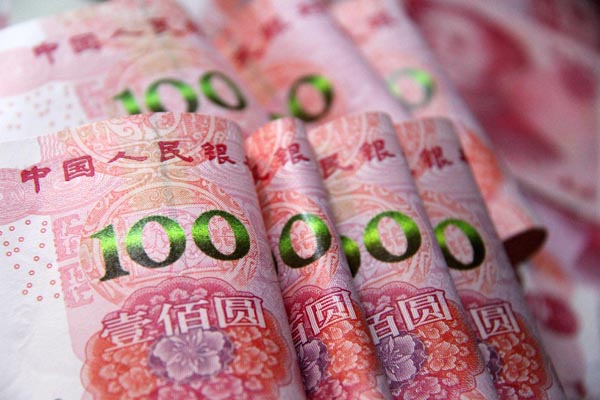
A photo of Chinese 100 yuan banknotes [Photo/VCG] |
The official inclusion of the yuan as a reserve currency by the International Monetary Fund on Saturday will be mainly of symbolic importance for now. It is a long overdue recognition of the rise of the yuan, powered by the remarkable growth of the Chinese economy over the past more than three decades.
However, for the yuan to play its greater international role, of substantially helping global trade and facilitating cross-border investment in the future, Chinese policymakers must take preemptive measures to avoid periods of extreme volatility that could plague the world's second-largest economy and engine for global growth.
Therefore, intensifying concerns over the health of the housing markets in big cities should prompt policymakers to thoroughly analyze how safe is the property sector, for it has been absorbing huge amounts of financial resources and thus affecting China's broad economic growth. It is shocking to know that almost all Chinese banks' new loans in July went to the real estate sector at a time when the overall economy is suffering from a slowdown. Even the August data that the property sector consumed about half of increase in bank loans cannot be justified by assuming that it alone can contribute up to one-fifth of the country's GDP growth.
At a crucial time of the economic transformation, it seems Chinese banks are competing against each other to put as many eggs as possible in a basket that will neither facilitate enough economic growth in the short term nor improve the health and productivity of the overall economy in the long run.
In spite of recent sporadic efforts by local governments to cool the red-hot property market, housing prices in more major Chinese cities are going through the roof to unrealistically high levels compared with either local GDP or people's income.
Some couples in Shanghai even filed for divorce after registering their properties in the name of either the wife or the husband to enable the other to buy apartments at lower down payment rates. To add fuel to the fire, some real estate agents spread rumors of massive purchases to create a panic over shortage of supply while some property developers manipulated prices to attract potential buyers.
Admittedly, local governments have taken prompt action against such rumors that could otherwise have further inflated the housing market bubble. But their piecemeal efforts are not a potent enough response to the unprecedented rapid surge in housing prices, a phenomenon that has had terrible consequences for many economies.
Though the volatile stock market at the beginning of this year left Chinese investors just bruised, the unfettered rise of property prices have made many of them blind to the increasing danger of dumping all their savings into the highly illiquid housing asset.
Given the huge boost a property boom can give to local fiscal revenues from land sales, it doesn't look like local officials will voluntarily take effective measures to stop the surge of housing prices.
And as long as local growth relies excessively on easy credit and a property boom, the Chinese economy can't achieve more productivity gains to raise people's incomes and living standards, the latter being the ultimate driving force behind the rise of the yuan.
As a major international currency, the yuan's value will have a greater impact on the Chinese and world economies. A stable yuan is a prerequisite for the country to press ahead with its economic transformation toward more sustainable and inclusive growth and the world economy to eventually recover without cheap money.
It is, therefore, more urgent than ever for policymakers to take the necessary measures to make the property basket safe.
The author is a senior writer with China Daily.
zhuqiwen@chinadaily.com.cn

Copyright 1995 - . All rights reserved. The content (including but not limited to text, photo, multimedia information, etc) published in this site belongs to China Daily Information Co (CDIC). Without written authorization from CDIC, such content shall not be republished or used in any form. Note: Browsers with 1024*768 or higher resolution are suggested for this site.
License for publishing multimedia online 0108263 Registration Number: 130349