Price of anarchy, a price worth paying
 |
|
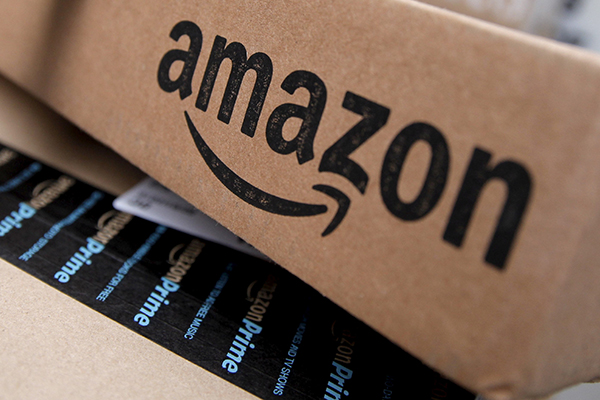
Amazon boxes are seen stacked for delivery in the Manhattan borough of New York, January 29, 2016. [Photo/Agencies] |
In game theory, the "price of anarchy" describes how individuals acting in their own self-interest within a larger system tend to reduce that larger system's efficiency. It is a ubiquitous phenomenon, one that almost all of us confront, in some form, on a regular basis.
For example, the centralized, top-down approach to traffic management in a city, which comprehends the entire system, identifies choke points, and makes changes to eliminate them. This is more efficient than simply letting individual drivers make their own choices on the road, with the assumption that these choices, in aggregate, will lead to an acceptable outcome. It makes better use of all the available information and reduces the cost of anarchy.
The world today is awash in data. In 2015, mankind produced as much information as was created in all previous years of human civilization. As the internet expands into new realms of physical space through the internet of things, the price of anarchy will become a crucial metric in our society, and the temptation to eliminate it with the power of big data analytics will grow stronger.
Examples of this abound. Consider the act of buying a book online through Amazon. Amazon has a mountain of information about all of its users-from their profiles to their search histories to the sentences they highlight in e-books-which it uses to predict what they might want to buy next. As in all forms of centralized artificial intelligence, past patterns are used to forecast future ones. Amazon can look at the last 10 books you purchased and, with increasing accuracy, suggest what you might want to read next.
But here we should consider what is lost when we reduce the level of anarchy. The most meaningful book you might read after those previous 10 is not one that fits neatly into an established pattern, but rather one that surprises or challenges you to look at the world in a different way. Big data can multiply our options while filtering out things we don't want to see, but there is something to be said for discovering that 11th book through pure serendipity.
What is true of book buying is also true form any other systems that are being digitized, such as our cities and societies. Centralized municipal systems now use algorithms to monitor urban infrastructure, from traffic lights and subway use, to waste disposal and energy delivery. Many mayors worldwide are fascinated by the idea of a central control room, where city managers can respond to new information in real time.
But with centralized algorithms coming to manage every facet of society, data-driven technocracy is threatening to over whelm innovation and democracy. This outcome should be avoided at all costs. Decentralized decision-making is crucial for the enrichment of society. Data-driven optimization, conversely, derives solutions from a predetermined paradigm, which, in its current form, often excludes the transformational or counterintuitive ideas that propel humanity forward.
A certain amount of randomness in our lives allows for new ideas or modes of thinking that would otherwise be missed. And, on a macro scale, it is necessary for life itself. If nature had used predictive algorithms that pre-vented random mutation in the replication of DNA, our planet would probably still be at the stage of a very optimized single-cell organism.
The price of anarchy is a price well worth paying if we want to preserve innovation through serendipity.
Carlo Ratti directs the Sense able City Laboratory at the Massachusetts Institute of Technology and heads the World Economic Forum's Global Agenda Council on Future Cities. Dirk Helbing is professor of Computational Social Science at the Swiss Federal Insti-tute of Technology (ETH) in Zurich and heads the FuturICT and Nervousnet initiatives. Project Syndicate
- Big data fuels era of individual travel
- China's state observatory partners Alibaba on big data
- Baidu hopes big data can improve care for patients
- Guizhou area pitches big data to Silicon Valley
- From tourism to big data, Chinese province presents itself in Silicon Valley
- Guizhou pitches big data to Silicon Valley