New configuration in relations with US
 |
|
MA XUEJING/CHINA DAILY |
China-US relations have reached a historic point, characterized by new dynamics in their interactions at the strategic level. As the two largest economies, the United States and China boast a combined GDP that accounts for more than one-third of world's total. And as each other's biggest trading partner, they had a trade volume of more than $550 billion in 2015.
Bilateral investment, too, continues to grow. In 2015, the accumulative investment from the US to China was worth $77.47 billion in actual terms, while Chinese investment in the US reached $46.6 billion in cumulative terms, making it the fourth-largest destination for Chinese FDI.
Chinese Minister of Commerce Gao Hucheng indicated in a signed article in USA Today that in the next decade, the China-US trade volume could quadruple. Besides, China is the largest holder of US Treasury bonds, which add up to $1.2 trillion.
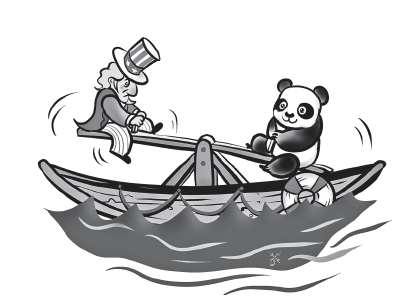
It is apparent that China's peaceful rise has driven China-US relations to new heights, with rivalry, competition and their cooperative partnership growing in tandem. This evolving configuration of conflicting dimensions will be a major feature of the bilateral equation.
The principle of "seeking common ground and shelving differences", as enshrined in the Shanghai Communiqué, may be the rule to maintain overall stability in bilateral ties, but in practice, the implementation of the rule hinges on how well the two leaderships and the foreign policy departments communicate and understand each other, and requires diplomatic finesse to deal with burning issues.
China-US relations today have global implications. "Seeking common ground and shelving differences" remains relevant, but the two sides must establish better communication mechanisms to reflect the new configuration of their relationship to transcend their differences. The China-US Strategic and Economic Dialogue meets those requirements.
Promotion of the concept of a "new type of major country relationship" is another significant step by China toward building a proper Sino-US communication mechanism, for it aims to advance China's major foreign policy objectives while showing its sincerity in opening a new chapter in China-US relations. More important, it shows China adheres to peaceful development and is opposed to one-upmanship and favors unity without uniformity.
China and the US have increasingly converging interests, which require a non-confrontational policy for the benefit of both countries. Also, the two countries must work together to address the challenges facing the world. All these developments will foster a "new type of major country relationship" featuring peaceful co-existence.
The US, however, has its own ideas; it uses different narratives for concepts, pursues different strategic goals and is guided by a different foreign policy. So China and the US have to take measures to promote mutual understanding.
The concept of a new type of major country relationship has met with reservations in the US, with some US officials saying they want to see more action than slogans.
But China still believes a "new type of major country relationship" is a constructive concept that will take Sino-US relations forward. China's conviction is rooted in its leadership's adherence to the prevailing trend in international relations and its faith in the peaceful development China has been pursuing.
The "pivot to Asia" strategy and a "new type of major country relationship" are two political and strategic visions for restoring balance in the region. The US wants to preserve its dominant status in the Asia-Pacific region, while China seeks to build a more equal relationship.
In recent years, many incidents, including the South China Sea issue and the deployment of the US' Terminal High Altitude Air Defense anti-missile system in the Republic of Korea, have fuelled tensions between China and the US. These are the result of the friction between two visions.
These changes are a new twist in the wider China-US relations. While we turn to history for guidance, it is vital that we come up with new approaches to meet the new challenges stemming from the new configuration in bilateral ties, and seek consensus-based solutions. So we must allow these efforts to run their due course.
The author is former president of China Institutes of Contemporary International Relations.
Courtesy: chinausfocus.com