OPEC plan to raise oil price may not succeed
 |
|
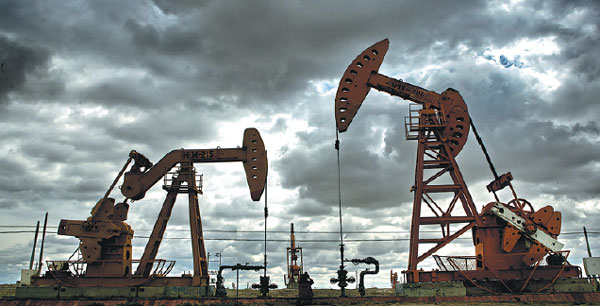
Pumps belonging to an oil company do their work in the Inner Mongolia autonomous region. [Liu Xuezhong/For China Daily] |
On Nov 30 when the Organization of Petroleum Exporting Countries agreed to reduce its output for the first time since 2008, international oil prices increased sharply. But will the OPEC's plan to raise oil price by cutting output succeed?
OPEC is the world's most influential oil cartel and influences oil prices by manipulating production targets. However, OPEC's capability to take concerted action has weakened because the number of oil producers in the world has increased in recent years. As such OPEC's measures may not dampen the new producers' enthusiasm to increase their production.
According to the Nov 30 agreement, OPEC members will start reducing their outputs by 1.2 million barrels a day from their current levels from January-equivalent to 1 percent of the total global output-and non-OPEC oil producers including Russia are expected to cut their output by about 0.6 million barrels a day. But will major oil producers, such as Iran that is desperate to expand its oil production and exports to increase its revenue to maintain its economic growth after the decades-long Western sanctions are lifted, benefit by reducing their outputs?
The questions raised by US president-elect Donald Trump over the Iranian nuclear deal could also force Iran to accelerate its oil production and thus benefit from the increased revenue before the new US administration takes office.
OPEC members don't have a good record of fulfilling its output reduction agreements. Data from Zero Hedge, a US economic blogger website, show that in the 17 OPEC agreements to cut output from 1982 to 2009, only about 60 percent of the "targets" were achieved. Going by the Zero Hedge data, a reduction of only 0.7 million barrels a day can be expected from OPEC's latest agreement.
Besides, the latest OPEC agreement does not include Nigeria and Libya, because they have been exporting an extra 0.5 million barrels a day since October. Also, Nigeria and Libya have said they plan to continuously increase their outputs, which many expect to make up for the reduced oil output by OPEC.
OPEC has no reason to expect non-members to cut their oil outputs. According to OPEC's latest agreement, non-members are expected to reduce production by 0.6 million barrels a day, with Russia cutting its output by 0.3 million barrels a day. The fact is that since 1998, Russia has promised to reduce its oil output four times but has cut it only twice and considerably increased it on the other two occasions. Moreover, Russia says its current oil output is equal to reducing production by 0.3 million barrels a day because its original planned output for 2017 is more than the current level.
Other oil producers such as Brazil, Canada and Kazakhstan, especially Brazil and Kazakhstan that face economic downturn, have enough reasons to take advantage of the OPEC agreement and increase their oil outputs and exports. The series of restrictions imposed by the United States on the production of oil and gas that Trump has promised to suspend is also expected to further lower the production cost of the country's shale gas sector and enhance their competitiveness in the global market.
From the perspective of oil demand, OPEC's plan to maintain oil prices by reducing output is not expected to succeed. New uncertainties emerging in the European Union following Italy's failed referendum on constitutional reform, the unlikelihood of a considerable increase in the demand for oil in China given its economic slowdown and other global factors mean global oil consumption is not likely to increase in the year ahead.
Furthermore, the possibility of the US Federal Reserve raising the interest rate, which will accelerate the flight of capital from emerging markets to the US, will also curb the demand for oil and could deal a blow to OPEC's plan.
The author is a researcher at the International Trade and Economic Cooperation Institute of the Ministry of Commerce.