What effects could the US interest rate hike have in the US and on emerging markets?
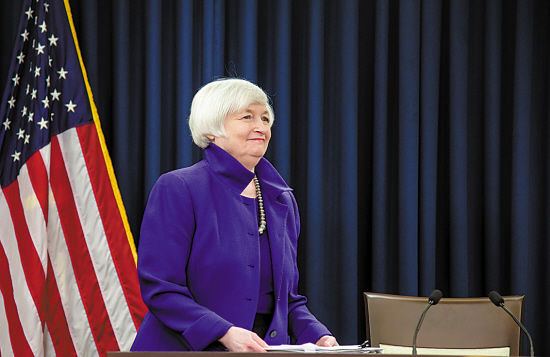
Many factors point to a rate increase in December: November's unemployment rate hit its lowest reading since August 2007 at 4.6%, inflation is now closer to its 2% target reaching 1.4% in October, the latest FOMC meeting indicated that officials favored a rate hike “relatively soon”, and markets are now expecting increased levels of inflation after President-elect Donald Trump indicated his plans for a large fiscal expansion. Hence, given the current economic conditions and the high expectation in the market (the probability of a rate hike in December is close to 93 %), the Fed will very likely hike at its next meeting.
The real question is whether, or more precisely how, the change of fiscal policy that is expected will affect its path of rate normalization. For the moment, the 'dot plot' shows that the FOMC participants’ median expectation is a Fed fund rate at 2% by the end of 2018 with 1 rate hike in 2016, 2 in 2017 and 3 in 2018 . While market participants anticipated a much lower path prior to the election, expectations of a big spending plan have led them to align their anticipations closer to the Fed’s. Some analysts even believe that market expectations could overshoot the dot plot path. Therefore, once the implementation of the new administration’s plan begins, one could expect the Fed to align with these expectations and have more hikes in 2017 or 2018 than currently anticipated.
What effects could this new policy mix have in the US and on emerging markets?
In the short run, the announcement of both a big fiscal expansion and the anticipation of a rate rise will increase flows to the US and lead to a strengthening of the dollar. The pressure on emerging market economies, notably Latin America and China, could be important. (However, as highlighted by most analysts, another taper tantrum episode is unlikely as the Fed has now adopted more forward guidance and as emerging markets are in better position.) This was already seen to a certain extent with an important appreciation of the dollar in the recent weeks . One must also note that a dual effect is at work there: as the dollar further appreciates because of the anticipation of this new policy mix, other currencies will depreciate. In emerging markets because the possibility of a rise in protectionism has emerged and in more advanced countries (such as Europe and Japan) because the divergence in monetary policy cycles is likely to widen.
In the long run, a dollar that is too high can have a negative effect on the US economy as it would hurt its trade balance. The Fed is mandated to focus on employment and inflation. In the case of a strengthening of the US dollar that would hurt US exports and increase unemployment, the Fed would likely intervene. More generally, two ways forward can be considered: one in which the fiscal spending plan is targeted on areas in need and with potentially important benefits for the US economy (such as education and public infrastructure), or another in which public spending is foolishly invested. In the first case, a Fed hike would signal that the state of the US economy is improving and would be positive in the US and for the rest of the world (leaving aside potential protectionist measures). In the second case, the Fed would likely hike to curb the rise of inflation that this spending would have triggered, potentially leading to a race between a growing inflation and the Fed. However, such a case would also see a rise in interest rates on the debt, which would encourage a more dovish Fed.
The only firm conclusion possible from these possible scenarios: there is important uncertainty around what the future policy mix will look like in the coming years.
The Fed is facing a multitude of unknown variables regarding fiscal policy and trade policy that could have opposite effects on the economy. In addition, there is the possibility that the Fed will face more political pressure (some board members will be replaced in 2017 and 2018), although the views of the administration on that matter haven’t been clearly established – will they be more hawkish following the mainstream Republican view or will they favor a dovish approach that would support their big fiscal expansion? The Fed will probably remain in 'wait-and-see mode' for the coming months and while it will have time to adapt to these new changes, the rising uncertainty strengthens the case for a clear communication and a unified voice from the FOMC.
The author is a Research Analyst at Peterson Institute for International Economics
- US Fed hikes interest rate after one-year pause, faster pace ahead
- Interest rate hikes may trigger a correction but not a rout in the city's property prices
- Interest rate environment complicates China's life insurance industry
- Call for lower interest rate, RRR
- First interest rate swap at Shanghai FTZ
- China mulls creating new interest-rate mechanism