What Trump means for Obama's legacy?
 |
|
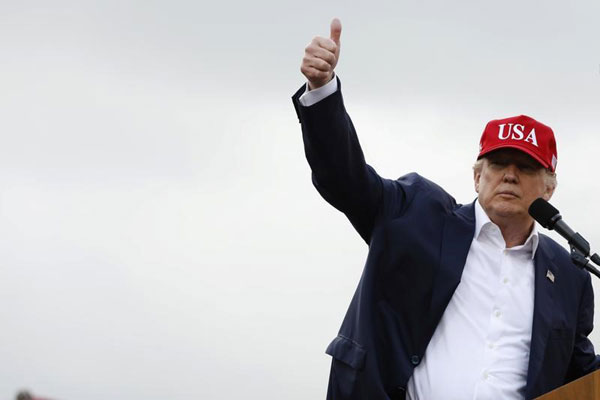
US President-elect Donald Trump gestures as he speaks during a USA Thank You Tour event in Mobile, Alabama, US, December 17, 2016. [Photo/Agencies] |

US President Barack Obama's eight-year term will end in January. He has rewritten history by becoming the first African American president of the United States, but he will leave behind a mixed legacy.
The positives first. Obama led the US through the global financial crisis, creating new jobs and helping revive the country's economy. Under his leadership, the US agreed with China to reduce their respective carbon emissions. The two countries also worked together to clinch the Paris Agreement on climate change last year. And with the "Clean Power Plan", the US raised its energy efficiency levels, reduced oil imports, and started developing clean energy rapidly.
As a nationwide healthcare reform, his Patient Protection and Affordable Care Act (or Obamacare) has considerably reduced the number of people without medical insurance cover. High on the agenda of Obama's second term were legalizing same-sex marriage, promoting equality in education, and immigration reform. He has succeeded on one front, as gay marriage has been legalized in 50 states. And he has tried to delay repatriating 5 million illegal immigrants and grant them work permits.
To give meaning to his diplomatic and counter-terrorism moves, Obama withdrew US combat troops from Iraq by the end of 2011 and from Afghanistan by October 2014. And on May 2, 2011, US forces eventually shot dead Osama bin Laden, the mastermind of the Sept 11, 2001, attacks.
Thanks partly to Obama's efforts, the ice was broken between the US and Cuba, with Washington and Havana upgrading their respective "interests sections" in each other's capitals to embassies in July, 2015. And on March 20, 2016, Obama became the first US president to visit Cuba in 88 years.
In 2015, the US led successful negotiations for a nuclear deal aimed at preventing Iran from making nuclear weapons, and when Iran complied this year, Washington lifted part of the sanctions on Teheran, which breathed some life into the nearly four-decade-old frozen bilateral relations.
But Iran is the only silver lining in Obama's Asia policy. He shifted the focus of US diplomacy from the Middle East to the Asia-Pacific, epitomized by his "pivot" to Asia strategy. As part of its "smart power diplomacy", the Obama administration tacitly fueled the "Arab Spring", which has left many countries, especially Syria and Libya, in tatters and resulted in a massive power vacuum in the Middle East and played a key role in the emergence of the Islamic State group.
In the Asia-Pacific, Obama's "pivot" strategy, instead of bringing about stability and prosperity, has intensified differences among the region's countries and heightened tensions. To allow the US to dictate trade and economic terms in the Asia-Pacific, Obama proposed the Trans-Pacific Partnership Agreement, which now is all but dead as US president-elect Donald Trump has vowed to scrap it on his first day in office.
Eight years ago, Obama entered the White House with the promise of change. But he has managed to change little in the US, as attacks on blacks have increased, with many blacks falling victims to police bullets. He has failed to change the country's gun culture, too. And although he raised the minimum wage and took initiatives to help the poor and needy, the gap between the rich and poor in the US has widened.
His healthcare reform is indeed a welcome move, but given the loopholes in and economic burden of Obamacare and, more importantly president-elect Donald Trump's aversion to it, the future of the scheme looks uncertain.
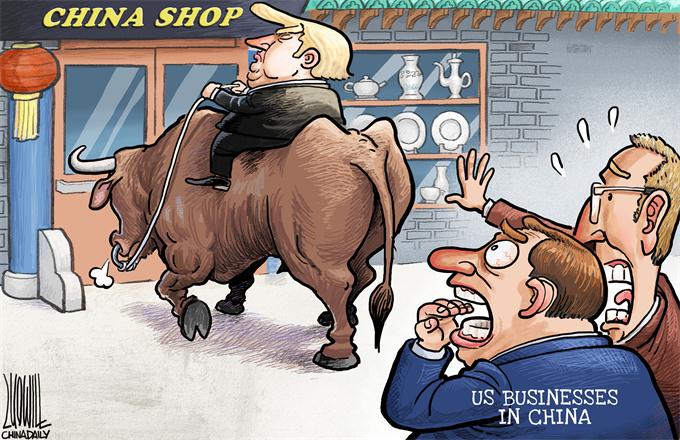
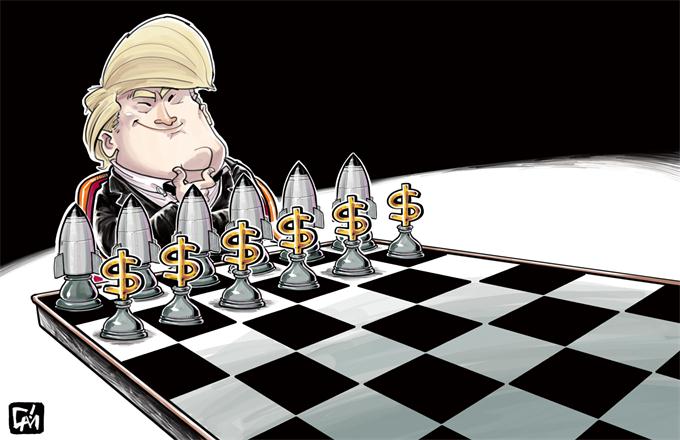
It is difficult to guess the fate of even the good policies Obama has implemented once Trump is sworn in as US president next month. Trump has already said he wants to "Make America Great Again" and put "America First" by reversing Obama's domestic and foreign policies. And with billionaires and retired generals in his team, it is difficult to say what kind of change Trump will bring to the US and the world.
The author is a senior fellow at the Institute of American Studies of the Chinese Academy of Social Sciences, and managing editor of The Chinese Journal of American Studies.